Exploring the Visual Cultures of India Through its Art, Performance and Ritual
Les Joynes, PhD, Scholar on the Futures of Culture in Public Diplomacy, 2022 Fulbright-Nehru Professional and Academic Excellence Award and Senior Scholar, Indira Gandhi National Centre for the Arts, New Delhi; Visiting Professor, Visva-Bharati University, West Bengal.
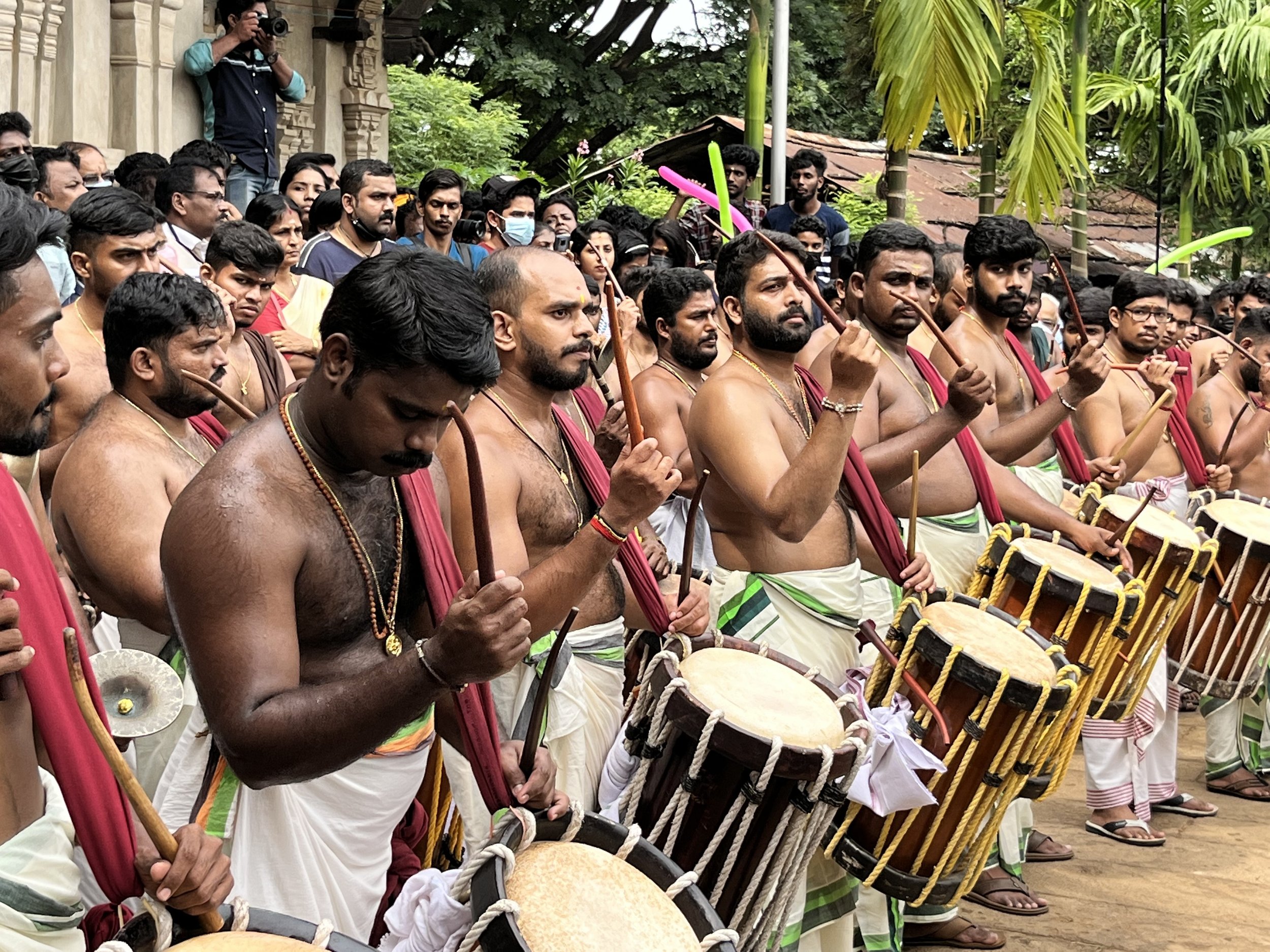
Greetings.
This ongoing photo documentation reflects my Fulbright Research Fellowship in India in 2022.
I am an American artist and research scholar focused on U.S. multilateral exchange in the arts and culture, and I served as a professor of American Modern and Contemporary Art. My Fulbright experience in India marked the culmination of four years of preparatory research at Columbia University on Indian dance, religions, histories, and education.
In February 2022, I was posted as a Senior Scholar at the Indira Gandhi National Centre for the Arts, where I examined art, performance, and creative heritage in India. I lectured on site-specific art, led mural-design workshops, organized a symposium on curriculum design and the future of museums, and curated an exhibition in New Delhi. I also began a new series of performances inspired by Indian classical traditions and prepared return projects in Kerala, Mumbai, Kohima, and Colombo.
One of the most extraordinary places I visited was Nagaland, a state in India’s northeast near Assam and the border with Myanmar. As a newly elected member of the Highland Institute, I worked with local groups to establish the Naga Youth Mentoring and Coaching Program, supporting Naga tribal communities in career development, education, and health. I also explored how art and cultural exchange can expand mutual understanding and shape the future of public diplomacy.
During my Fulbright fieldwork, I traveled from Delhi through Uttar Pradesh, Rajasthan, Maharashtra, Kerala, Tamil Nadu, Andhra Pradesh, and West Bengal, and received special permission to visit Nagaland in India’s northeast border region.

In each region, I examined social structures, cultural sites, and the performative body—including rasa expressions of love, compassion, wonder, humor, peace, and heroism. I explored Indian performative traditions that underlie both Western and Eastern aesthetics and that have shaped the history of the South Asian performative body from prehistory to the present.
Before, during, and after my Fulbright fellowship, I saw the power of building strong networks. In preparation for my posting, I connected with past Senior Scholars in India and established relationships with academic networks, Fulbright regional offices, the Indira Gandhi National Centre for the Arts, the Royal Asiatic Society, and my local government hosts. This experience inspired me to continue developing partnerships across South Asia. I subsequently prepared a solo exhibition in Kerala, guest lectured in Mumbai, developed a coaching and mentorship program for tribal communities in Nagaland, and collaborated on an art biennial and a U.S.–Sri Lankan bilateral project in Colombo.
In February 2022… it began in New Delhi….
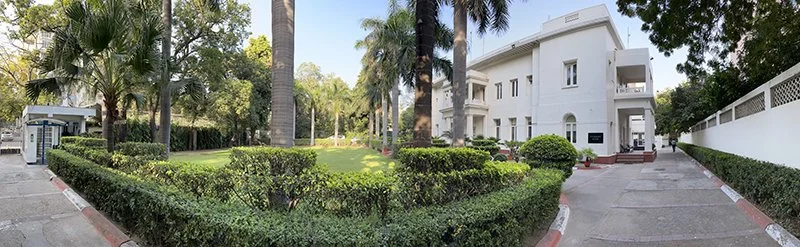
Fulbright headquarters in India: The United States India Education Foundation in New Delhi. My research and travels began here as one of the first Fulbright Scholars to come to India after Pandemic. I was prepared to travel in September 2020. The Fulbright was delayed five times until I was posted at the beginning of February, 2020.
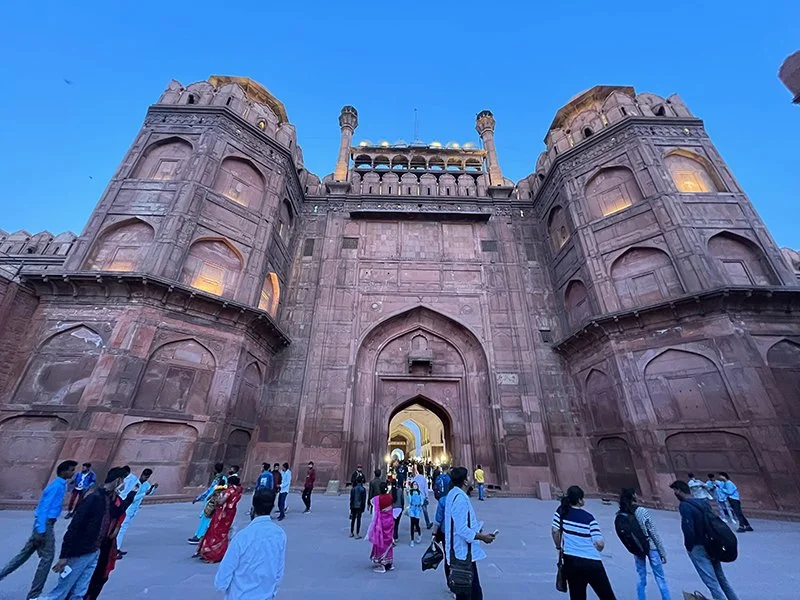
The Red Fort in New Delhi. Founded by Emperor Shah Jahan and surrounded by a magnificent 18m-high wall, this fort took 10 years to construct (1638–48) and is rumoured to have had the decapitated bodies of prisoners built into the foundations for luck. It once overlooked the Yamuna River, which has now shrunk to some distance away.
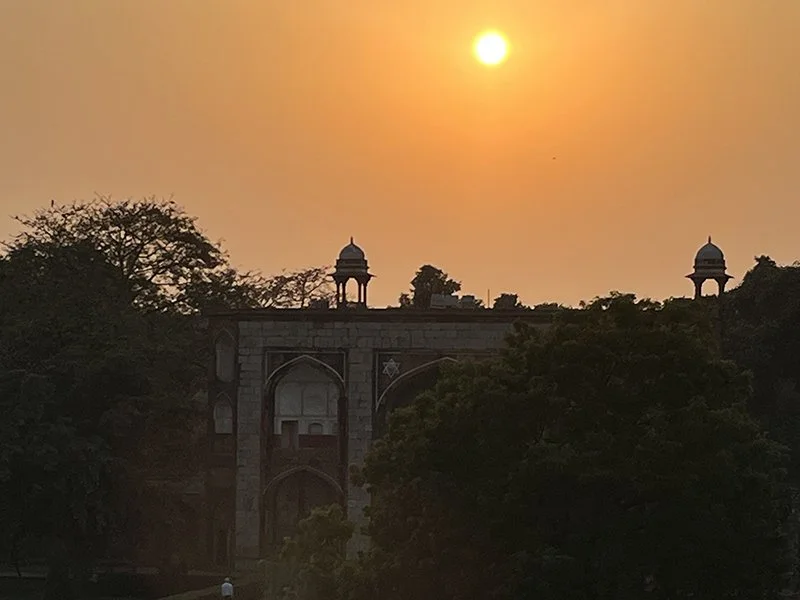
Sunset at Humayun’s Tomb in New Delhi.
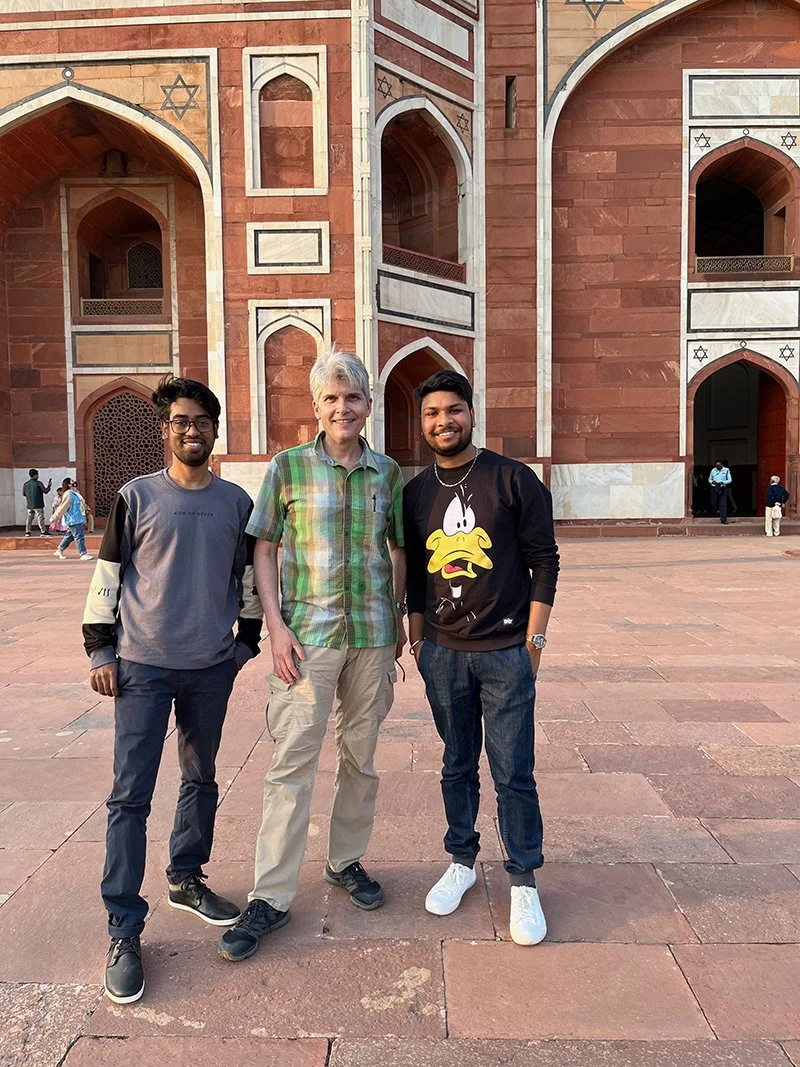
At Humayun’s Tomb in Delhi chatting with university students from Delhi University.
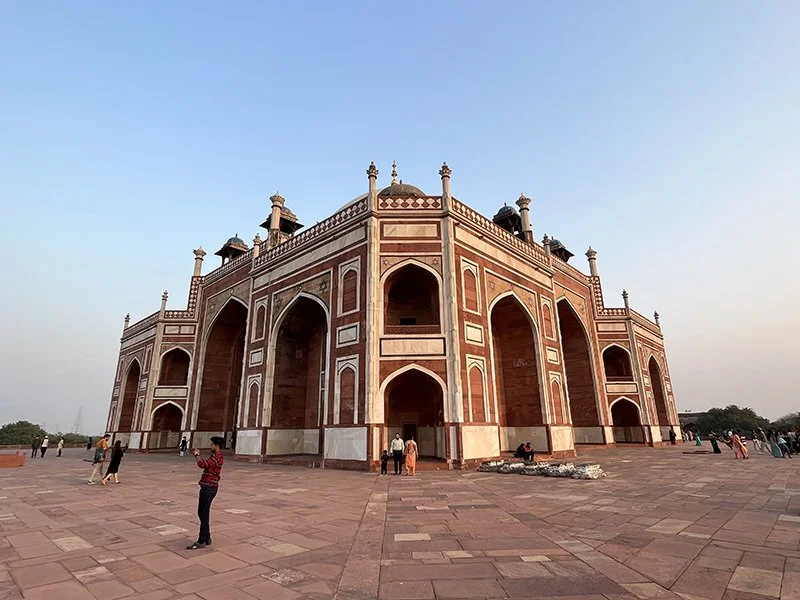
The colossal Humayun Tomb of the Mughal Emperor Humayun in Delhi which was constructed 1547 on the banks of the Yamuna River. Located in Nizamuddin in Old Delhi it is the first garden-tomb on the Indian subcontinent, As an example of Mughal architecture, the tomb is modelled on Gur-e Amir in Samarkand.
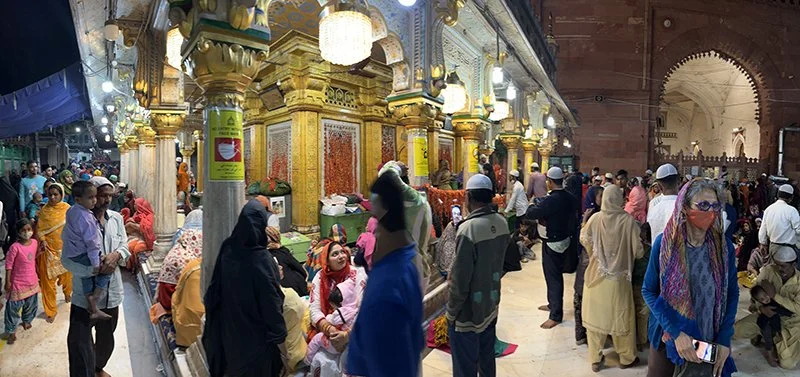
A visit to the Nizamuddin Mosque to hear the Thursday Qawwali Nights At Delhi's Nizammudin Dargah.
The Journey Begins: Uttar Pradesh - On the road to Mathura and Vrindavan
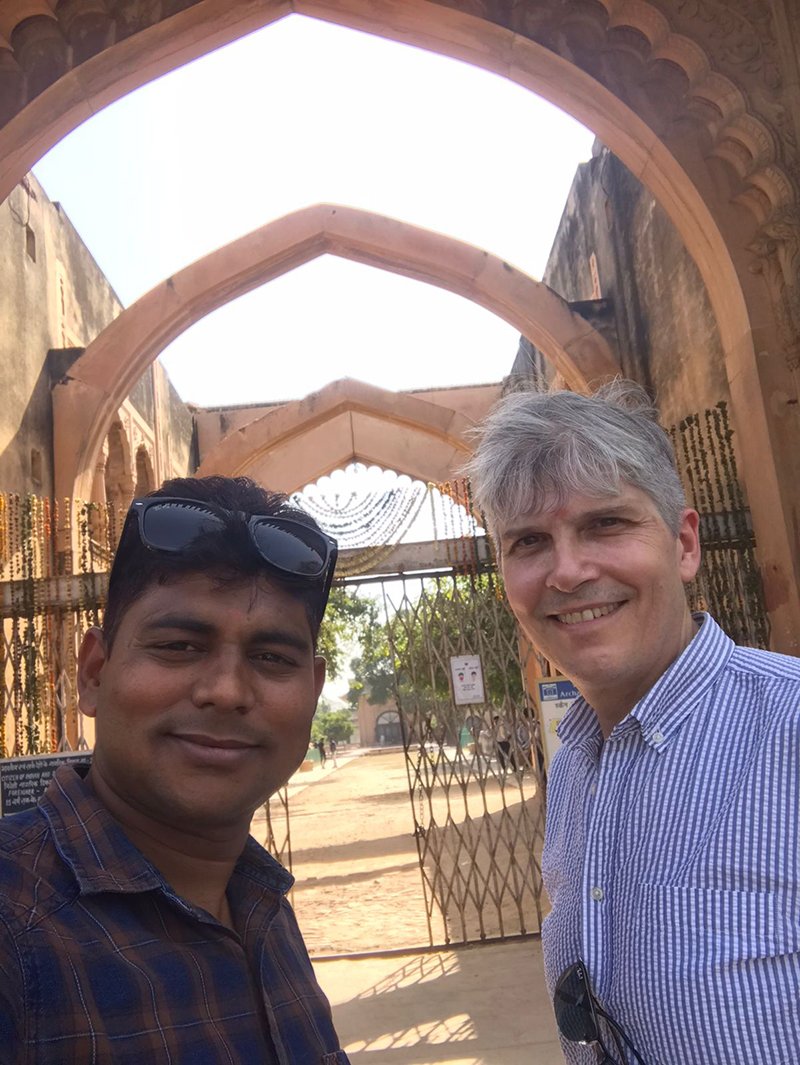
In Mathura with my driver, guide and friend, RP, visiting the Forts on the way to Mathura.
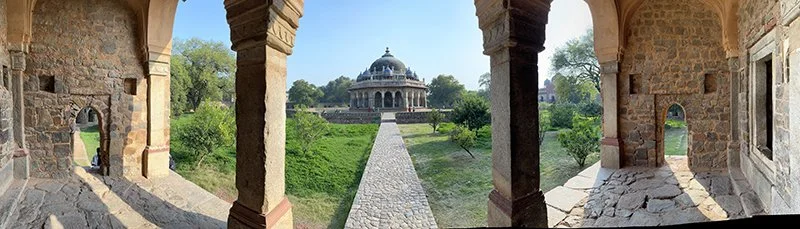
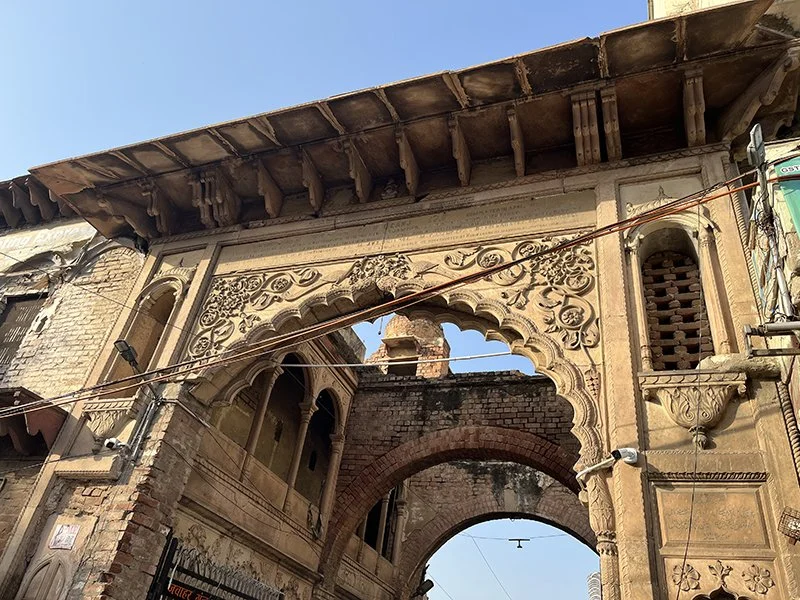


Vishram Ghat, located about 5km from Mathura, which is the center to 25 ghats. According to legend, Lord Krishna rested at this place after killing the evil demon. It is popularly known as the heart of Brij Bhoomi, the land and birthplace of Lord Krishna.
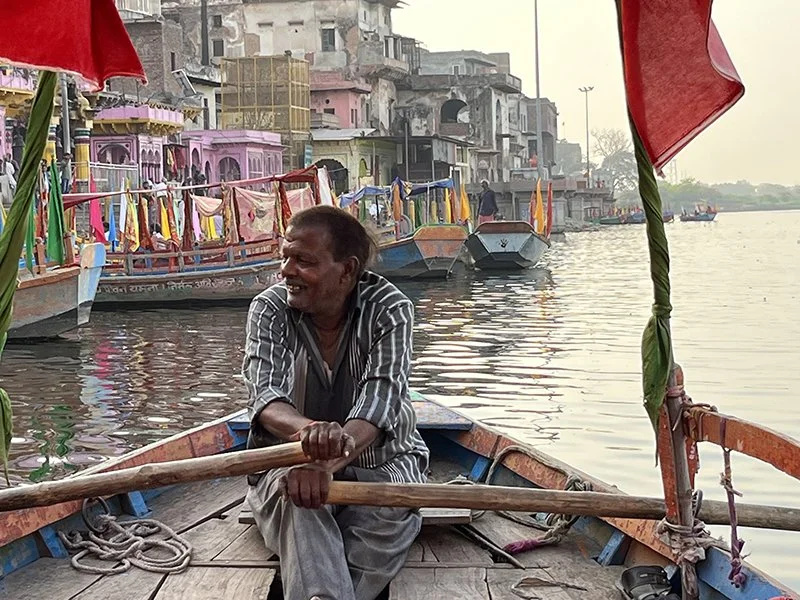
A short boat ride on the Yamuna river in Mathura. According to the legends, Yamuna was the daughter of Surya, the Sun God, and sister to Yama, the God of Death and thus the popular belief have come up that those who take a dip in its holy waters are not besieged by fears of death. The Yamuna river is closely connected to Lord Krishna's childhood days. ike the Ganges, the Yamuna River is highly venerated in Hinduism in the form of a river and as the goddess Yamuna. The Yamuna is considered a river of heaven. The Rig Veda includes the Yamuna River as one of the seven sacred rivers, along with the Ganges.

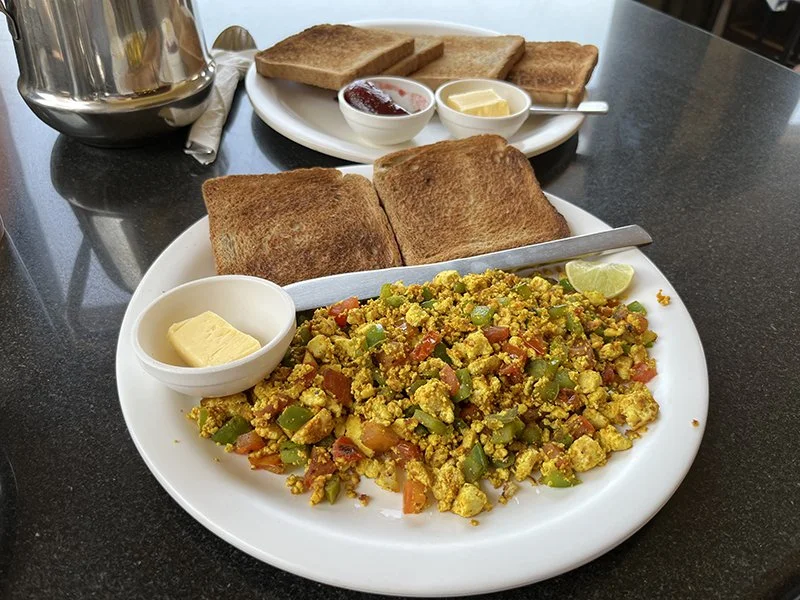
Breakfast of Champions at MVP Hostel in Vrindavan near ISKCON.
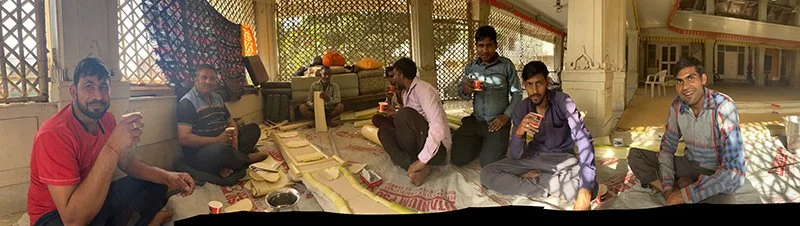
Having tea with workers while visiting Shrivatsaji, the head priest of Radha Raman Temple in Vrindavan. Krishna spent most of his childhood days in this city.V rindavan has about 5,500 temples dedicated to the worship of Krishna and his divine consort Radha.
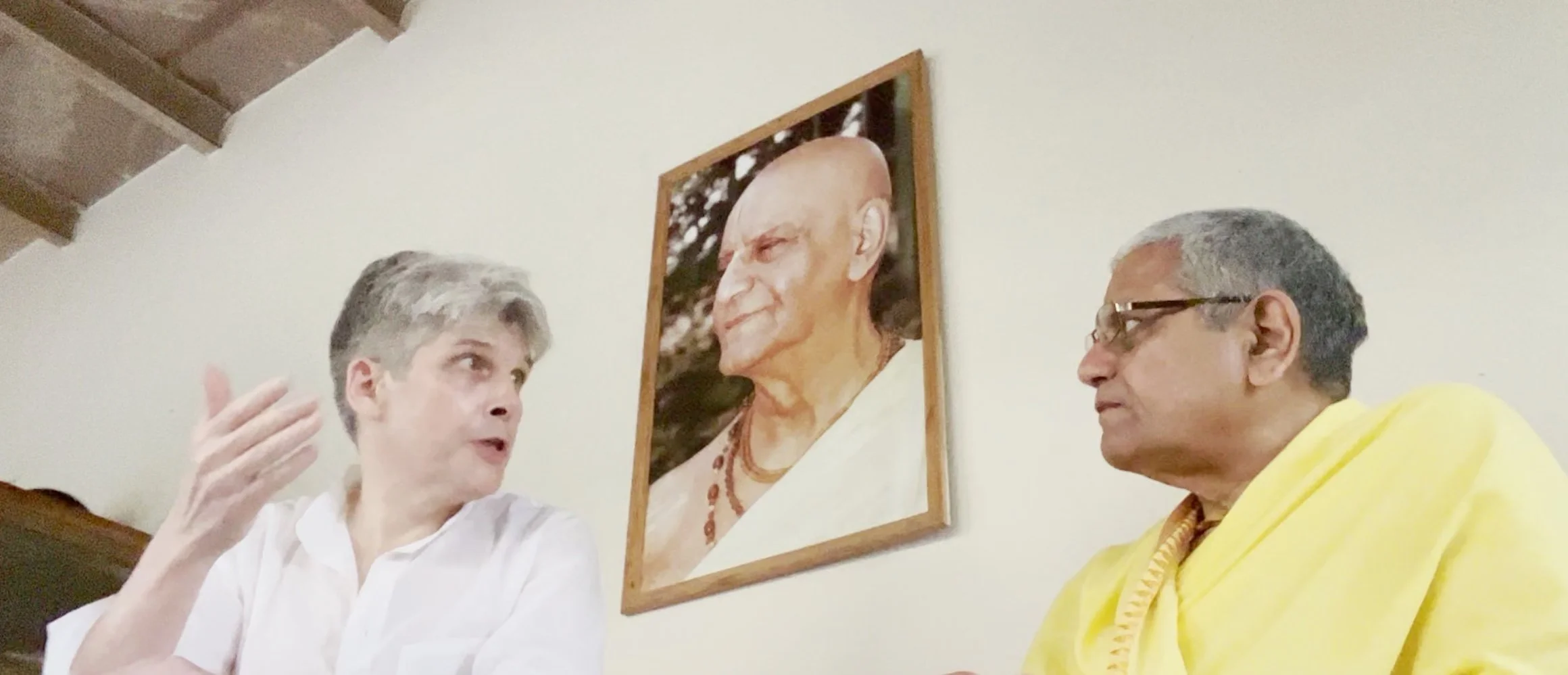
Interviewing Srivatsaji and talking about the elusive meaning of happiness in different cultures.
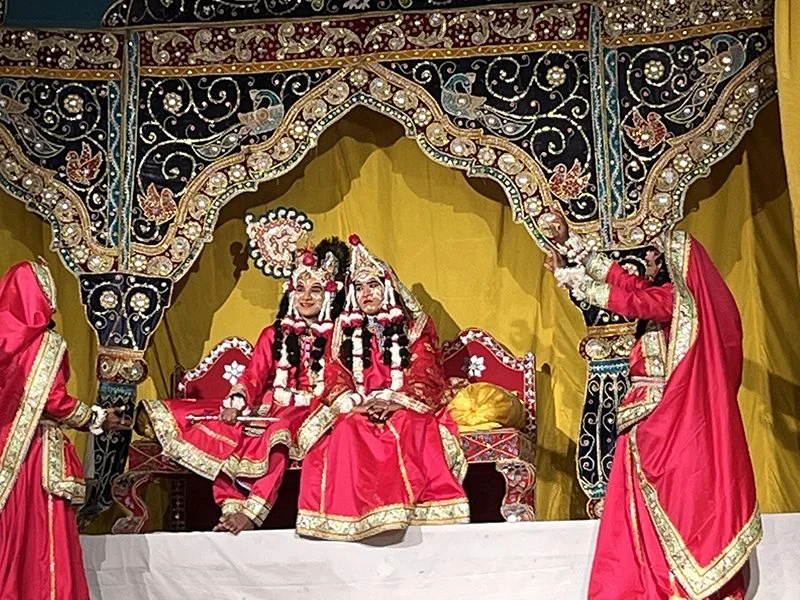
The Rasalila takes place one night when the Gopis of Vrindavana, upon hearing the sound of Krishna's flute, sneak away from their households and families to the forest to dance with Krishna throughout the night, which Krishna supernaturally stretches to the length of one kalpa, a Hindu unit of time lasting approximately 4.32 billion years. In the Krishna Bhakti traditions, the rasa-lila is considered to be one most beautiful depiction of soulful love. In these traditions, romantic love between human beings in the material world is seen as a reflection of the soul's original, ecstatic spiritual love of Krishna, in his spiritual world, Goloka.
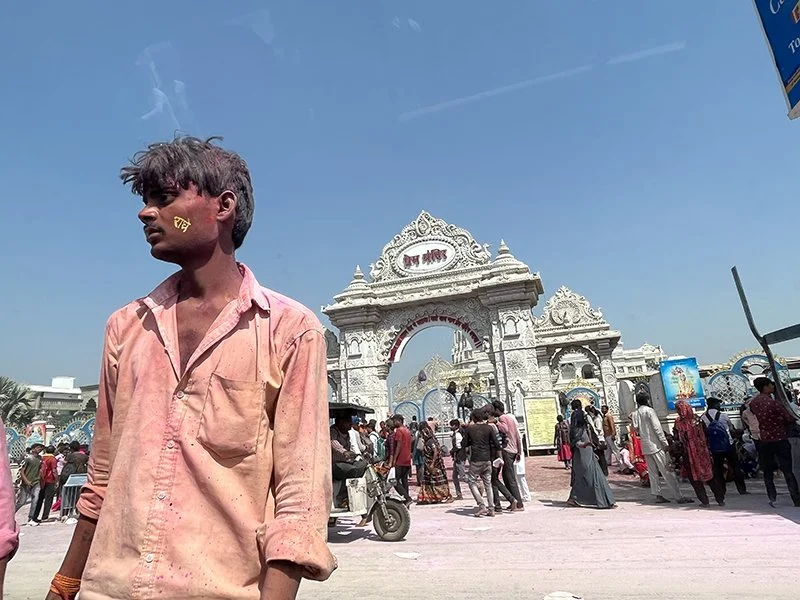
Vrindavan, Uttar Pradesh. Holi began…
The essence of the festival holds that the throwing of colors during Holi symbolizes the burning away of sins and the clearing of negative thoughts such as anger, hatred, jealousy, and suspicion. One origin story traces Holi to Hindu mythology and the legend of Hiranyakashyap, the demon king who demanded to be worshipped as a god. His son Prahlada refused and instead devoted himself to Vishnu, “The Preserver.” Vishnu, impressed by Prahlada’s courage, saved him from a fire set by his father and ultimately destroyed Hiranyakashyap.
Another legend associated with Holi is the tale of Lord Shiva and Kamadeva, the god of passion, who awakened Shiva from deep meditation so he could save the world.
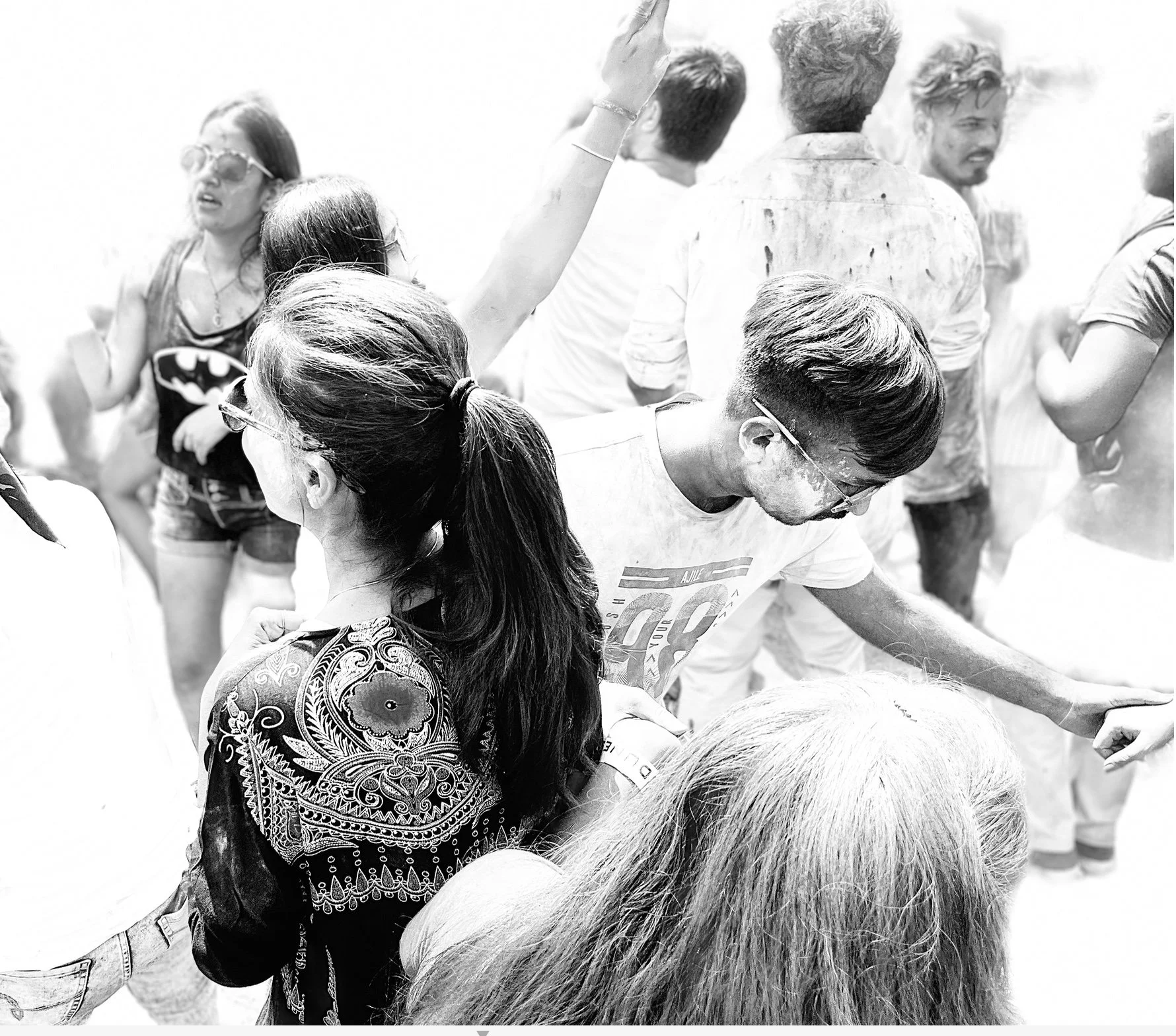
Jaipur…Holi begins.
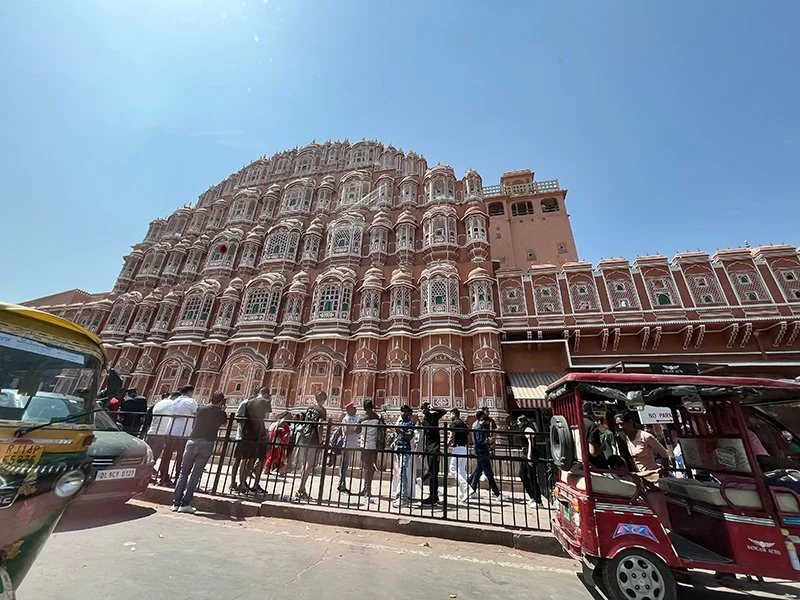
Built from red and pink sandstone, the Hawa Mahal (1799) was commissioned by Maharaja Sawai Jai Singh, the founder of Jaipur. Its five-story honeycomb façade featured 953 small windows, or jharokhas, decorated with intricate latticework. This design allowed the royal women of the zenana to observe daily life and street festivals below without being seen.

Entering the City Palace in Jaipur.
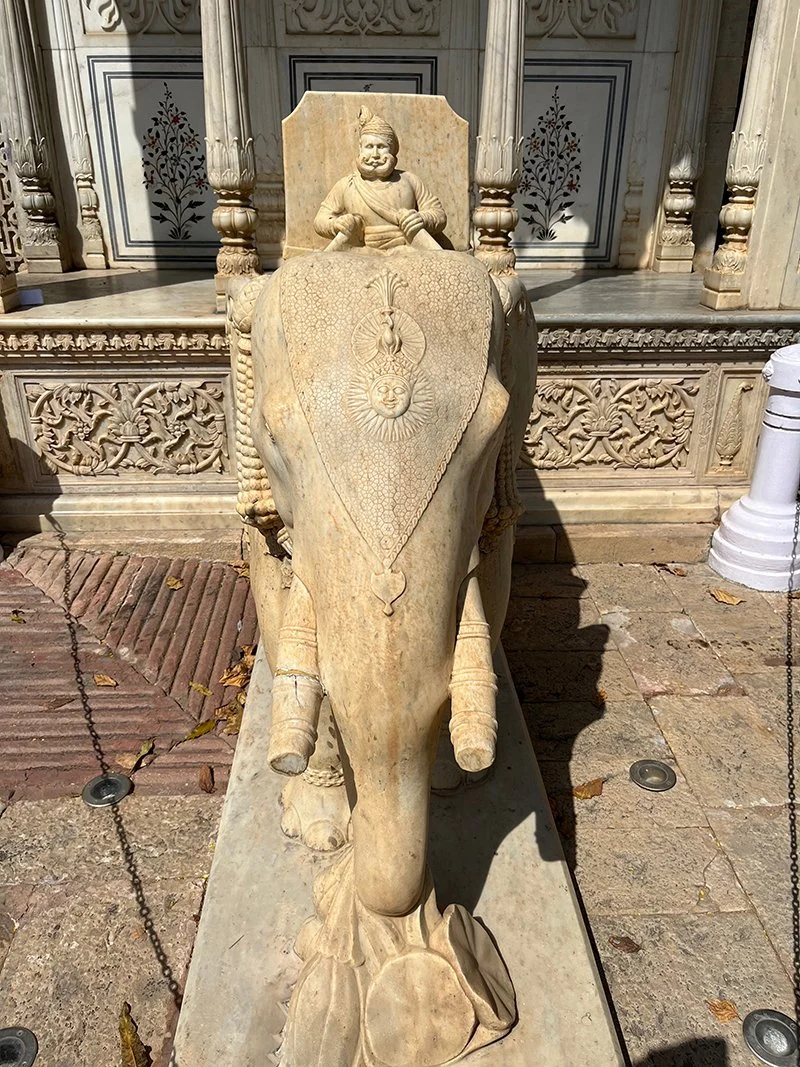
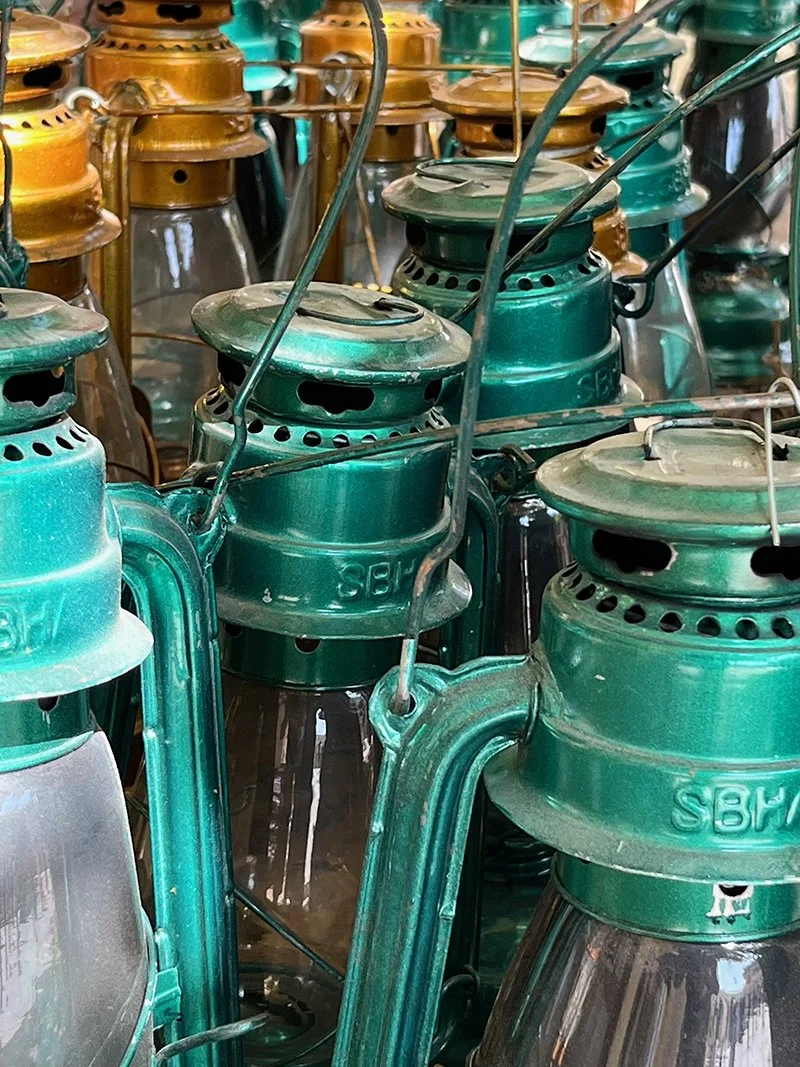
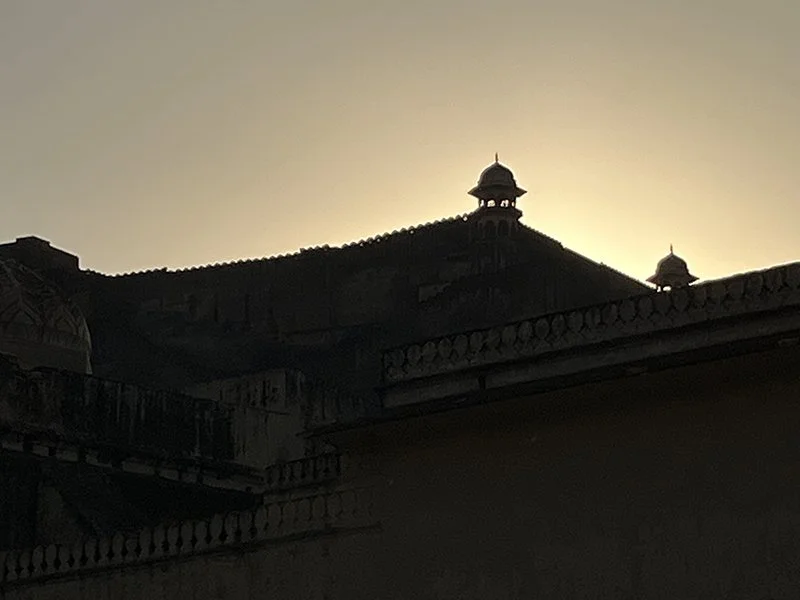
The City Palace area at sunset.
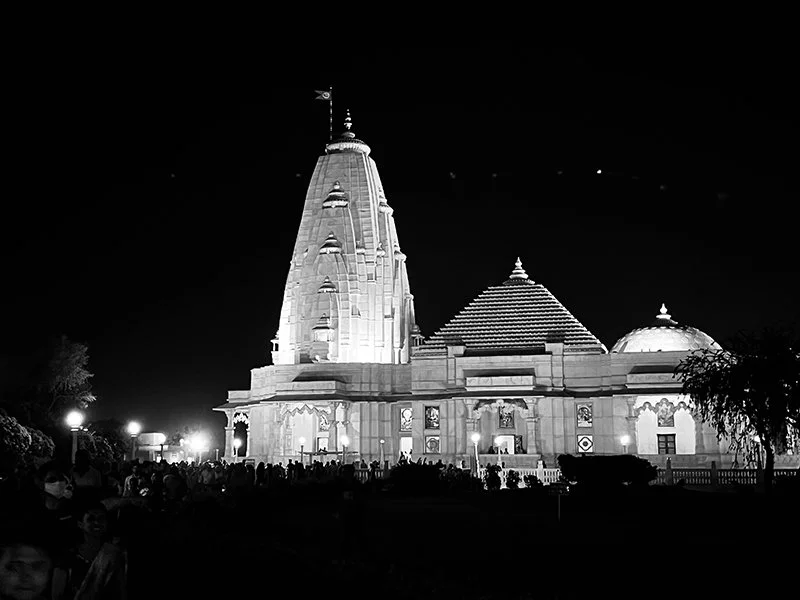
An a visit to a Hindu Temple all in white marble.
Then to the Albert Hall Museum…
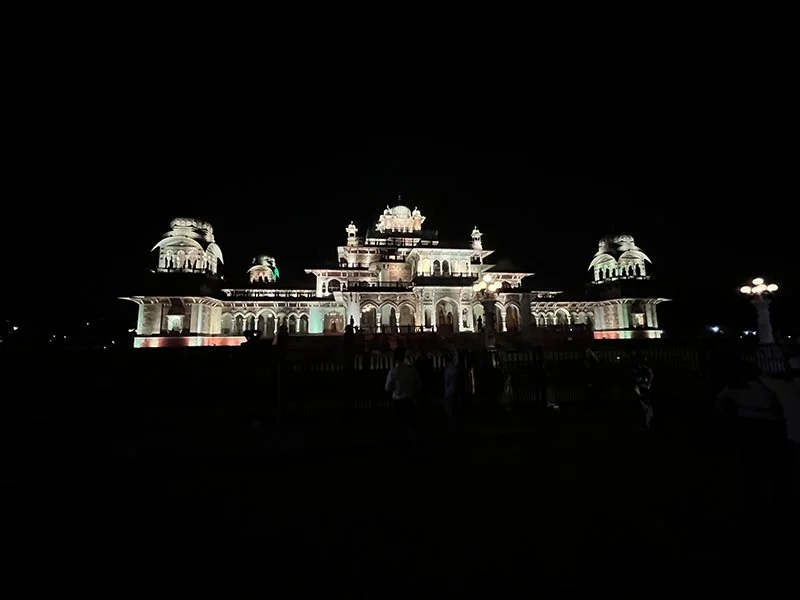
The magnificence Albert Hall Museum in Jaipur. Named after HRH King Edward VII (Albert Edward) (1841-1910) who ruled from 1901-1910. A classical British example of museums that portray culture, science and industry as well as merging the architectural styles prevalent in Great Britain with those of India. Albert Hall was designed by Samuel Swinton Jacob, assisted by Mir Tujumool Hoosein, and was opened as public museum in 1887.
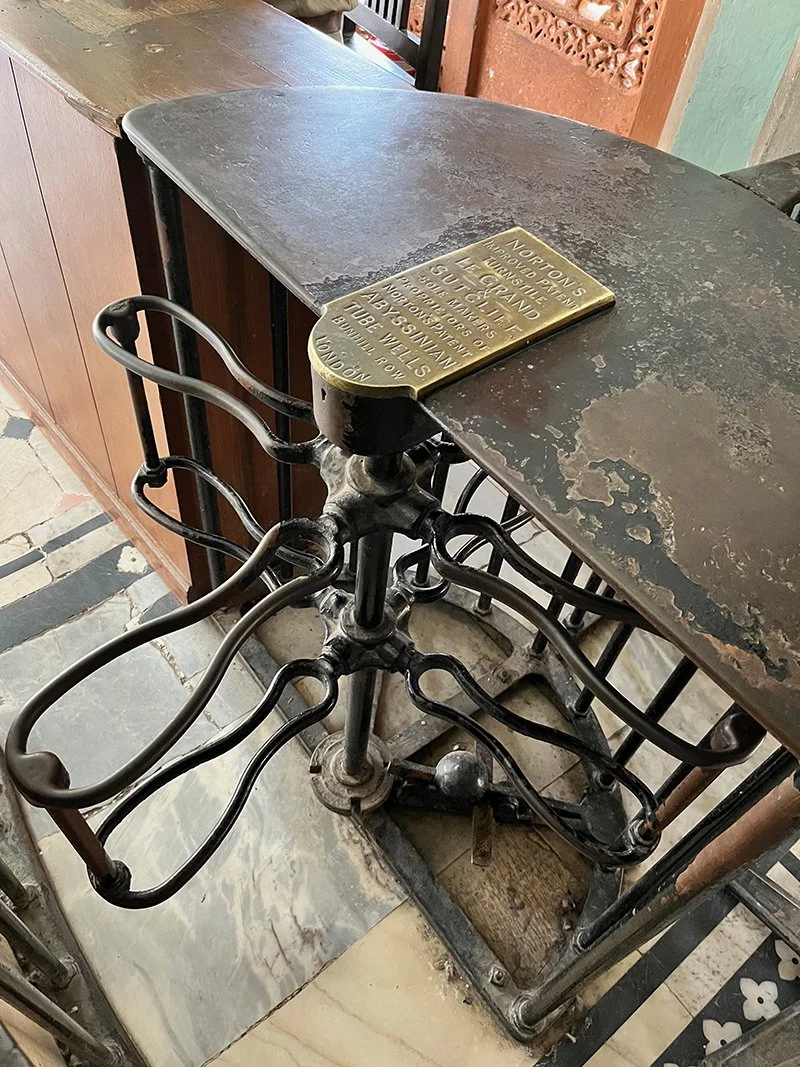
An extraordinary example of a nineteenth century Norton turnstile still in operation. No rushing the barriers here!
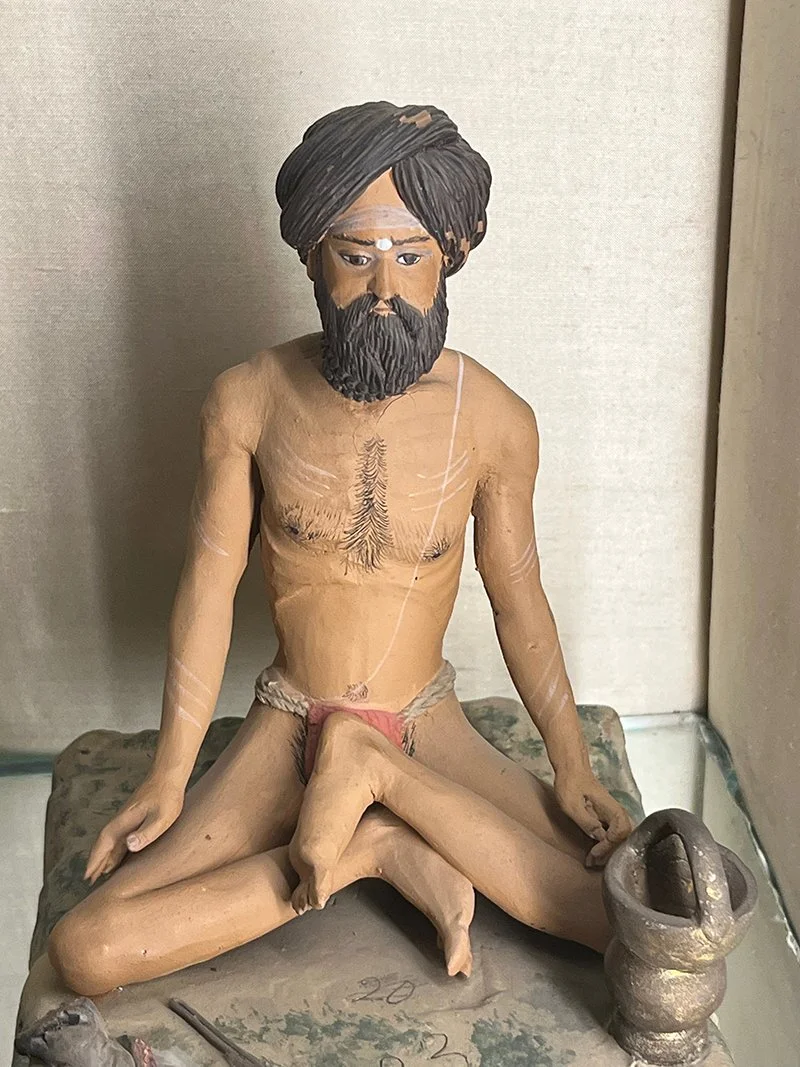
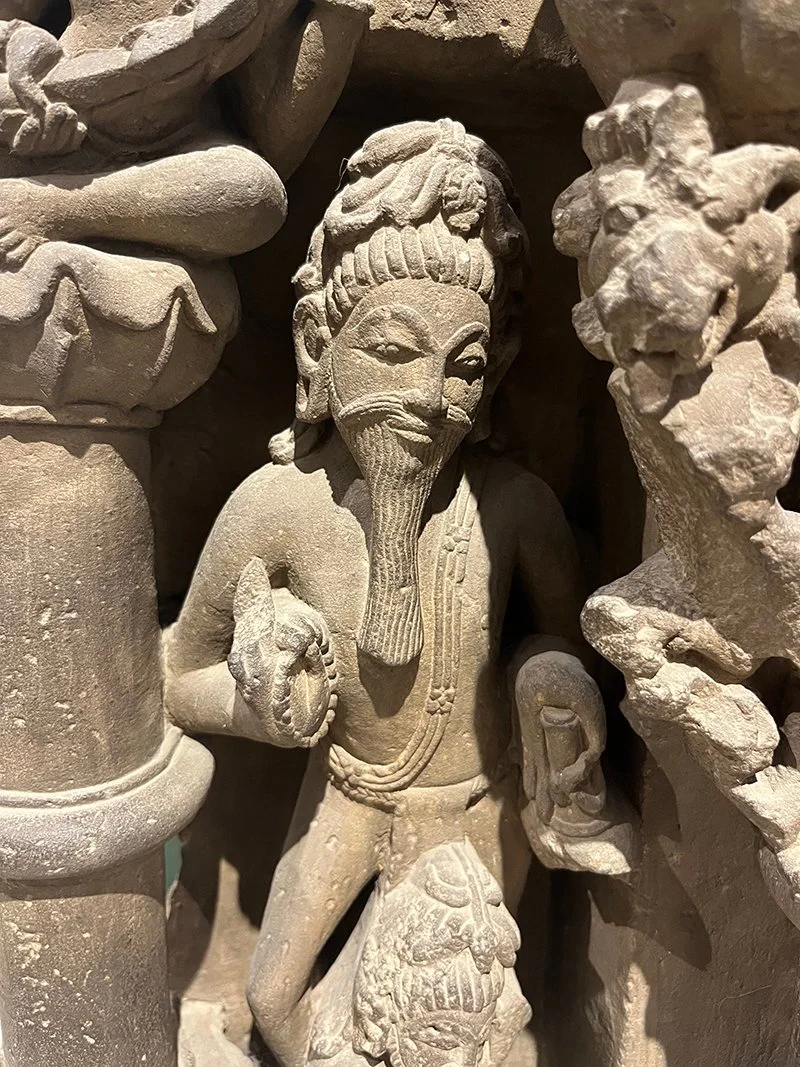
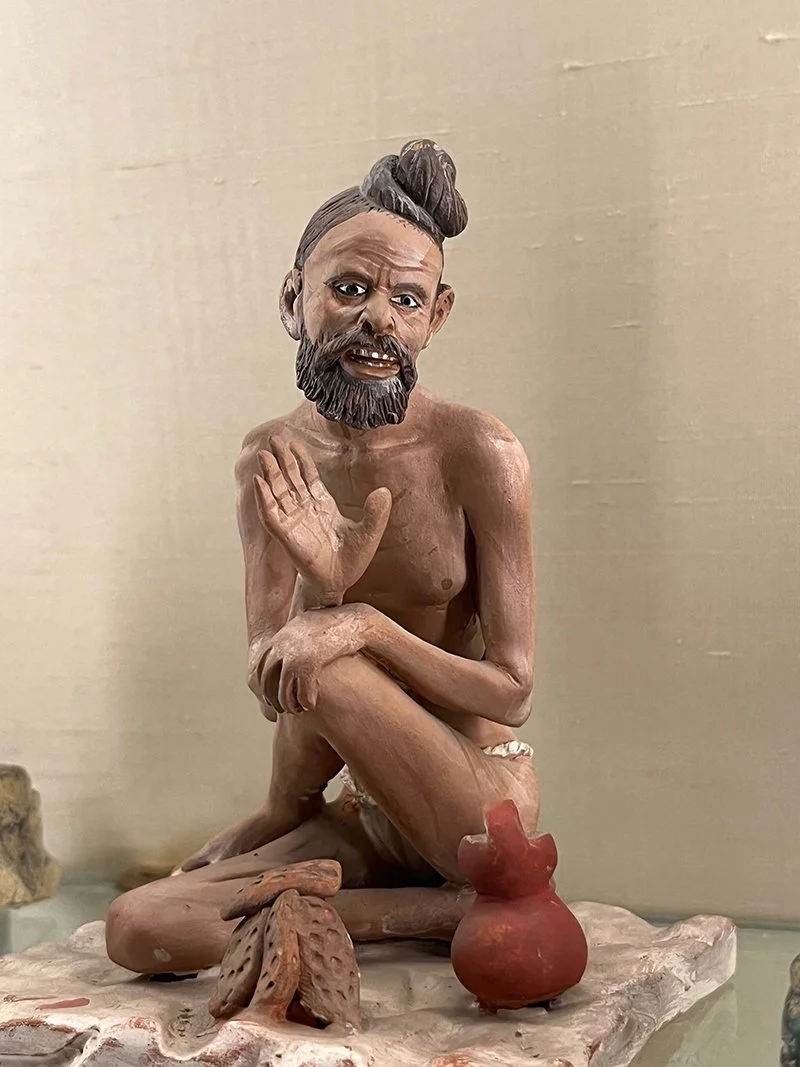
As a practitioner of Ashtanga Yoga, I appreciated these clay figurines of Yogi’s from the 19th century - perhaps to serve as examples of different forms of Yogic practice in India.

On my trip to the great Amer Fort in Jaipur, I was advised to meet Mr. Bhat, the head of a brass band renowned in the region. Instead, I met his brother, who introduced me to his family, his parents, and many members of their community. They had gathered in an area known as the Artist Colony for a local wedding—a major celebration for everyone after the pandemic had made public events so difficult.
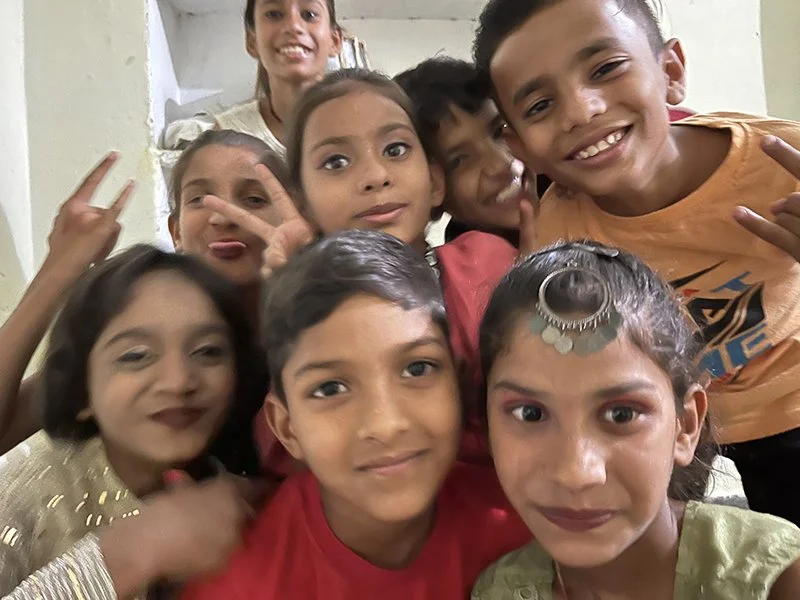
About thirty children were attending the wedding, and they were excited to see a foreigner after two years—I may have been the first American they had ever met. When I asked about their favorite films, a chorus of “Spiderman, Batman, Captain America!” erupted just as the bride and her entourage arrived. We quickly brought the group back to order so the ceremony could proceed.
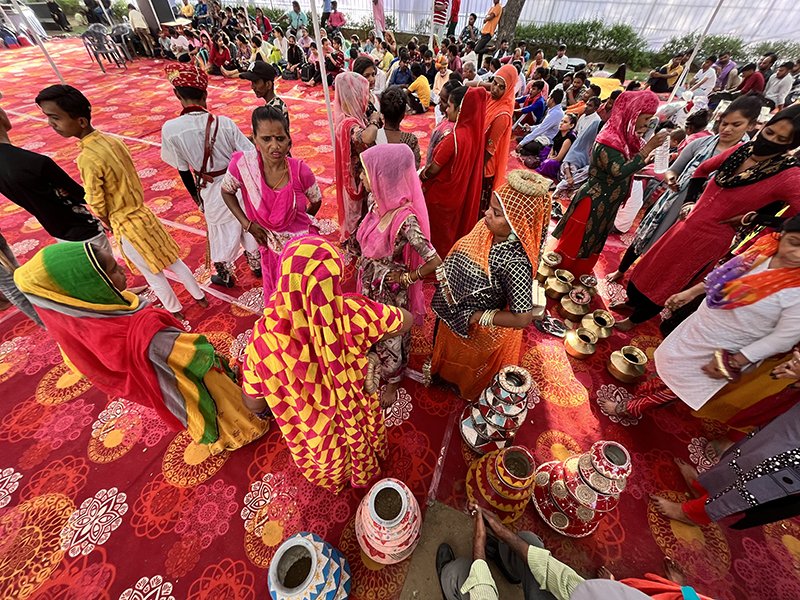
Preparations for Rajasthan Day - the national Day in Rajasthan on 30 March 2022. Under the protection of giant tents in the blazing sun - performers from all over Rajasthan assemble to practice for the televised national celebrations that take place on a giant stage erected in front of the Albert Hall Museum.
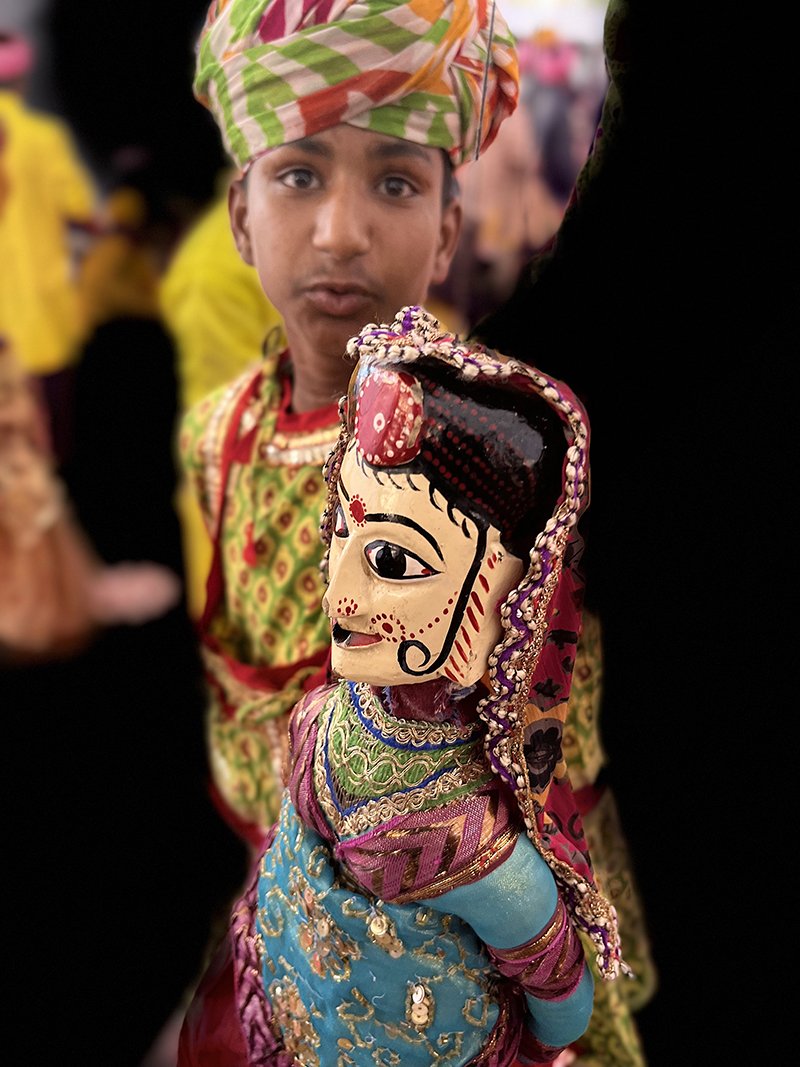
Puppet master apprentice.

Dancers

Preparing the entry for the horse dancers…

Puppeteers practice alongside

And I am given a try at puppeteering.
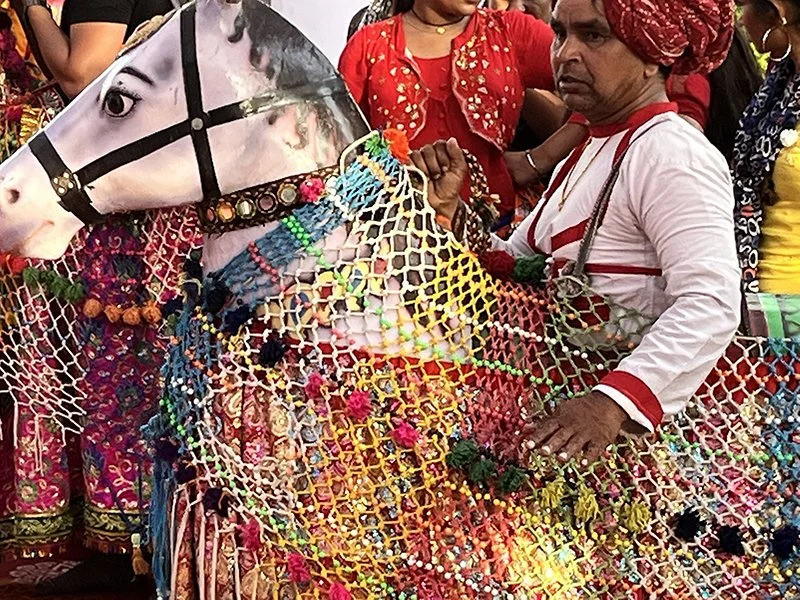
The horse dancers arrive….
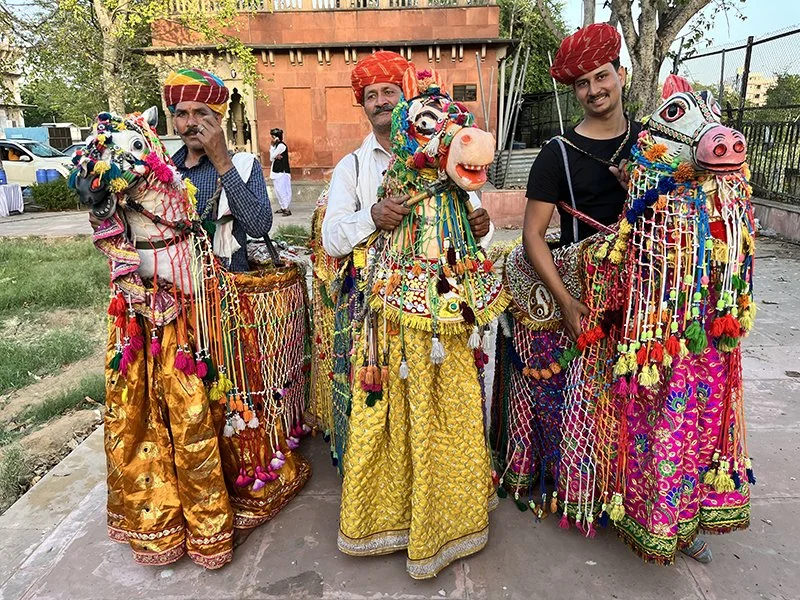
Kachchhi Ghodi dance originated in the Shekhawati region of Rajasthan. The dancers wore novelty horse costumes and engaged in mock battles while a singer narrated folk tales about local bandits. In Rajasthan, the dance was traditionally performed by men dressed in a kurta and turban, along with an imitation horse costume. The shell of the costume was made of papier-mâché molded into the shape of a horse and supported by a bamboo frame, then covered with brightly colored fabric decorated with mirror-work embroidery known as shisha. The dancers also wore musical ankle bells, or ghungroo, similar to those used in Indian classical dance.

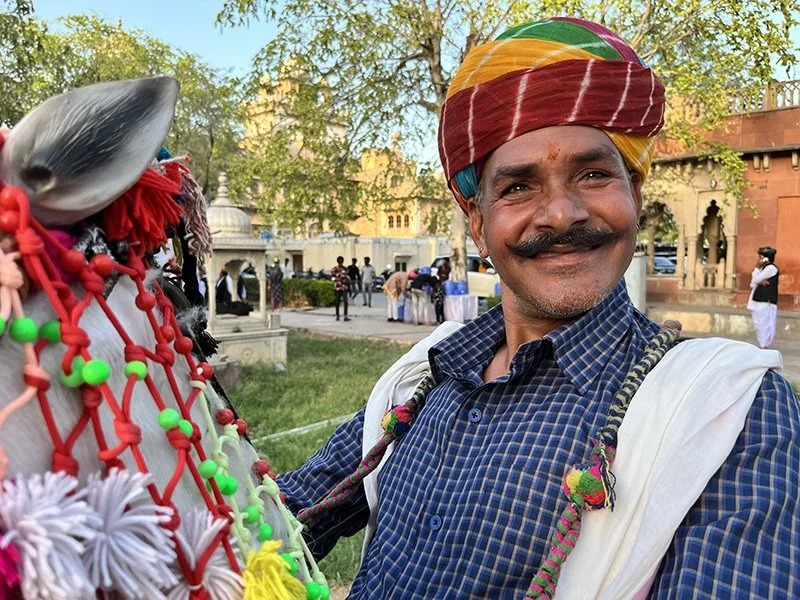
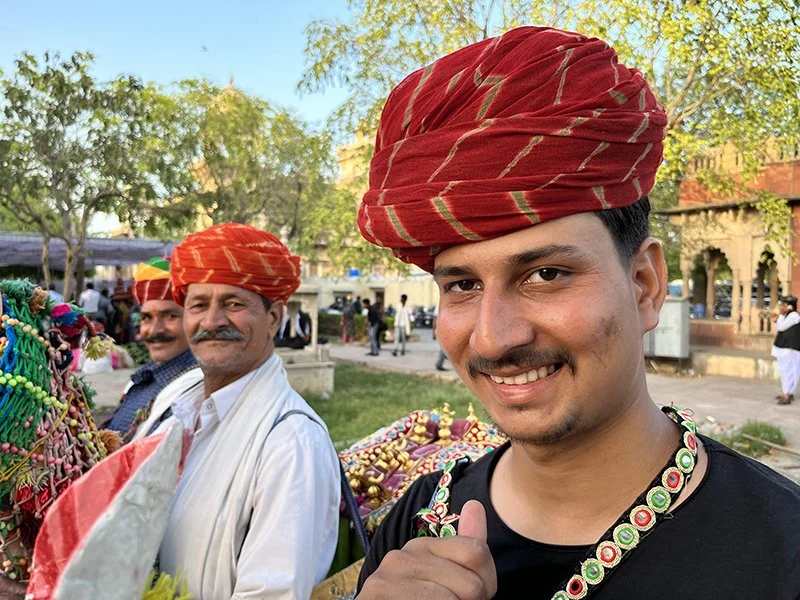

Bagpipers
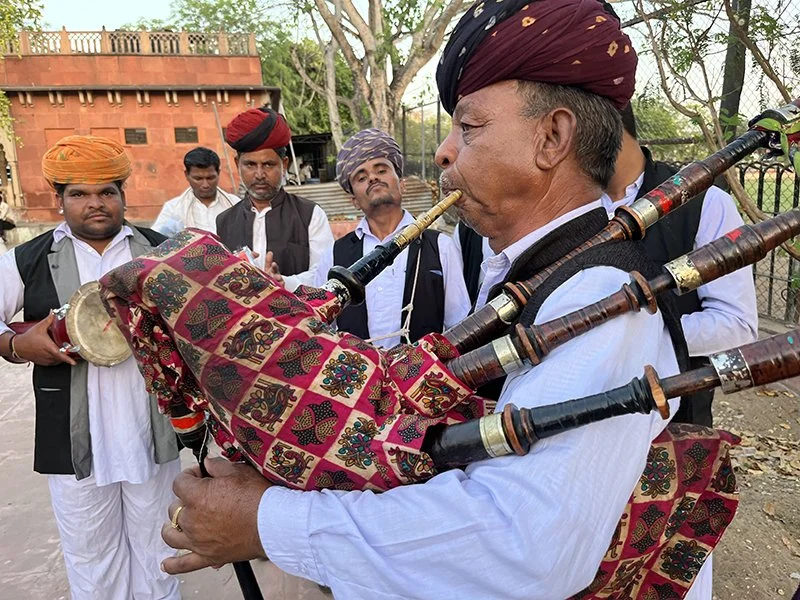
[Video] Rajasthani performers in Jaipur during the practice sessions before Rajasthan Day in 2022.
https://vimeo.com/769873737
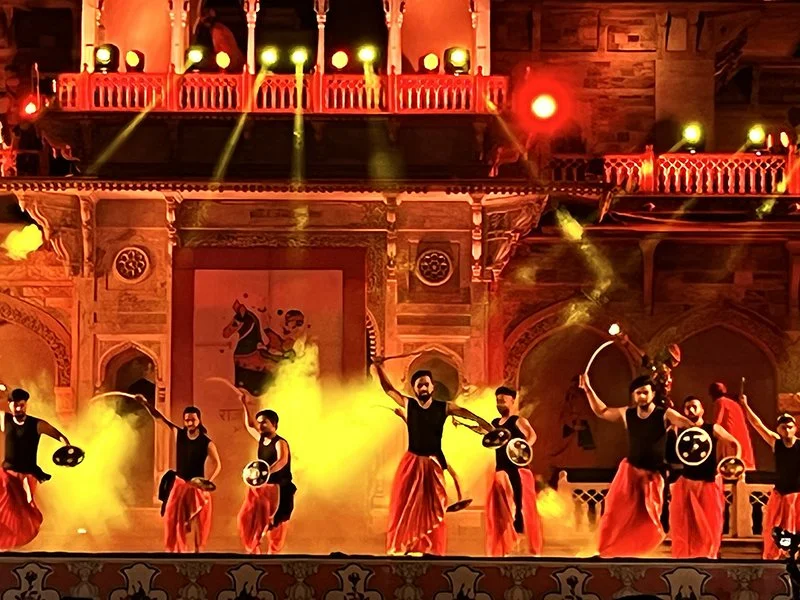
Rajasthan Day, Albert Hall Museum on March 30th 2022. When performance becomes Heritage and Heritage becomes spectacle.
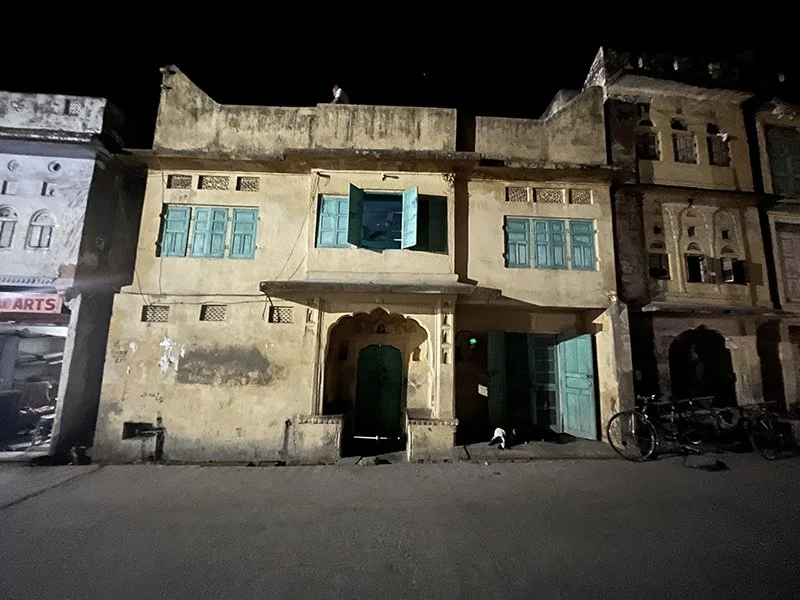
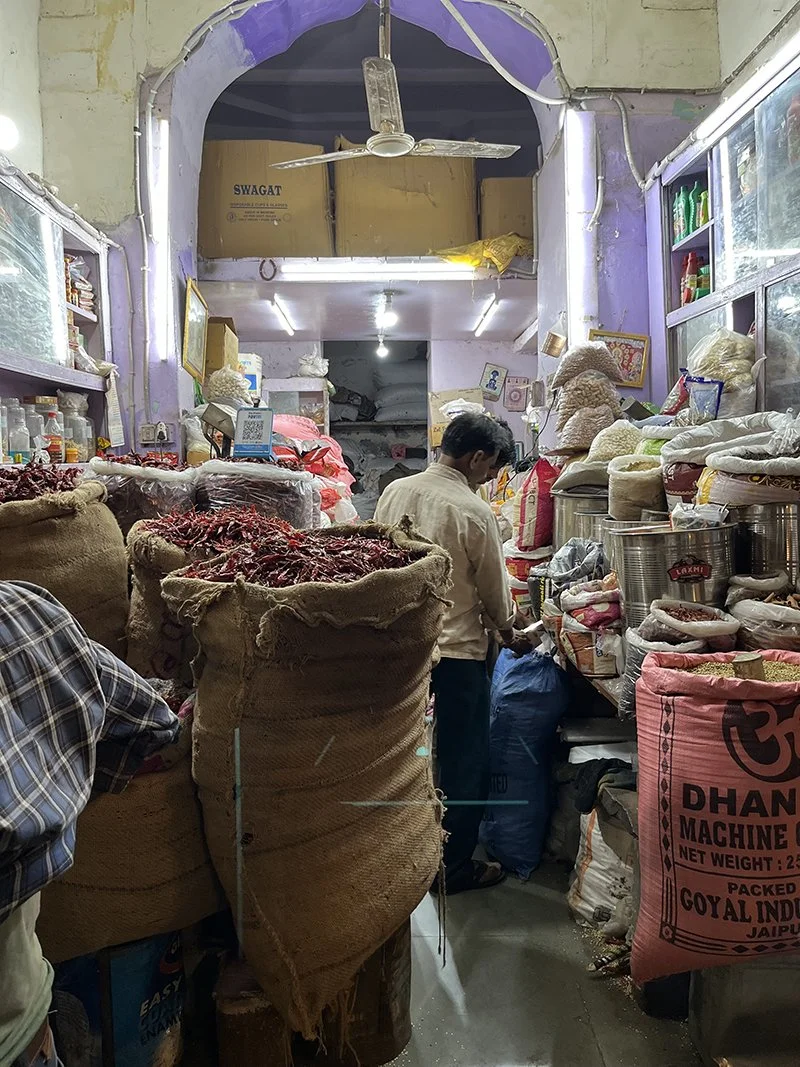
A tranquil walk on the quiet streets parallel to the markets near the City Palace in Jaipur.

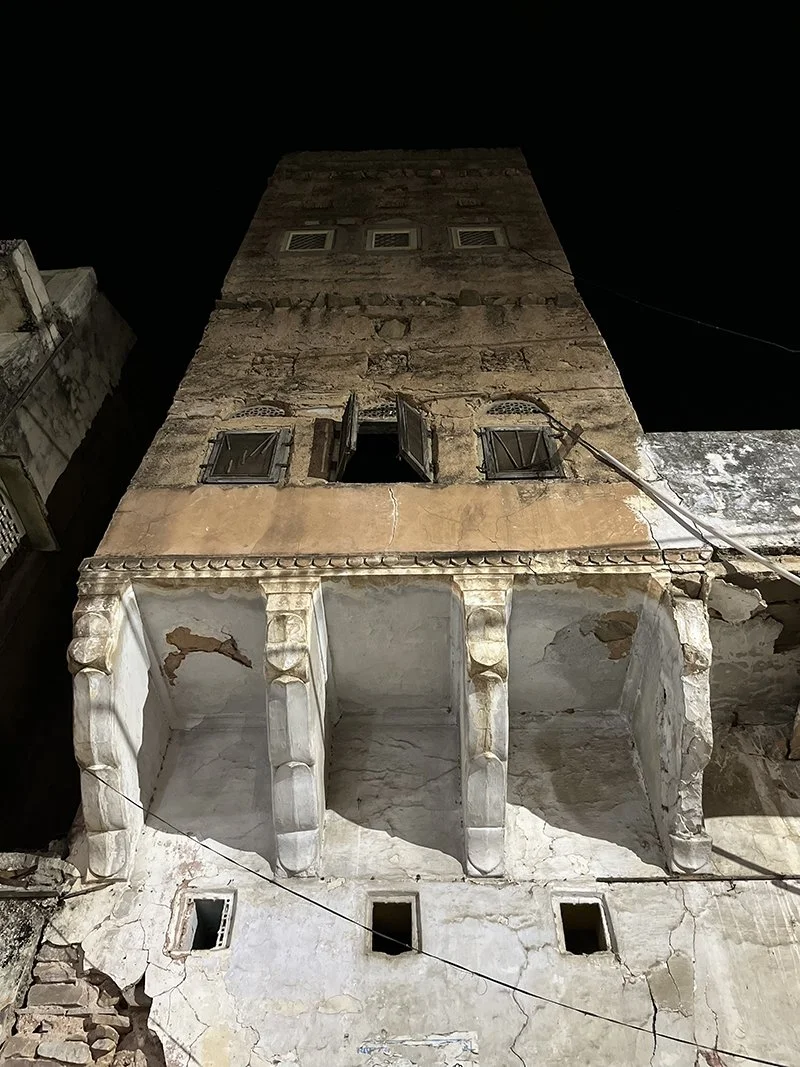
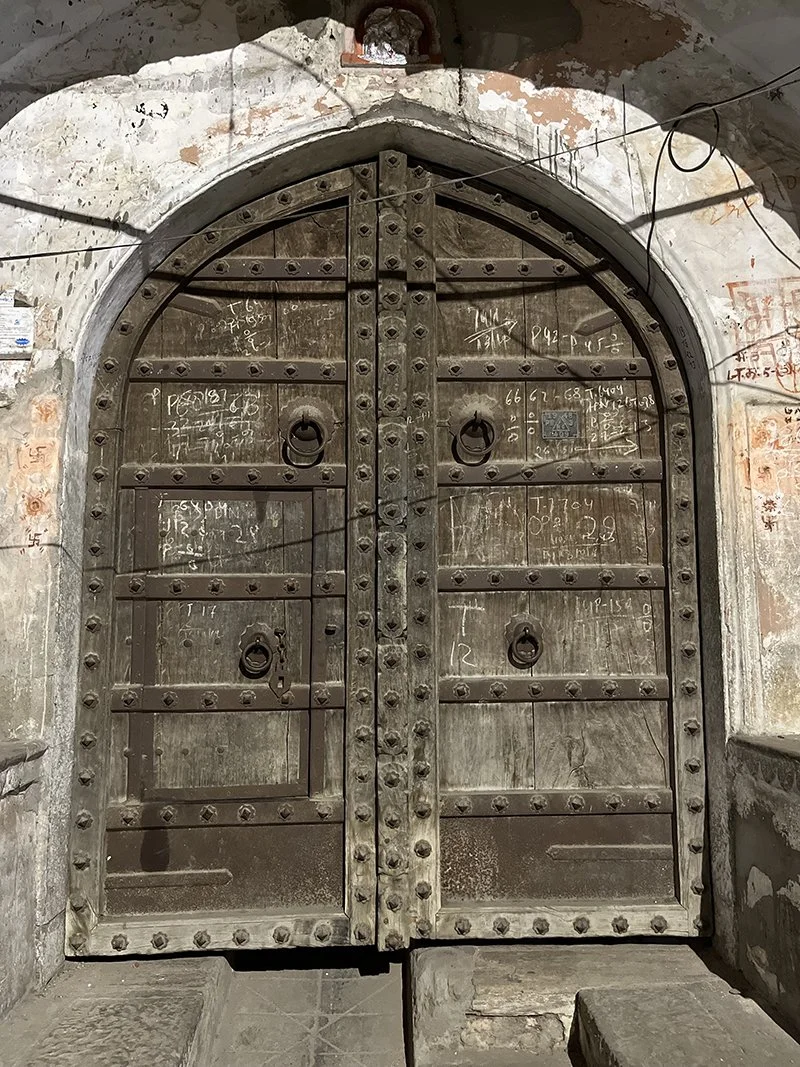
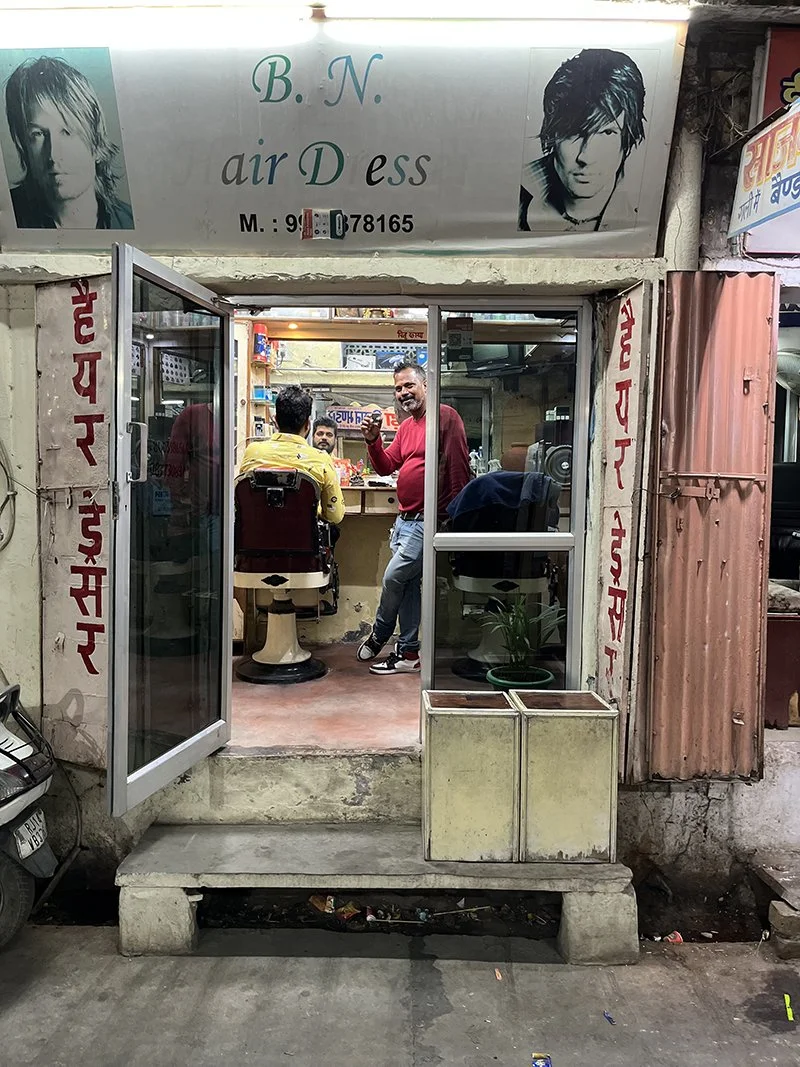

Taking the train 2AC from Jaipur to Udaipur.
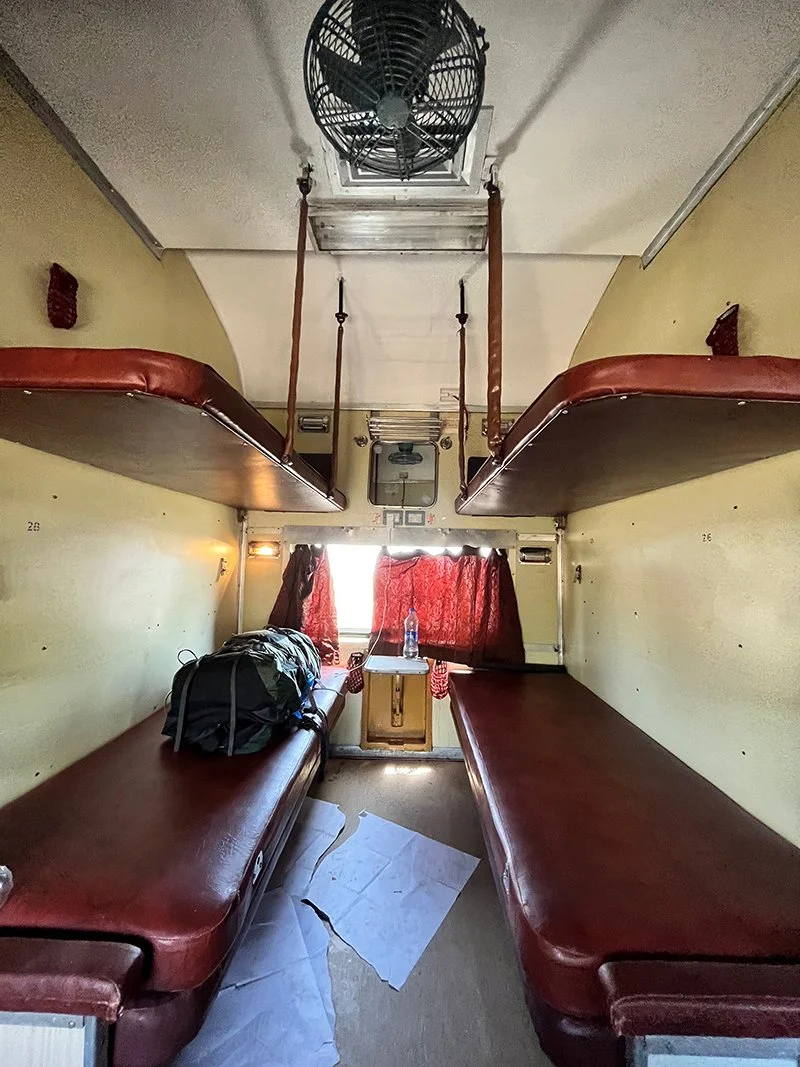
Plenty of space for the next nine hours.
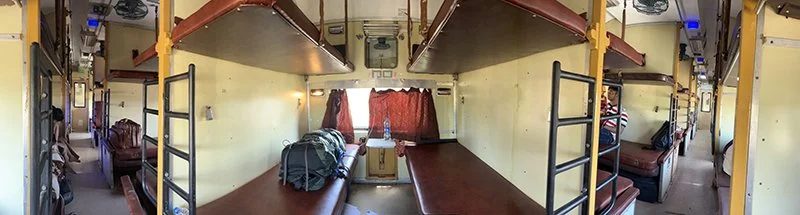
Two floors to enjoy.
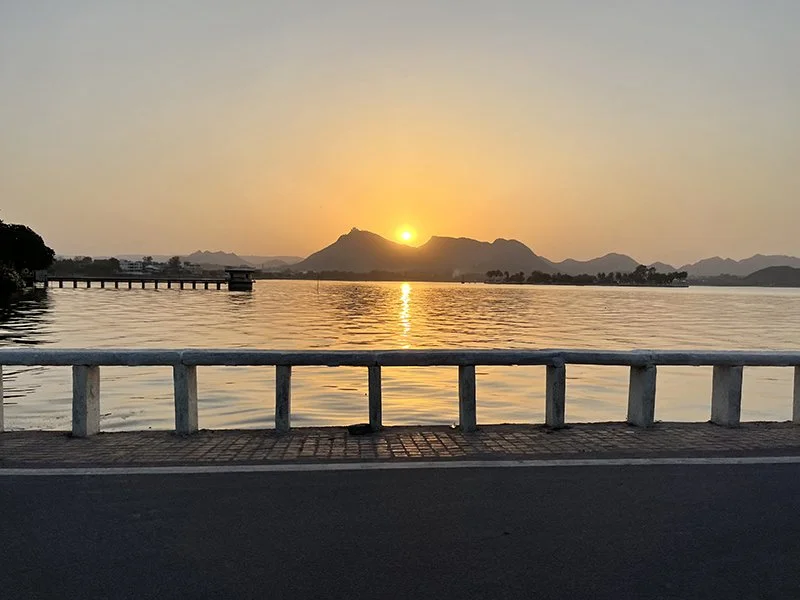
And finally - at the end of a long journey arriving in Udaipur.
Udaipur

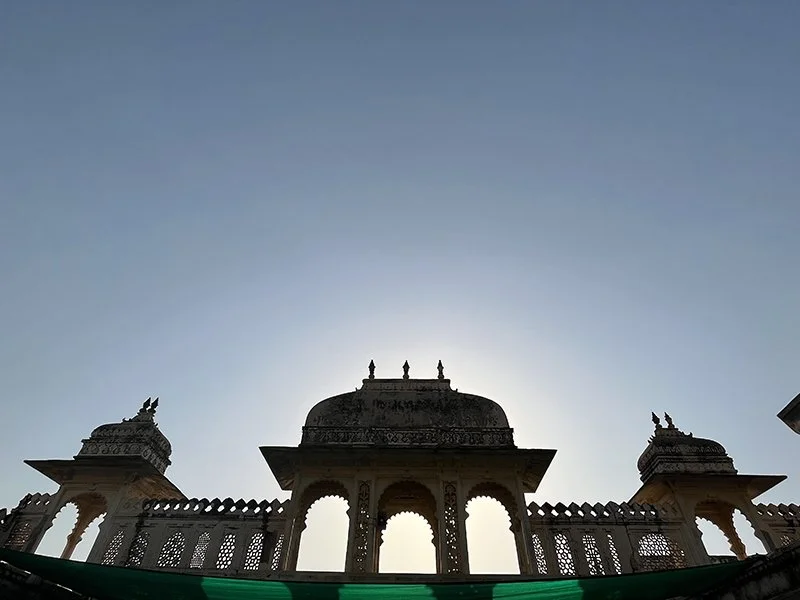
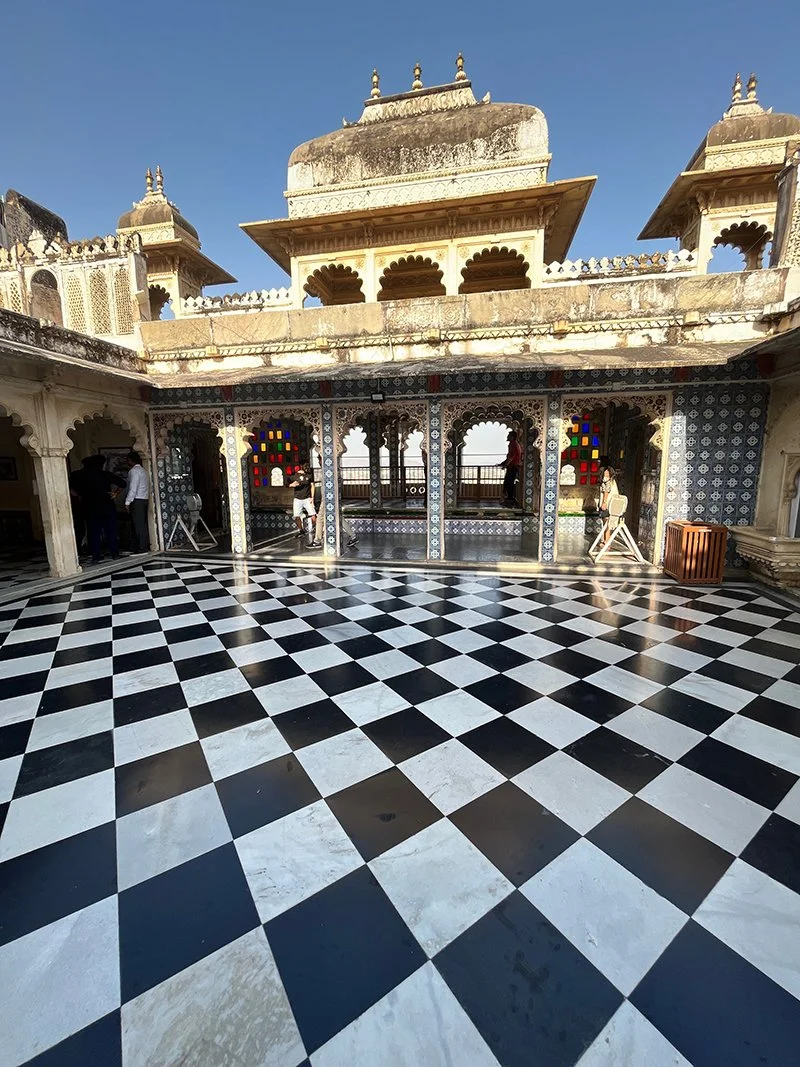
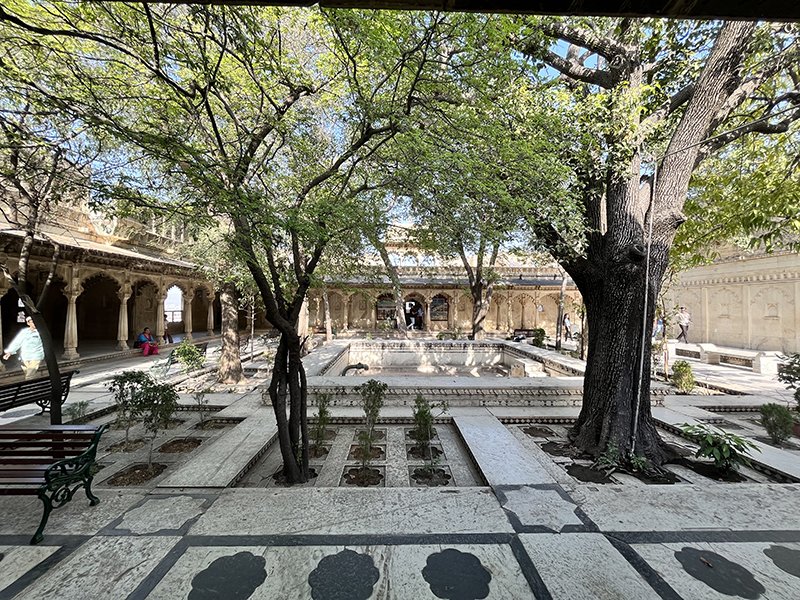
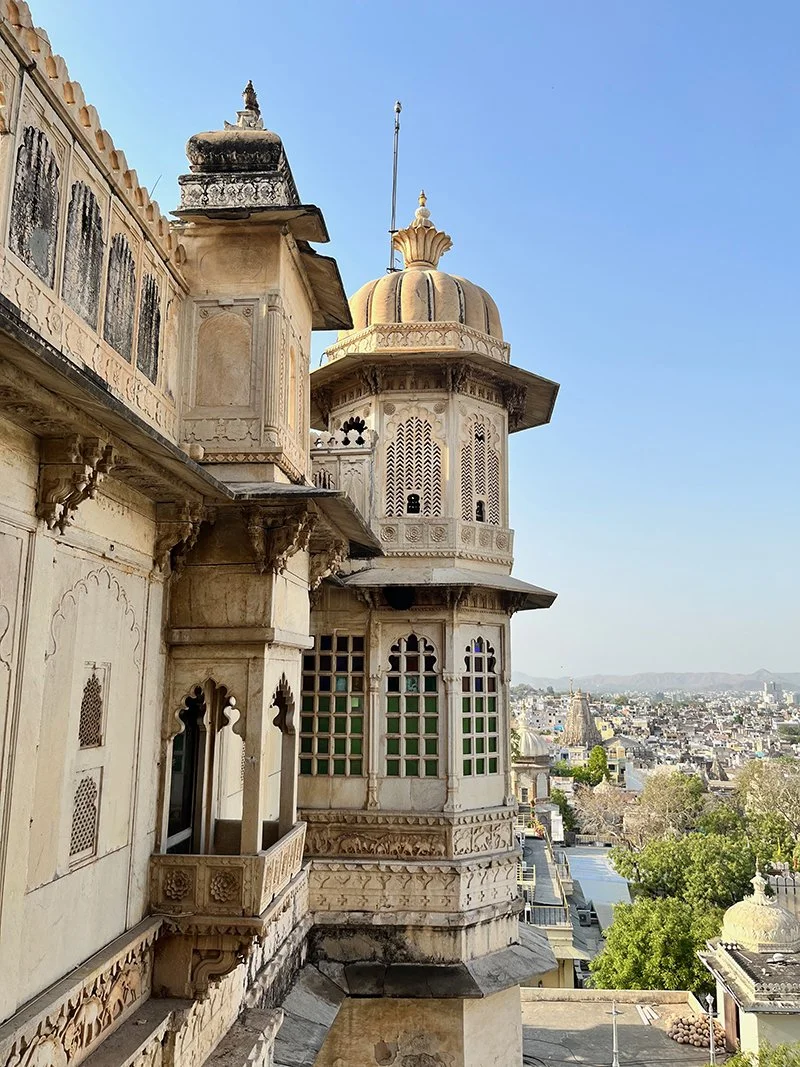
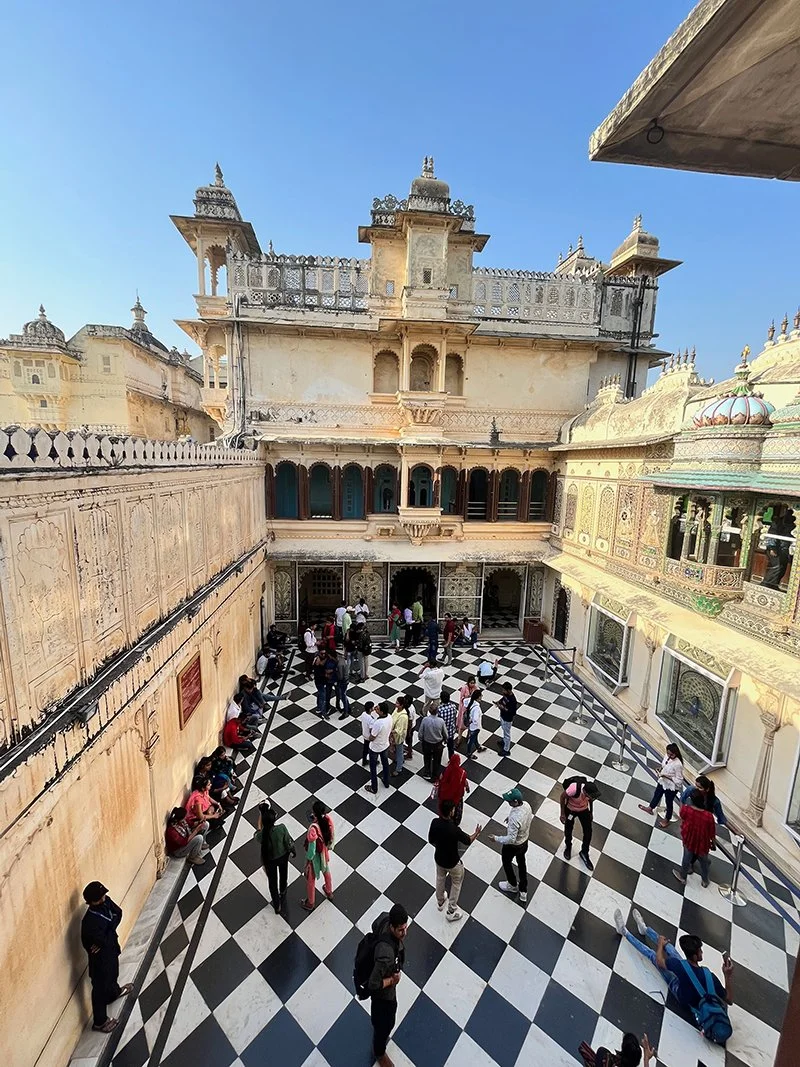
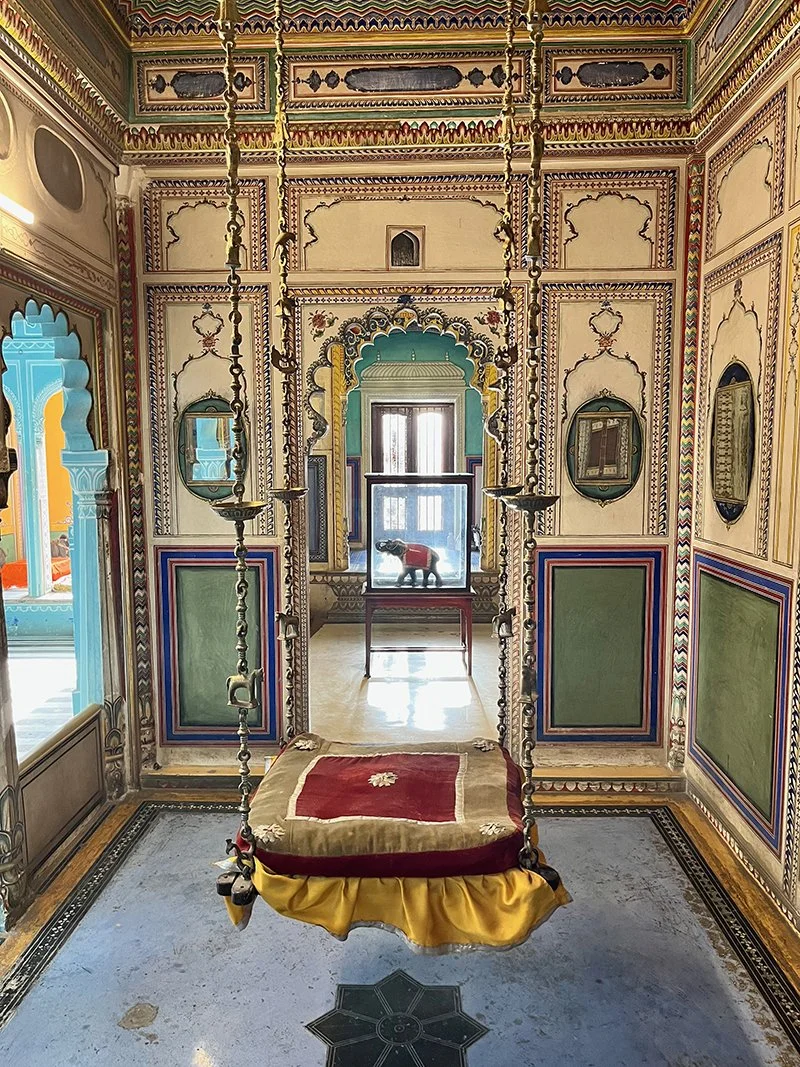

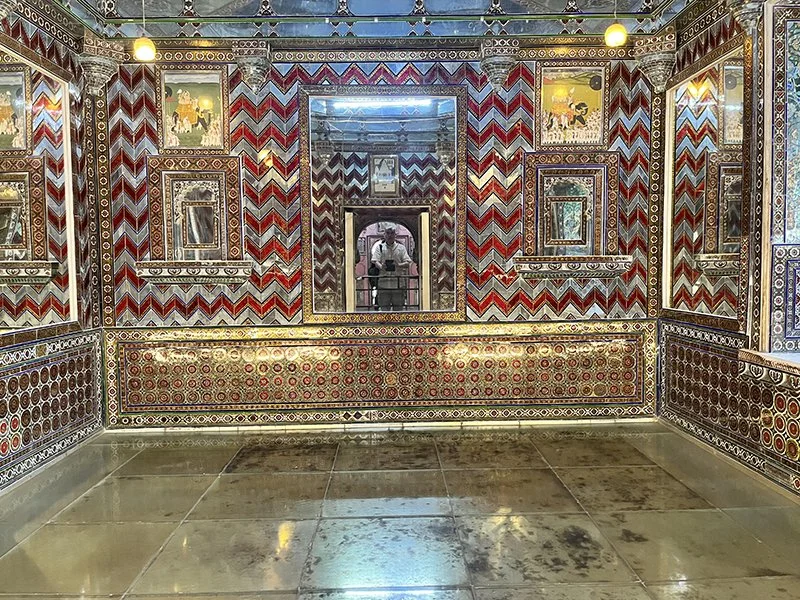

Ritual and Performing Spring. A woman wearing Ghagra Choli performing Gangaur Puja where she presents a temple idol to Gangaur Ghat on Lake Pichola at the feet of the City Palace in Udaipur (4 April 2022), one of the festivals of Rajasthan that celebrates the worship the Goddess Parvati (2022© Les Joynes).
Kerala April 2022

[Image] Observing and Documenting Performance: Thrissur Pooram is one of India’s largest Hindu Festivals in the 10 temples situated around Vadakkunnathan Temple. More than 100,000 in attendance. (2022© Les Joynes). I was welcomed as a member of the press to attend the central performances.

Observing Kootiyattam Performance of Margi Madhu School in Central Kerala 2022 (2022© Les Joynes)
Chennai, Tamil Nadu, June, 2022

At the Madras Club, home away from home.
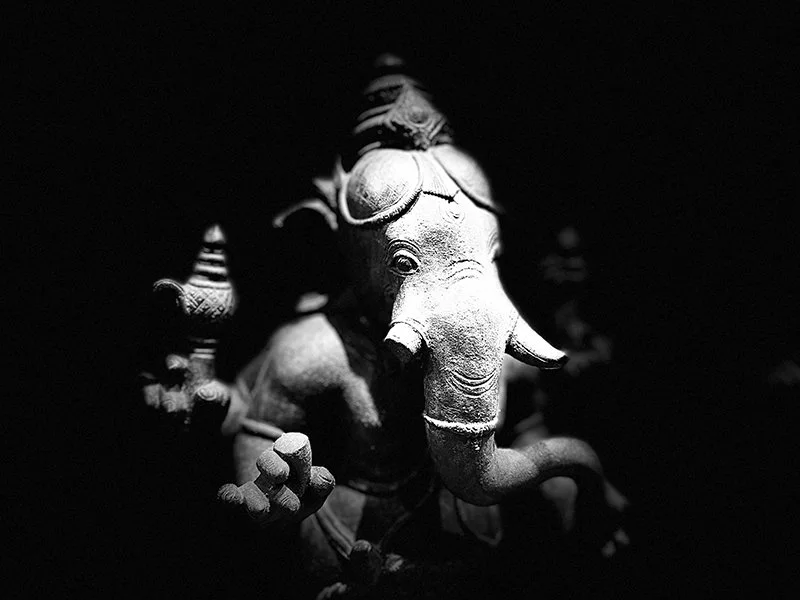
Bronze Ganesh at the Government Museum, Chennai which since 1851, is the second oldest museum in India and has the richest collections of bronze idols, 500 of them dating to 1000 BCE, in Asia
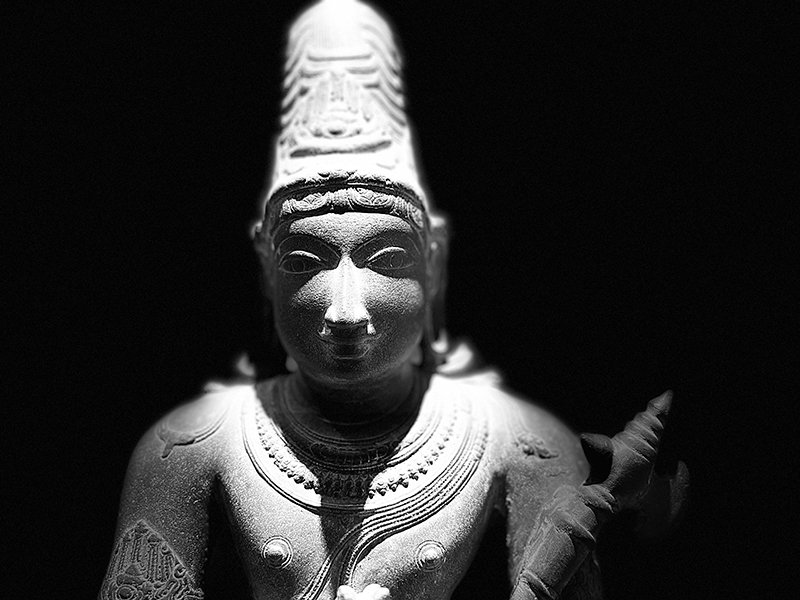
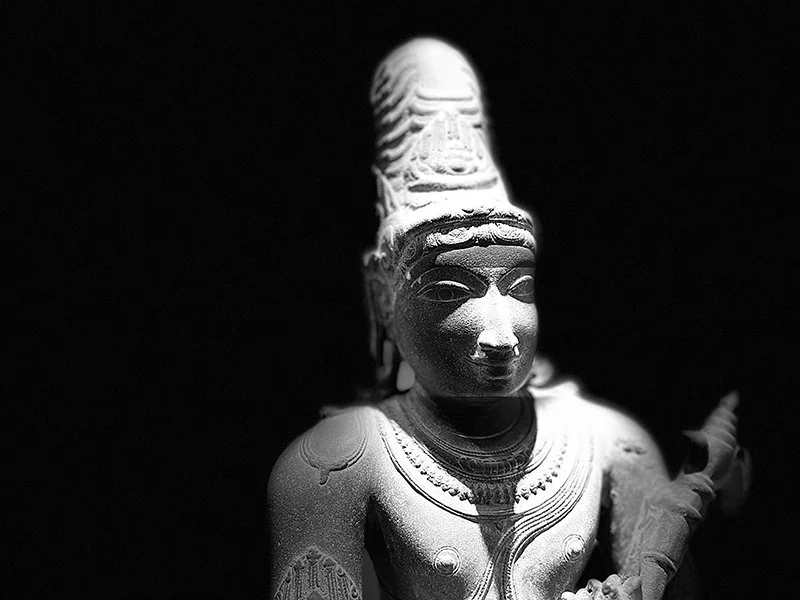


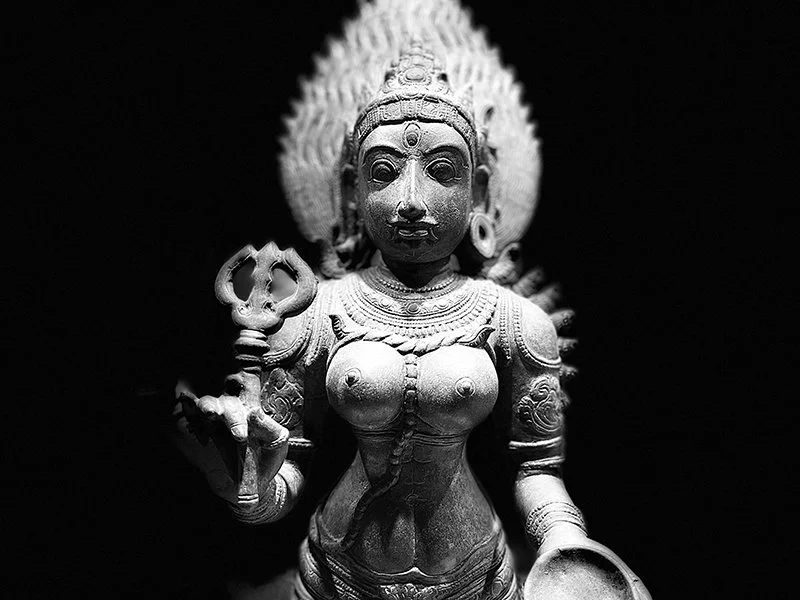
13th century bronze sculpture of Uma.
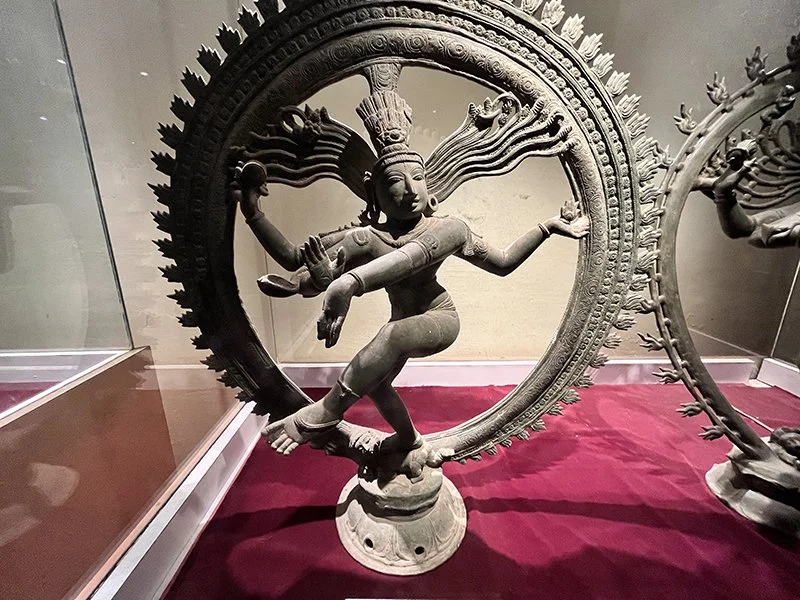
13th century bronze Nataraja from the Queida Milla District, Tamil Nadu.
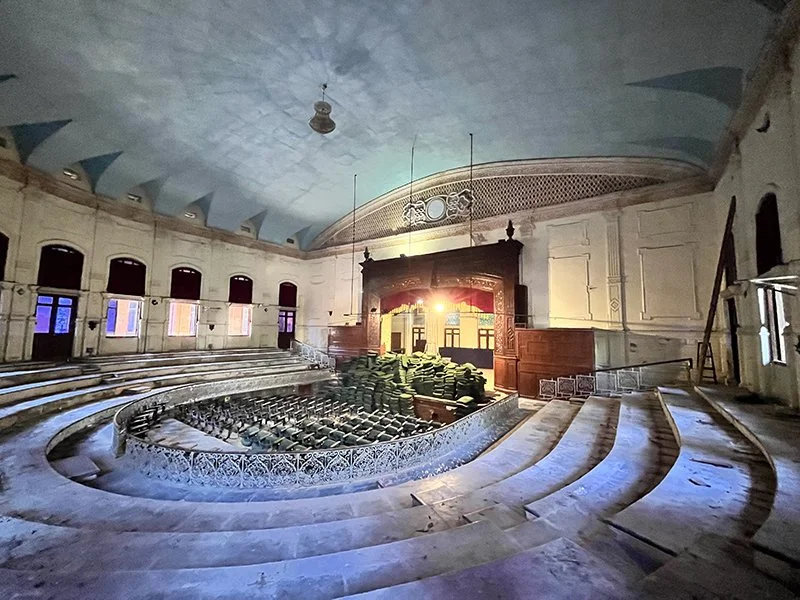
The theater dating from 1851 was under renovation and I had a chance to roam around inside.

The Parthasarathy Temple is a 6th-century Hindu Vaishnavite temple.
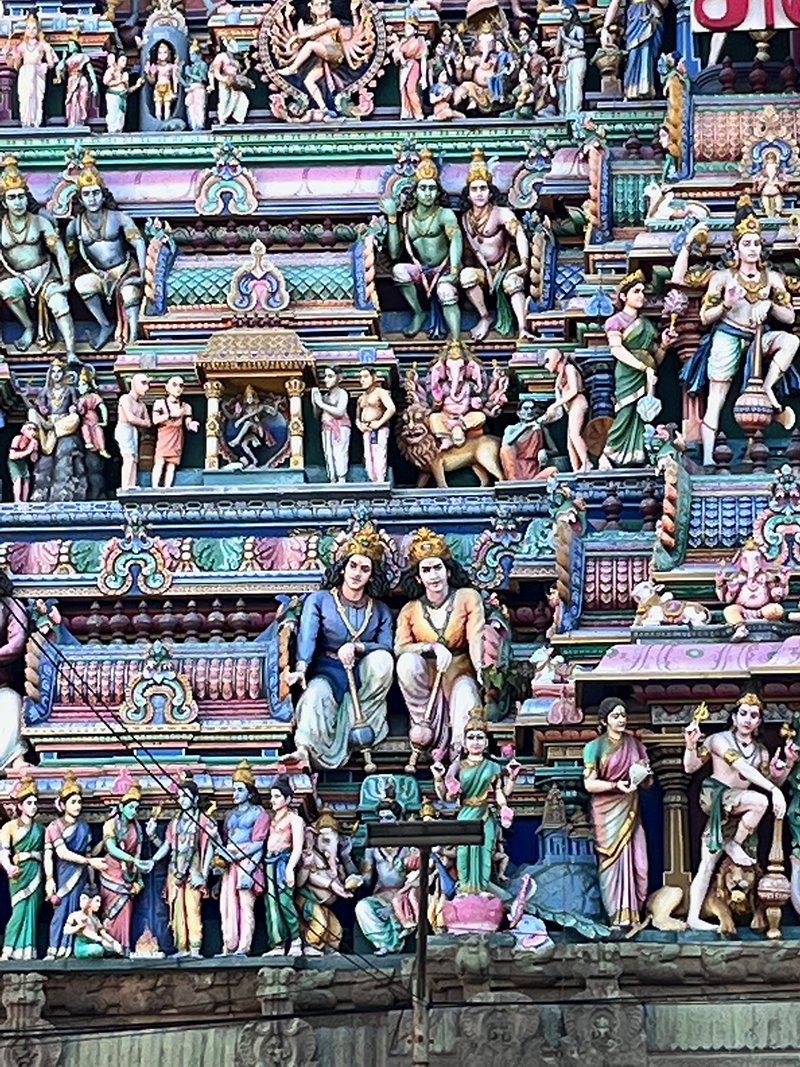
The gopuram (towers) and mandapas (pillars) are decorated with elaborate and almost contemporary carvings.'Parthasarathy' means the 'charioteer of Arjuna', referring to Krishna's role as a charioteer to Arjuna in the epic Mahabaratha. Inside are shrines for Vedavalli Thayar, Ranganatha, Rama, Gajendra Varadar, Narasimha, Andal, Hanuman, Alvars, Ramanuja, Swami Manavala Mamunigal and Vedanthachariar.
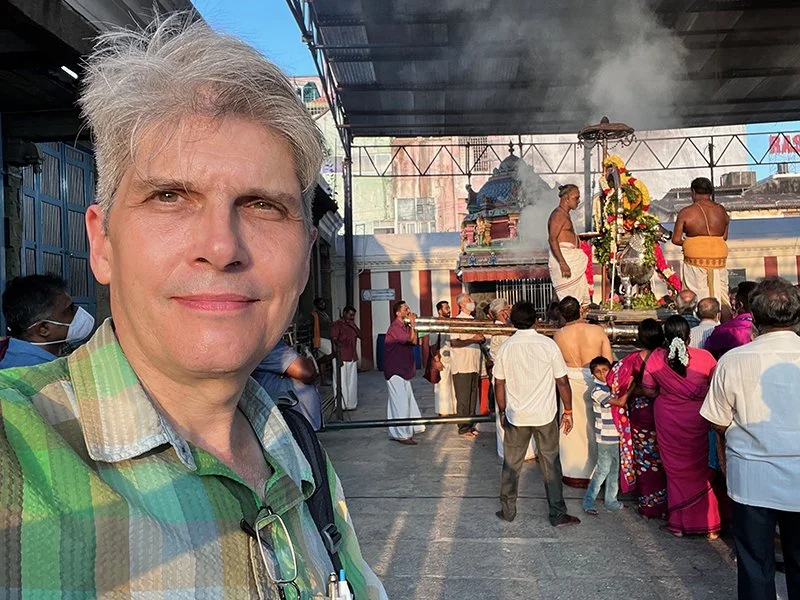
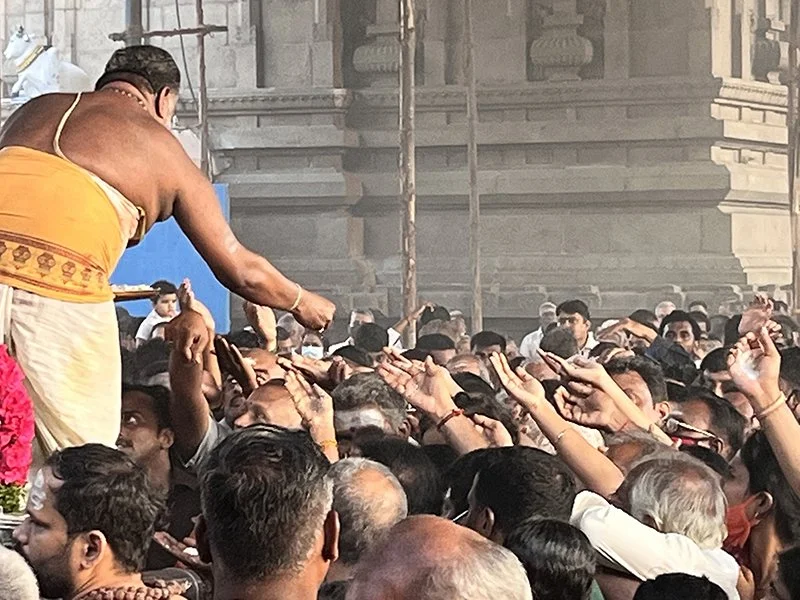
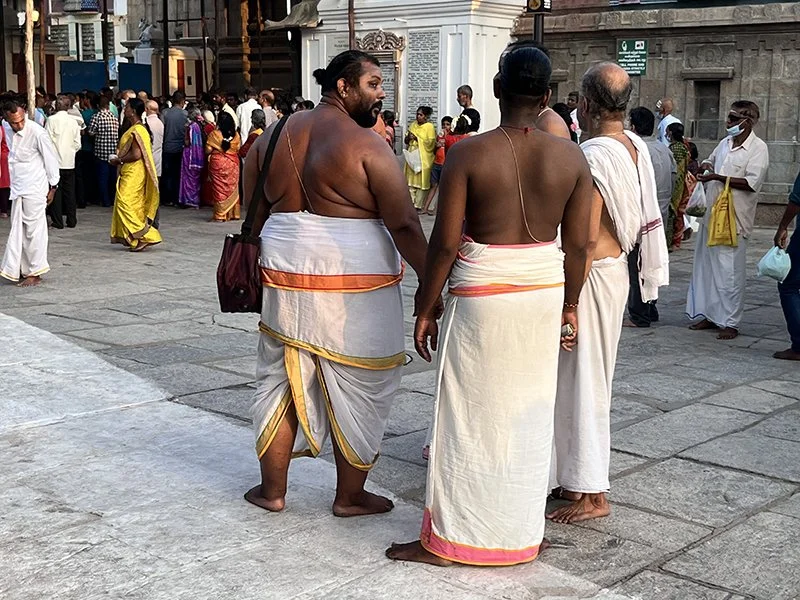

I visited the director of the Kalakshetra Foundation, which was established by Rukmini Devi Arundale and the theosophist George Arundale. Since 1936, it has been a vital center for master teachers, musicians, and performers. It also became one of the key sites for my future research in India.
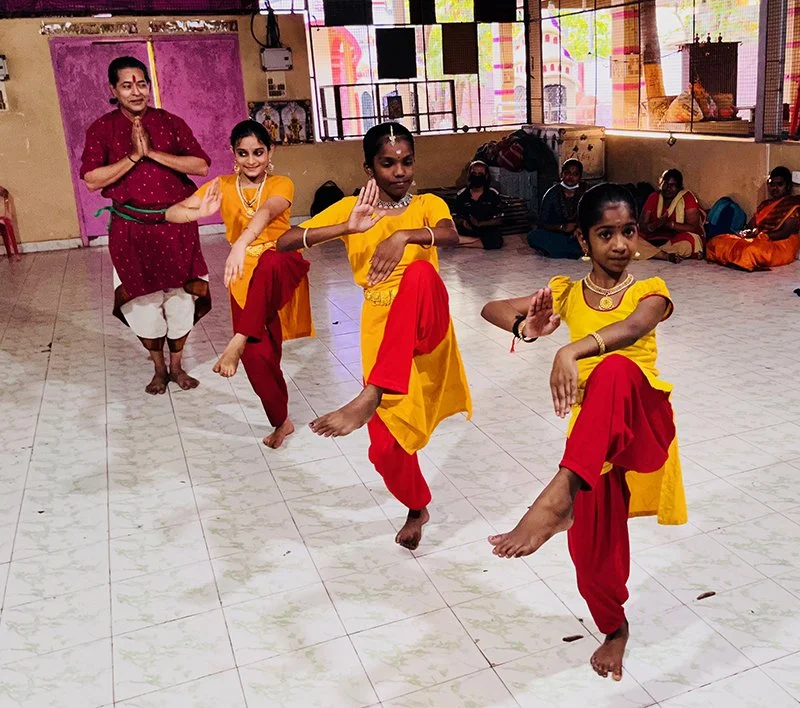
I conducted a Fulbright research visit to the Madras Kali Bari Temple, a Hindu temple in the West Mambalam neighborhood of Chennai. There I met with students and parents and spoke about Bharatanatyam — a devotional dance form — and its training for young students.
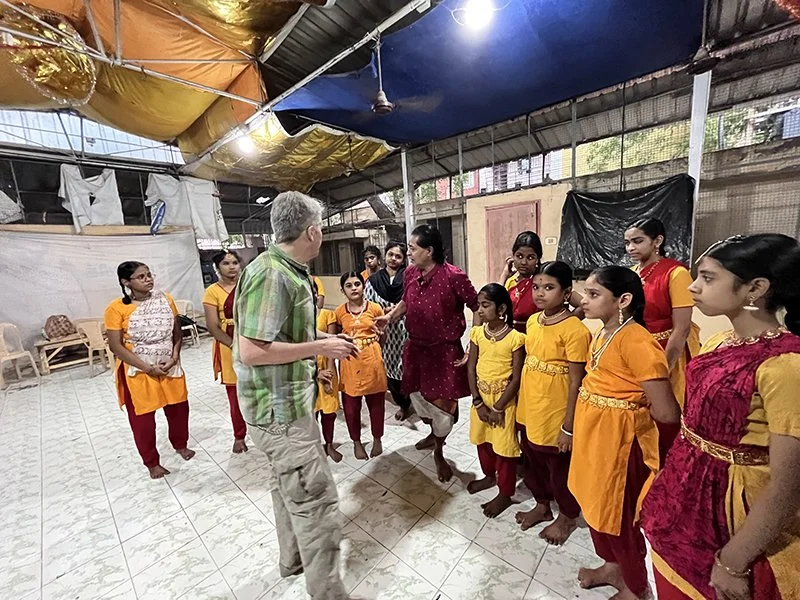
Discussing Baratnatyam - both performance and devotion. And a unique form of education in India.
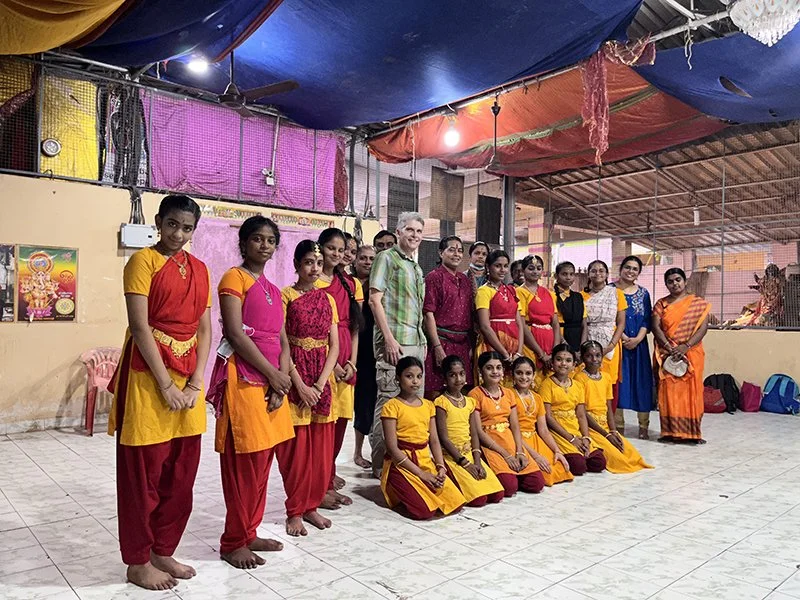
Nagaland, August 2022
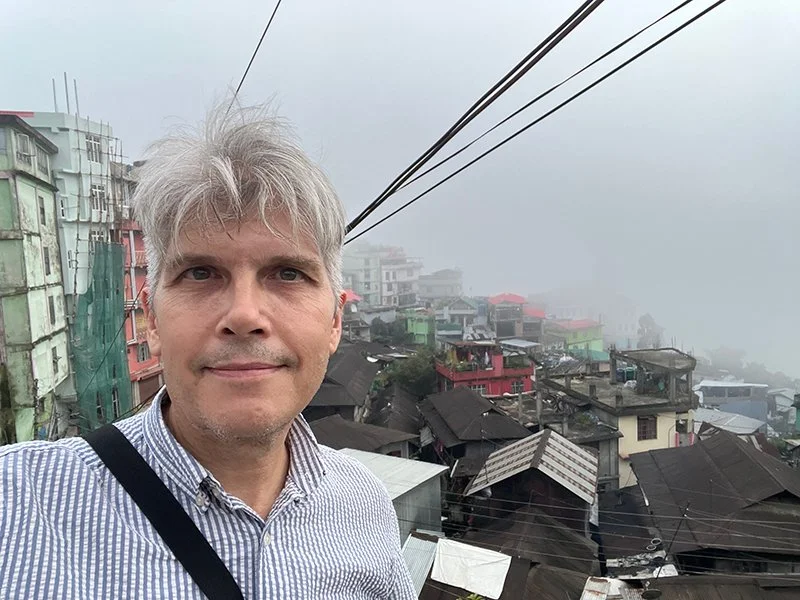
I arrived in early August under an overcast sky. The town of Kohima rests along a mountain ridge; originally known as Kewhira, it was founded in 1878 when the British established their headquarters in the Naga Hills District of what was then Assam Province. It became the capital after the state of Nagaland was inaugurated in 1963. Kohima was also the site of one of the bloodiest battles of World War II, often described as the “Stalingrad of the East.”
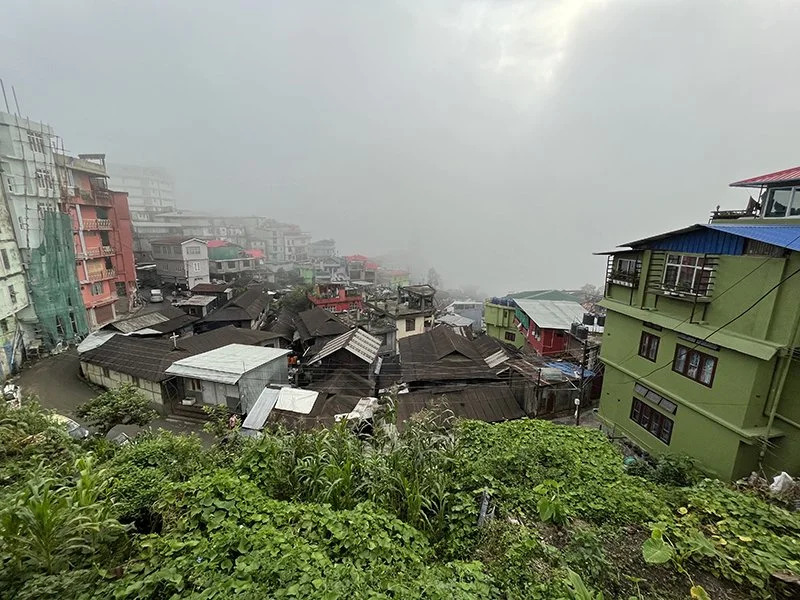
I was hosted at a house down a meandering mountain path 200 meters down the hill. So deep in the clouds that the clouds would roll in the windows of my homestay.
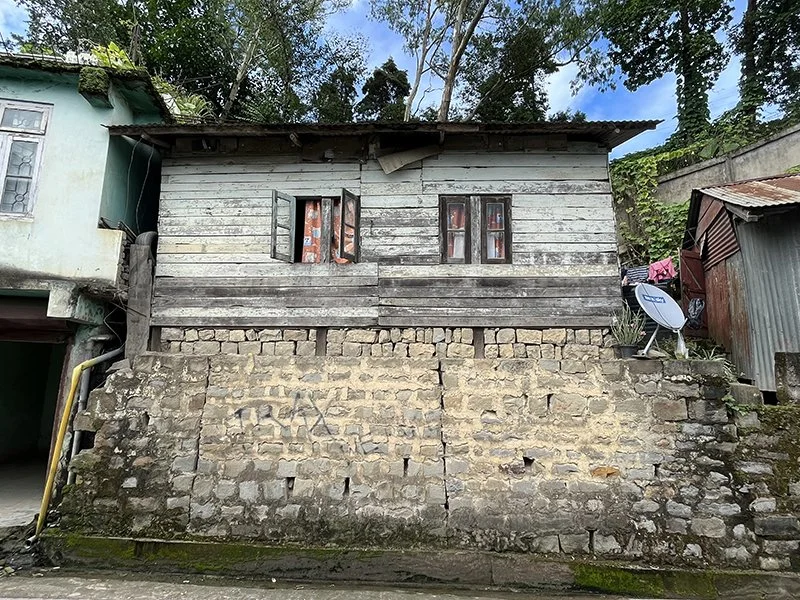
Houses are built to be pierced on the hillsides.
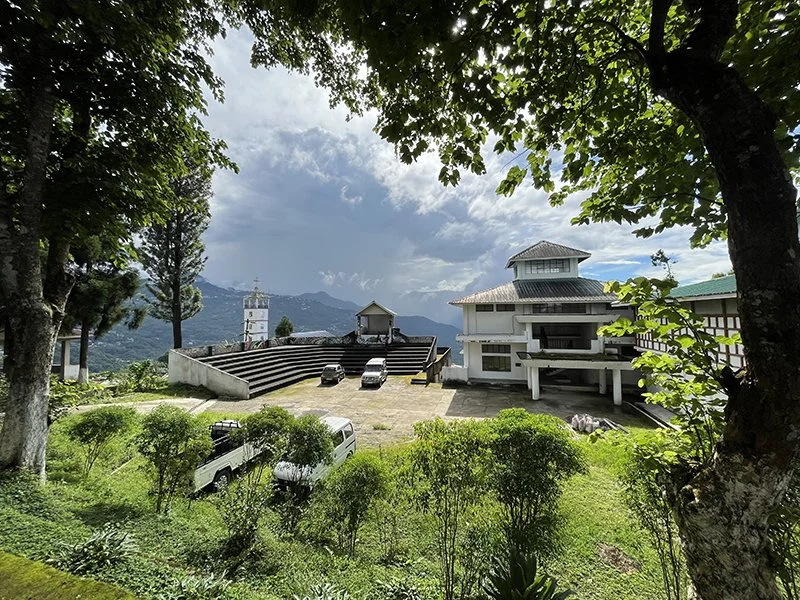
A sweeping view from the Kohima National Museum.

The museum which houses Naga artifacts.
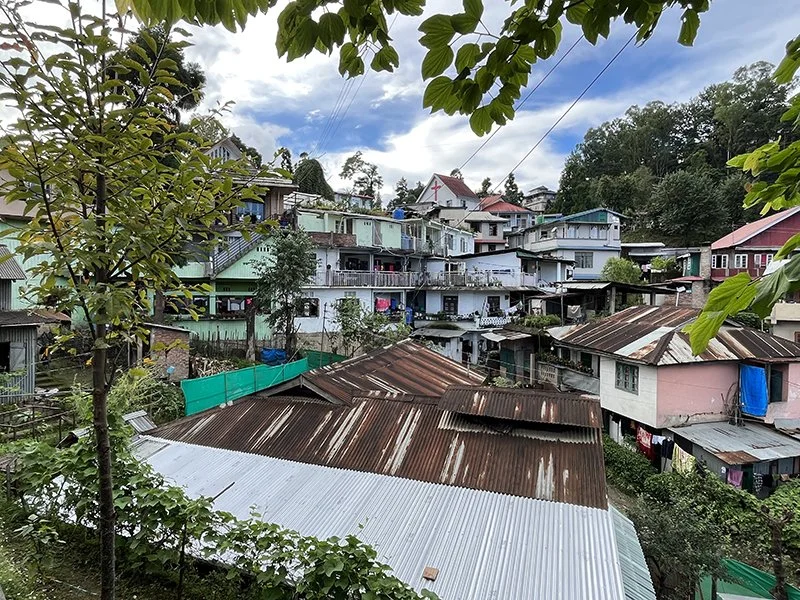
Walking from the museum one encounters the growing town of Kohima dotted with homes and churches.
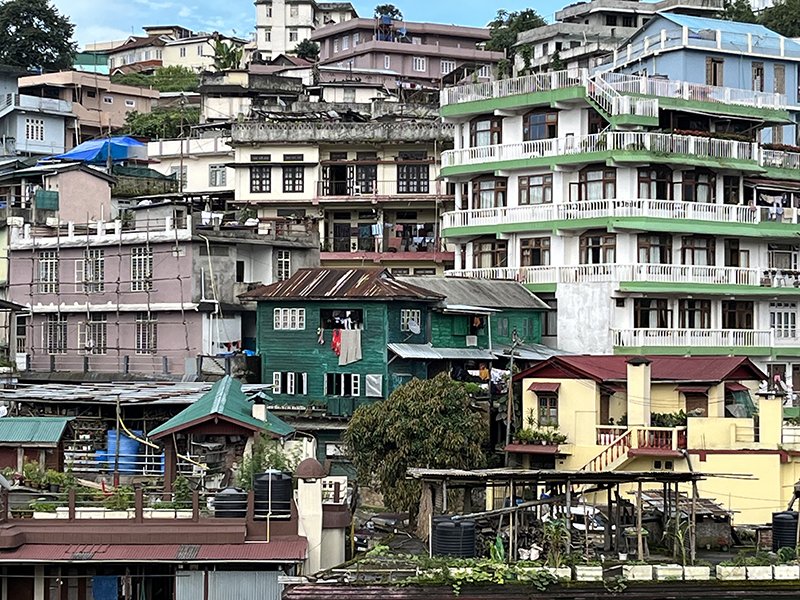

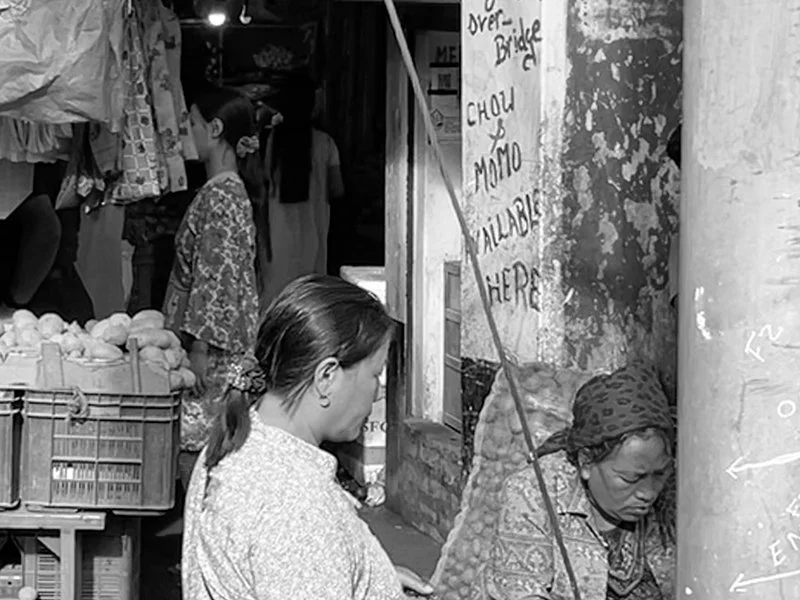
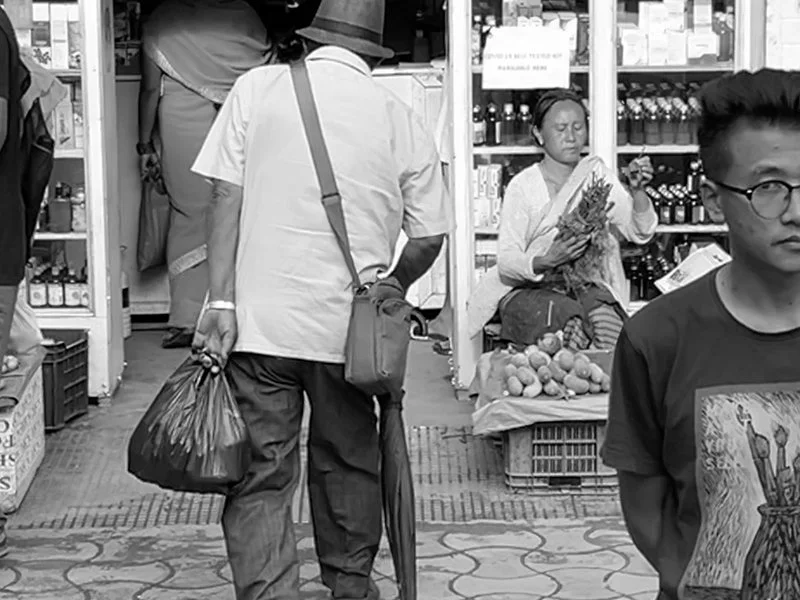
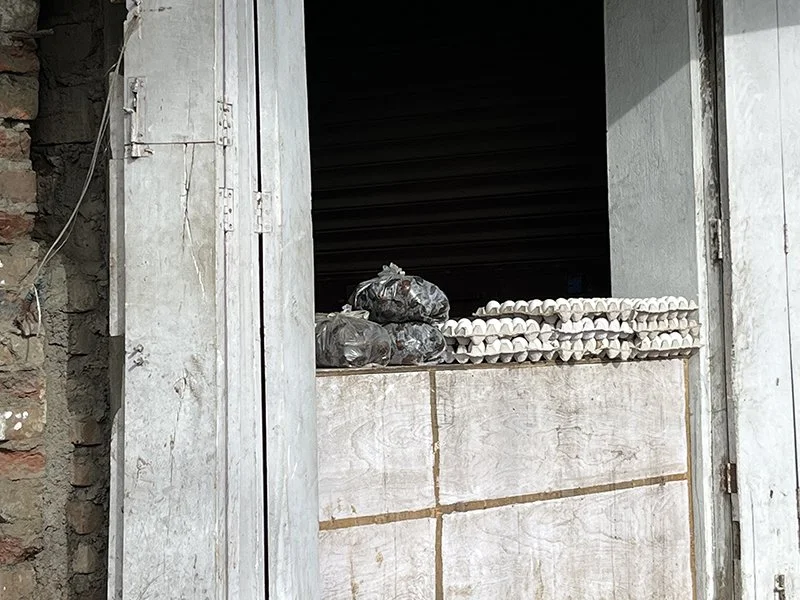
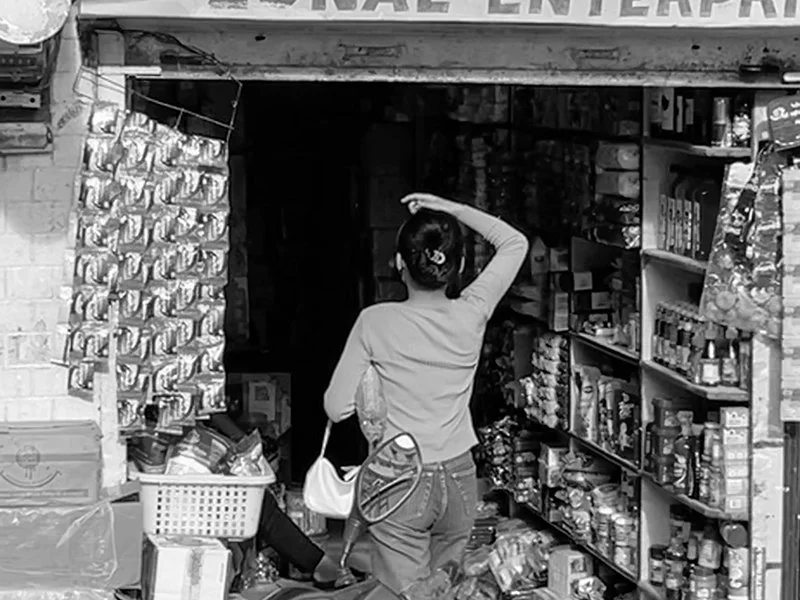
A bus takes me “down town” to the main market.
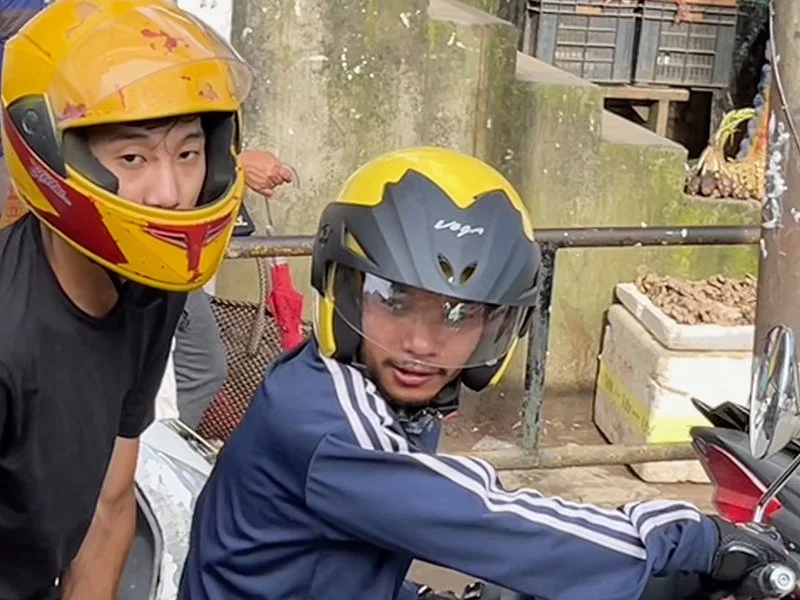
From the bus window I can take some photos.


[video] Interviews with Tetseo Singers (Mütsevelü Tetseo (Mercy), Azine Tetseo (Azi), Kuvelü Tetseo (Kuku) on right and Alüne Tetseo (Lulu) on left from the Chakhesang tribe of southern Nagaland- who demonstrating Li kukre kutiko (songs of the people), often performed in tribal competitions across valleys traditional (2022© Les Joynes)
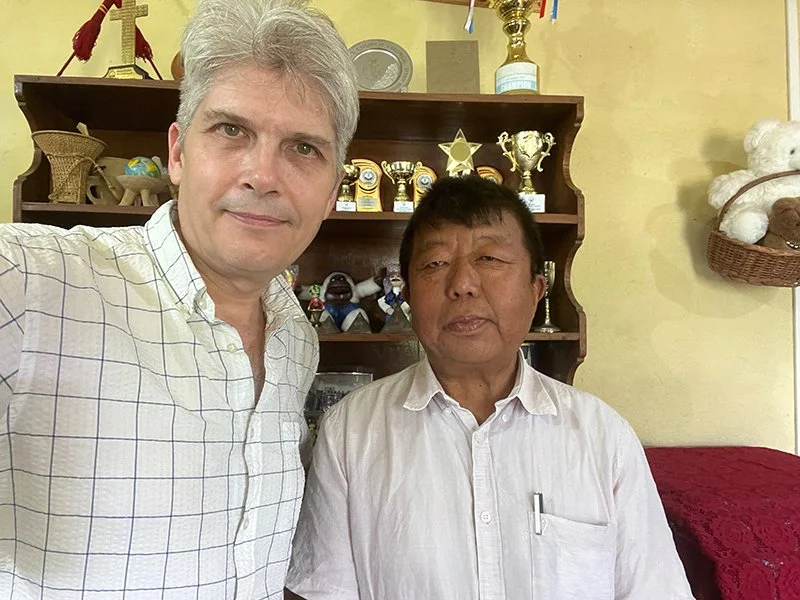
Nagaland is 92% Christian and I had the opportunity to meet with several of its church leaders.

The diversity of Nagaland with its sixteen major tribes: Angami, Ao, Chakhesang, Chang, Dimasa Kachari, Khiamniungan, Konyak, Kuki, Lotha, Phom, Pochury, Rengma, Sangtam, Sumi, Tikhir, Yimkhiung, Zeliang.

With my new colleagues at the Highland Institute, Nagaland’s leading independent institute researching Naga culture.
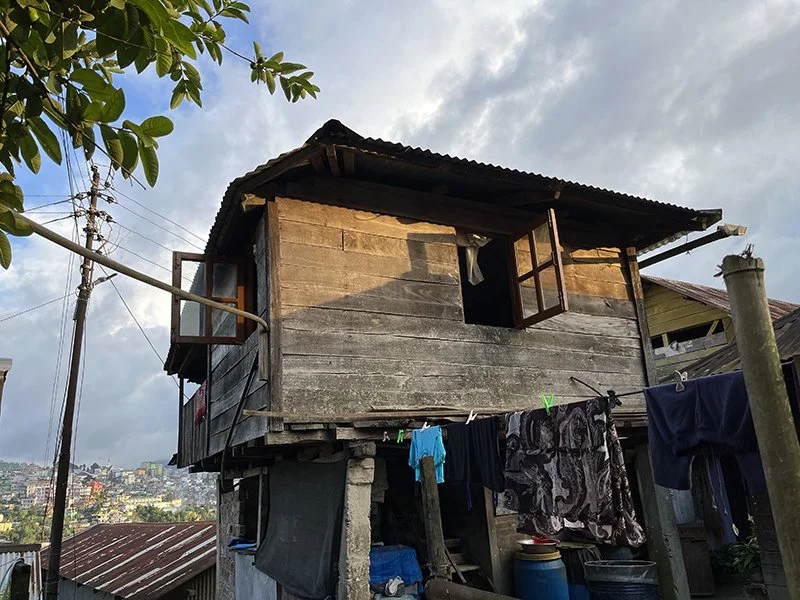
A sunday walk near my homestay,
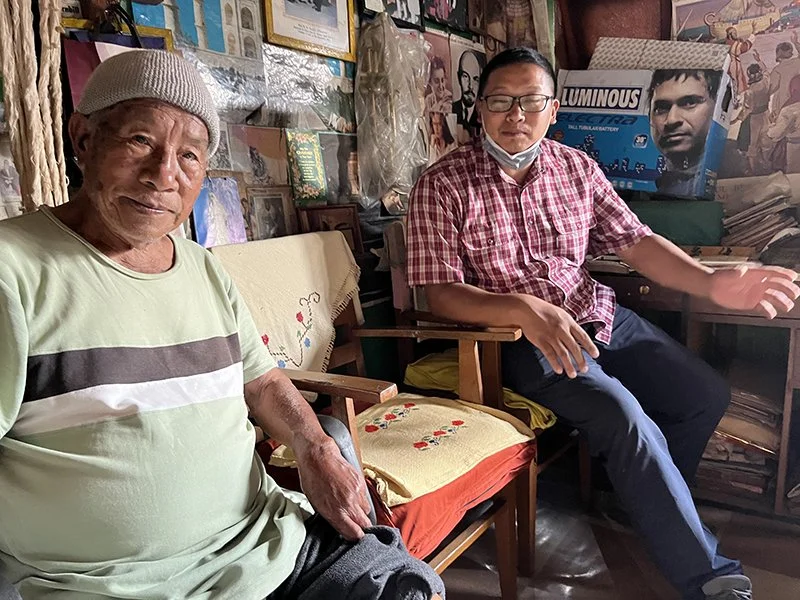
Meeting with local inhabitants and their collections of artifacts.


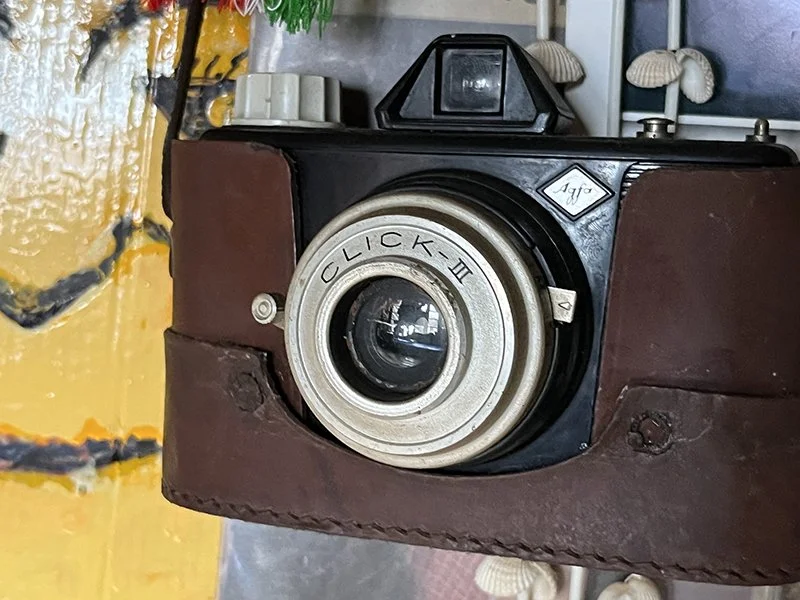

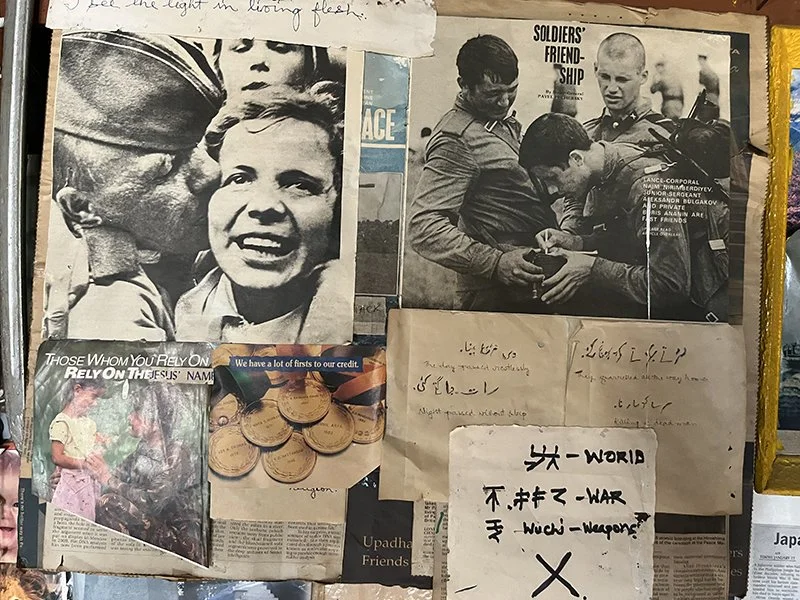


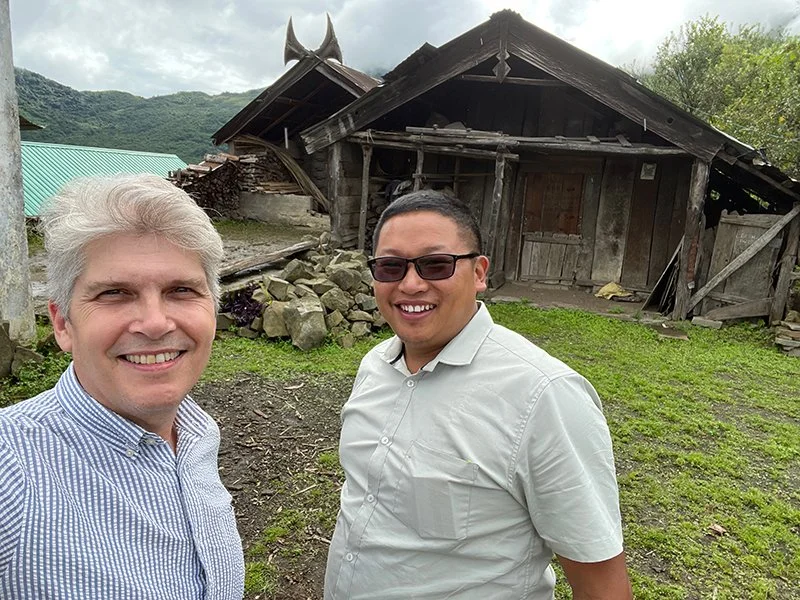
With my guide visiting tribal areas in the south.

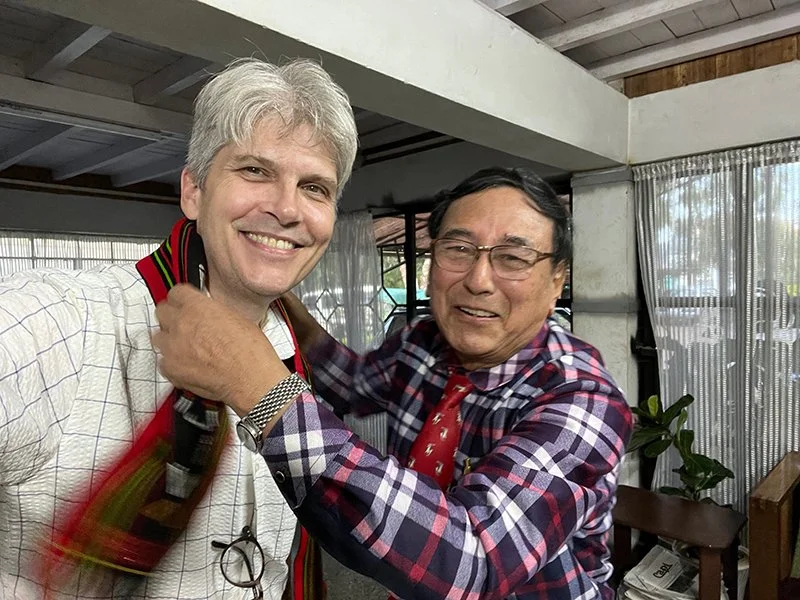
With one of the Naga elders in Kohima receiving an honorary scarf.
Visva Bharati University, Santiniketan, West Bengal September 2022
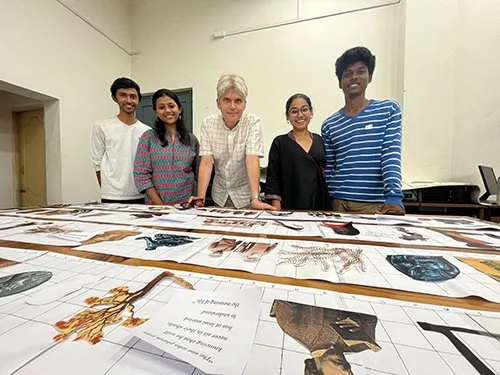
Leading a workshop on mural design with MA and BA students at Visva Bharati University in Santiniketan in West Bengal,
University of Visual and Performing Arts, Colombo, Sri Lanka

Workshop on Performance. Visit to the University of Visual and Performing Arts in Colombo on a special Fulbright SCA-RTP Regional Grant to Sri Lanka.