
Les Joynes
FormLAB
FormLAB: Witnessing Creativity as It Happens
Creativity, in the account that follows, is treated not as a possession — a talent one either has or lacks — but as a capacity: a muscle whose exercise gives us the agency to bring into being what does not yet exist. FormLaboratory (FormLAB), which I initiated in London in 1997, developed out of this premise as an ongoing artistic and research practice. It started as a studio-as-laboratory experiment: an attempt to turn the studio inside out and render visible what ordinarily happens behind the closed doors of artistic production.
Creativity, on this account, is not simply the making of an artwork. It is the capacity to imagine, experiment, respond and construct — the agency to enter an uncertain space and begin forming something that does not yet exist. FormLAB creates the spaces, structures and encounters in which that capacity can become visible.
The Studio Turned Inside Out - prototyping art
The traditional artist's studio operates, in many respects, as a black box. An artist works privately, develops a body of work over time, and eventually presents the finished results in a gallery or museum. This is the arrangement the French artist Daniel Buren addressed in his 1971 essay "The Function of the Studio," which described the studio as the "first frame, the first limit" on which every subsequent frame of exhibition depends — a private, stationary site of production whose objects are destined for a public, mobile afterlife elsewhere (Buren, "The Function of the Studio," 1971). My own interest lay one step earlier than Buren's: not in the studio's function as a site of production, but in what happens before a finished work exists — when artists visit one another, exchange ideas, respond to what they see, experiment with materials and shape one another's direction.
This became a formative part of FormLAB’s development at Goldsmiths, University of London in 1997. Rather than treating the studio simply as a place where objects are produced for later exhibition, I came to see it as a space of encounter: a site where a thread of dialogue moves between artists, and where one person's experiment can become the catalyst for another's. FormLAB grew out of this recognition — the premise that what happens in the studio can itself become the work.FormLAB is accordingly not a style of artwork or a fixed method of production. It is a lens: a way of looking at creative activity. Its transparent structure renders process visible.
Raw materials enter a space; people interact with them, with one another, and with the circumstances surrounding them; a series of actions unfolds. Those actions produce discrete objects, images, installations and other forms, but the objects account for only part of what has taken place.The resulting process may resemble an impromptu performance, but it is not a stylized one. It is reactive: each action responds to a situation, a material, another person, or an unanticipated development. The work therefore exists simultaneously as action, relationship, space, object and memory. It resides in what happened between participants; in the physical environment that made those encounters possible; in the discrete objects and images that emerged; and in the memories carried forward by audiences through photographs, publications and the objects themselves. The objects become, in effect, talismans of the act — physical traces of something that happened.
From the Ontology of Art to the Laboratory
FormLAB as a line of inquiry became the subject of my doctoral research (2008–2012), which examined cross-cultural collaboration, geographically dispersed artistic practice, and the relationship between artistic process, place and production. During that research I held a Visiting Scholar designation in Philosophy at Columbia University, where I began examining questions concerning what constitutes an artwork and how the boundaries between form, object, process, artist, audience and context might be understood. That inquiry led me to conclude that an artwork is always perceived through systems — institutional, discursive, cultural — and I wanted to understand how art, and creativity more broadly, operates across those systems.
The question is not new to art theory. Allan Kaprow's happenings had already, by the late 1950s, proposed that art could consist of an unrepeatable event rather than a durable object (Tate, "The Happening"), and Nicolas Bourriaud's 1998 account of relational aesthetics later described a body of practice that takes "the whole of human relations and their social context" as its point of departure, rather than an independent, private symbolic space (Bourriaud, Relational Aesthetics, 1998). FormLAB shares this horizon of concern but approaches it from a different angle: not the choreography of a social situation as artwork, but the deliberate exposure of the generative process itself — the sequence of decisions, responses and materials — as a legitimate object of witness.
This research informed a FormLAB project at the Museum of Brazilian Sculpture (MuBE) in São Paulo, where I built an on-site laboratory inside the museum so that visitors could witness art being made rather than encounter it only as a completed object. Materials, artists, cultural perspectives, actions and encounters unfolded within the museum itself, in full view of its public.
Asked, at the time, what constituted the final artwork, I concluded that it was not one thing but many. It included the installation within the museum; the transparent structure that made the process visible; the performative acts of making; the objects that emerged from those actions; and the writing, photography and moving image that documented them — and, just as importantly, the memory the project left behind.
FormLAB:創造性が生まれる、その現場に立ち会う
本稿では、創造性を、持っているかいないかで分けられる才能、すなわち個人に備わる所有物としてではなく、一つの能力として捉える。それは筋肉のように、使うことによって鍛えられ、まだ存在しないものを生み出すための主体的な力となる。私が1997年にロンドンで始めたFormLaboratory(FormLAB)は、この考えを出発点に、継続的な芸術実践・研究活動として発展してきた。その始まりは、スタジオを実験室として捉える試みだった。スタジオの内側を外へと開き、通常は芸術制作の閉ざされた扉の向こうで起きていることを、目に見えるものにしようとしたのである。
この捉え方において、創造性とは、単に芸術作品をつくることではない。それは、想像し、実験し、応答し、構築する能力であり、不確かな空間へと踏み込み、まだ存在しない何かを形づくり始める主体的な力である。FormLABは、その能力が目に見えるかたちで現れるための空間、構造、そして出会いを生み出す。
スタジオの内側を外へ開く――アートをプロトタイピングする
従来のアーティストのスタジオは、多くの点でブラックボックスとして機能している。アーティストは人目に触れないところで制作し、時間をかけて一連の作品を展開させ、やがて完成した成果をギャラリーや美術館で発表する。フランスのアーティスト、ダニエル・ビュランが1971年の論考「スタジオの機能」で論じたのは、この仕組みである。ビュランはスタジオを、その後の展示におけるあらゆる枠組みが依拠する「最初の枠組み、最初の限界」と表現した。つまり、スタジオとは私的で固定された制作の場であり、そこで生まれた作品は、その場を離れ、移動可能なものとして公共の場でその後の生を送るよう運命づけられているのである。
私自身の関心は、ビュランの問いよりも、さらに一段階手前にあった。制作の場としてのスタジオの機能ではなく、完成した作品が存在する以前に起こること――アーティスト同士が互いのスタジオを訪ね、考えを交わし、目にしたものに反応し、素材を試し、互いの制作の方向性を形づくっていく、その過程に関心があった。
こうした経験は、ロンドン大学ゴールドスミスで、私がアーティストとして成長するうえで重要な基盤となった。私はスタジオを、後に展示するためのものを制作するだけの場所ではなく、出会いの空間として捉えるようになった。そこでは、対話の糸がアーティストのあいだを行き交い、一人の実験が別の誰かの試みを促す契機となりうる。FormLABは、この認識から生まれた。すなわち、スタジオで起こること自体が作品になりうる、という考えである。
したがって、FormLABは作品の様式でも、固定された制作手法でもない。それは一つのレンズであり、創造的な活動を見るための視点である。その透明な構造は、プロセスを可視化する。未加工の素材が空間に持ち込まれ、人々がそれらに働きかけ、互いに関わり合い、周囲の状況と相互に作用するなかで、一連の行為が展開していく。そこから個々のオブジェ、イメージ、インスタレーション、その他の形態が生まれるが、それらが示すのは、そこで起きたことの一部にすぎない。
そのプロセスは、即興のパフォーマンスのように見えるかもしれない。しかし、それは様式化されたものではない。状況に応じて生まれるものであり、一つひとつの行為は、ある状況、素材、他者、あるいは予期しなかった展開への応答となっている。そのため、作品は、行為、関係、空間、物体、記憶として、同時に存在する。それは、参加者のあいだで起きたことのなかにあり、その出会いを可能にした物理的環境のなかにあり、そこから生まれた個々のオブジェやイメージのなかにある。そして、写真や出版物、さらにはオブジェそのものを通して、観客のなかに受け継がれていく記憶にも宿る。いわばオブジェは、その行為を宿す護符となる――何かが確かに起きたことを物質としてとどめる痕跡なのである。
芸術の存在論から実験室へ
この探究は、私の博士課程での研究(2008~2012年)の主題となった。そこでは、異文化間の協働、地理的に分散した芸術実践、そして芸術のプロセス、場所、制作の関係を考察した。研究期間中、私はコロンビア大学の哲学分野で客員研究員を務め、何が芸術作品を成り立たせるのか、また、形態、物体、プロセス、アーティスト、観客、文脈のあいだにある境界をどのように理解できるのか、という問いの検討に着手した。この探究を通じて、芸術作品は常に、制度、言説、文化といった諸システムを介して知覚される、という結論に至った。そして、芸術が、さらに広くは創造性が、そうしたシステムを横断してどのように働くのかを理解したいと考えるようになった。
この問い自体は、芸術理論において新しいものではない。アラン・カプローのハプニングは、すでに1950年代末には、芸術が永続的な物体ではなく、一回限りの出来事として成立しうることを提起していた。 その後、ニコラ・ブリオーは1998年の『関係性の美学』において、独立した私的な象徴空間ではなく、「人間関係の総体とその社会的文脈」を出発点とする一連の実践を論じた。 FormLABもこうした関心の地平を共有しているが、その接近の仕方は異なる。社会的な状況を作品として演出するのではなく、生成のプロセスそのもの――判断、応答、素材が織りなす一連の展開――を、人々が立ち会い、見届けるに値する対象として、意図的に開示するのである。
この研究は、サンパウロのブラジル彫刻美術館(MuBE)で実施したFormLABのプロジェクトに反映された。私は美術館の内部に実験室を設け、来館者が完成した物体として作品に出会うだけでなく、芸術がつくられていく過程そのものに立ち会えるようにした。素材、アーティスト、文化的な視点、行為、そして出会いが、美術館という場のなかで、来館者の目の前に展開した。
当時、何をもって最終的な作品とするのかと問われ、私は、それは一つではなく、複数のものから成ると結論づけた。美術館内のインスタレーション、プロセスを可視化する透明な構造、制作という遂行的な行為、そこから生まれたオブジェ、そしてそれらを記録した文章、写真、映像。そのすべてが作品に含まれる。そして、それらと同じくらい重要なのが、プロジェクトが後に残した記憶なのである。
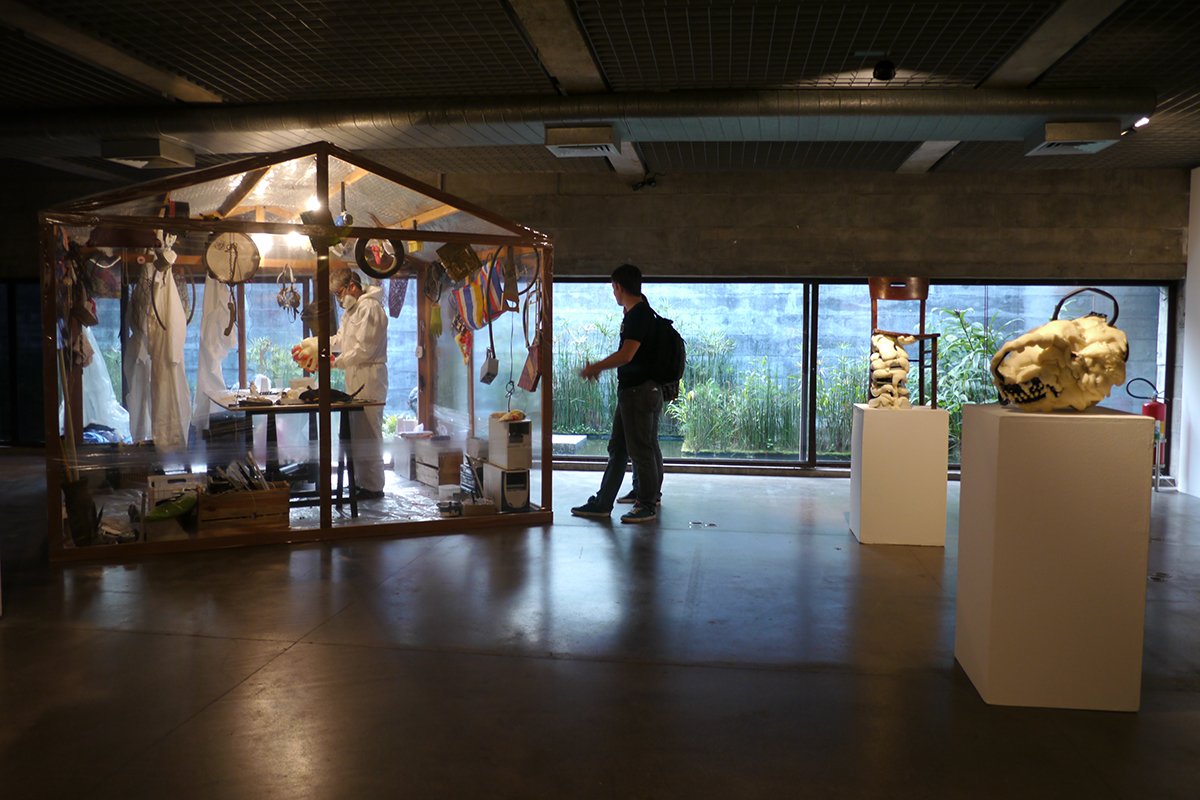
FormLAB - Sao Paulo
FormLAB created US-Brazil collaborations at the Brazilian Museum of Sculpture, Sao Paulo, Brazil. 2023-2026 © Les Joynes, ARS New York and DACS London.
The Energy of the Unexpected
Across nearly thirty years of developing FormLAB in different cultural settings, one of my most durable observations is that something occurs in the process that cannot be fully predicted from the outcome.
There is a difference between extending an existing body of work incrementally — refining it, making it more recognizable, aligning it more closely with the expectations that surround it — and allowing a creative process to yield something genuinely unforeseen. Both modes have their value, but they generate different kinds of energy. My interest lies in the tension between coalescence and disruption: the forces by which forms become established, and the forces that pull them apart. In physical systems, entropy describes a tendency toward increasing disorder, while energy input can produce temporary structure, pattern and organization. Artistic practice contains a comparable tension. Established forms supply coherence, but creative acts can dissolve those forms and generate new ones. The unexpected carries a particular vitality precisely because it has not yet been absorbed into a system.
Discussing studio visits with American artist David Hammons, Hammons described his preference for seeing what an artist was working on now, rather than encountering only the accumulated work of the past — a.k.a. the studio's "graveyard." What matters are the things that are still alive, still becoming. I encountered something similar when a German artist friend visited my studio in New York. I had begun showing him the paintings in a series then underway, one after another, when his attention was drawn to a canvas turned to face the wall. It was not among the works I had intended to show: unfinished, its surface marked by circular forms I had stripped back with a palette knife and rubbed with turpentine, leaving flat, opaque, moon-like shapes behind. To me, this had been simply an act of removing what was not working, in preparation for something new. My friend saw something else entirely in the gesture. Those circles became, in his eyes, moons — and the work eventually became Four Fathers (below). It evolved from something I had not consciously intended. Sometimes the beginning of a new work is hidden inside the act of abandoning an old one.
予期せぬものがもたらすエネルギー
さまざまな文化的環境のなかで、30年近くにわたりFormLABを展開してきた。その経験を通して繰り返し確かめてきたのは、完成した成果からだけでは十分に推し量ることのできない何かが、プロセスのなかで起きている、ということである。
既存の一連の作品を少しずつ発展させていくこと――磨きをかけ、その特徴をより明確にし、周囲の期待にいっそう沿うものにしていくこと――と、創造のプロセスに身を委ね、真に予想外のものが生まれるのを許容することとのあいだには、違いがある。どちらにも価値はあるが、そこから生まれるエネルギーの質は異なる。私が関心を寄せているのは、まとまりを生み出す力と、それを突き崩す力との緊張関係である。すなわち、形態を成立させる力と、それを解体する力とのあいだにある緊張だ。物理系では、エントロピーは無秩序さが増大する傾向を表す一方、エネルギーの投入によって、一時的な構造やパターン、秩序が生まれることがある。芸術実践にも、これに通じる緊張関係がある。確立された形態は一貫性をもたらすが、創造的な行為はその形態を解きほぐし、新たな形態を生み出すことができる。予期せぬものが独特の生命力を帯びるのは、まさにそれが、まだシステムのなかに取り込まれていないからである。
アメリカのアーティスト、デイヴィッド・ハモンズとスタジオ訪問について話した際、彼は、過去に制作され、蓄積された作品――いわばスタジオの「墓場」――だけを見るよりも、そのアーティストがいま取り組んでいるものを見たいと語った。重要なのは、いまなお生きていて、生成の途上にあるものなのだ。
私も、ドイツ人のアーティストの友人がニューヨークの私のスタジオを訪れたとき、これに似た経験をした。そのとき制作中だった連作の絵画を一枚ずつ見せていたところ、彼の目は、壁に向けて置かれていた一枚のカンヴァスに引き寄せられた。それは、見せるつもりの作品には含まれていなかった。未完成で、その表面には、私がパレットナイフで削り、テレピン油でこすった円形の跡が残っていた。そこには、平坦で不透明な、月のような形が現れていた。私にとって、それは単に、うまくいっていない部分を取り除き、新しい何かに備えるための行為にすぎなかった。しかし友人は、その身振りに、まったく別のものを見いだした。彼の目には、それらの円が月として映ったのである。そして、その作品はやがて《Four Fathers》(下図)となった。それは、私が意識的には意図していなかったものから発展した作品だった。新しい作品の始まりは、ときに、古い作品を断念する行為のなかに隠れている。
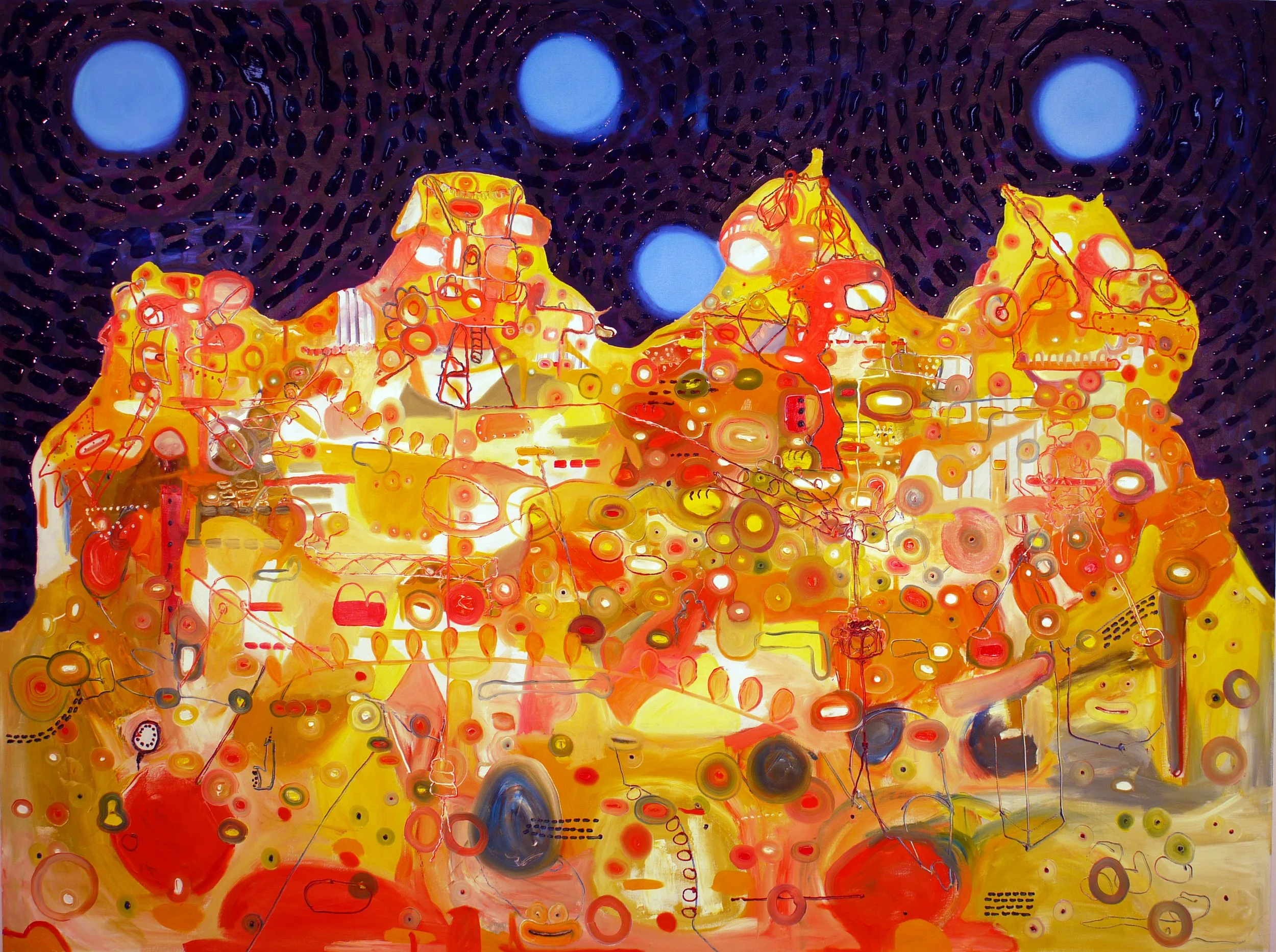
Four Fathers (2011) Oil on Canvas, 54 x 72 in. © Les Joynes, ARS New York and DACS London.
Creativity Across Cultures
Since much of my life has involved moving between cultures, cross-cultural encounter became a natural extension of FormLAB.
For me, living within another culture produces a temporary suspension of one's assumptions. Language offers one of the clearest instances of this. When I first lived in France, I spoke only some French; as I became fluent, my relationship to the culture changed. I acquired, in effect, another way of experiencing the world — almost a second body, retained alongside the first.
The same process recurred through living in Germany, the UK, Belgium and Japan, and through subsequent work especially in Asia. Each culture supplied another lens through which to experience the world. But something is also lost as the outsider becomes an insider: the distance that once rendered everything strange begins to disappear. I became interested in preserving some measure of that space of not-knowing.
When another culture remains partly unfamiliar, perception can sharpen. Language becomes almost abstract; gestures, materials, rituals and assumptions become things to observe rather than take for granted. The unfamiliar opens a space in which habitual ways of seeing loosen their hold. This space between the familiar and the unfamiliar has affinities with what Jacques Derrida described through différance: meaning generated through difference, and continually deferred rather than settled into a single, fixed interpretation. For me this is not merely a philosophical proposition but an experiential condition. To encounter another culture is to encounter another way of making sense of the world — and potentially another version of oneself. FormLAB uses artistic practice as a vehicle for entering that space, posing the question: what happens when we allow ourselves to see through another person's lens?
文化を横断する創造性
私の人生の多くは、異なる文化のあいだを行き来することとともにあった。そのため、異文化との出会いは、FormLABの自然な展開となった。
私にとって、異なる文化のなかで暮らすことは、それまで自明としていた前提が一時的に宙づりになる経験である。言語は、そのことを最も明確に示す例の一つだ。初めてフランスで暮らしたとき、私はフランス語を少ししか話せなかった。流暢に話せるようになるにつれ、その文化との関係も変わっていった。事実上、世界を経験するもう一つのあり方を身につけたのである。それは、もとの身体とともに保持される、ほとんど第二の身体のようなものだった。
同じプロセスは、ドイツ、英国、ベルギー、日本での生活、そしてその後、とりわけアジアでの活動を通じて繰り返された。それぞれの文化が、世界を経験するための新たなレンズをもたらした。しかし、外部の者が内部の者になるにつれ、失われるものもある。かつてはあらゆるものを見慣れないものとして浮かび上がらせていた距離が、次第に消えていくのである。私は、この「わからなさ」の空間を、ある程度保ち続けることに関心を持つようになった。
異なる文化に、なお不慣れな部分が残っているとき、知覚は研ぎ澄まされることがある。言語はほとんど抽象的なものとなり、身振り、素材、儀礼、そして暗黙の前提は、当然のこととして受け入れるのではなく、観察すべき対象となる。見慣れないものは、習慣的なものの見方の拘束力が緩む空間を開く。
この、慣れ親しんだものと見慣れないものとのあいだにある空間は、ジャック・デリダが「差延(différance)」という概念を通して論じたことと響き合う。意味は差異を通じて生まれ、単一の固定された解釈へと落ち着くのではなく、絶えず先送りされる。私にとって、これは単なる哲学的な命題ではなく、実際に経験される状態である。異なる文化に出会うことは、世界を意味づける別のあり方に出会うことであり、さらには、もう一つの自分に出会う可能性でもある。FormLABは、芸術実践をその空間へと踏み込むための手段とし、次のように問いかける。他者のレンズを通して見ることに自らを開くとき、何が起こるのだろうか。
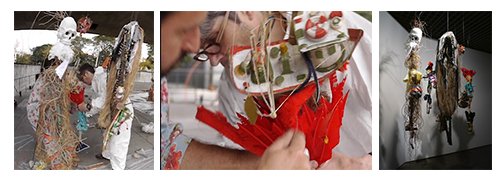
FormLAB performance incorporating ritual into sculpture (2012)
FormLAB at the Brazilian Museum of Sculpture, Sao Paulo, Brazil. 2012 © Les Joynes, ARS New York and DACS London.
Creativity as Agency
The lessons drawn from FormLAB extend beyond the production of artworks. The same creative capacity that allows an artist to experiment with an unfamiliar material can allow a teacher to imagine a new curriculum, a researcher to approach a problem differently, an organization to re-examine its assumptions, or an individual to navigate technological change. This is why my work has increasingly moved across art, education, innovation, coaching and technology.
Turning the traditional studio inside out, FormLAB stages transparent environments in which the raw process of making becomes visible to an audience rather than concealed behind a finished object, a practice tested across cultures from São Paulo to Tokyo and grounded in my research. What happens when the private act of making is opened to public view? What is gained — and lost — when the unexpected is allowed to disrupt what is already known? And how do we create the conditions in which people, in any discipline or culture, can move beyond what they already know?
主体的に働きかける力としての創造性
FormLABから得られた知見は、芸術作品の制作にとどまらない。アーティストが未知の素材を試すことを可能にする創造的な能力は、教師が新たなカリキュラムを構想し、研究者が異なる角度から問題に取り組み、組織が自らの前提を問い直し、個人が技術の変化に対応していくことをも可能にする。私の活動が、芸術、教育、イノベーション、コーチング、テクノロジーの領域をますます横断するようになったのは、そのためである。
FormLABは、従来のスタジオの内側を外へと開き、制作の生のプロセスが、完成した作品の背後に隠されるのではなく、観客の目に見えるものとなる透明な環境をつくり出す。私自身の研究に根ざしたこの実践は、サンパウロから東京まで、異なる文化のなかで試みられてきた。
制作という私的な行為が人々の目に開かれるとき、何が起こるのか。予期せぬものが、すでに知られていることを揺さぶるに任せるとき、何が得られ、何が失われるのか。そして、どのような分野や文化にあっても、人々が自らの既知の範囲を超えていけるような条件を、私たちはどのようにつくり出せるのだろうか。
About Les
Les Joynes (PhD) is a multimedia artist, researcher, and coach, and founder of FormLAB, a nomadic experimental laboratory that has staged live art-making inside museums and public spaces in the americas, Europe and Asia.
A Fulbright Scholar in art and performance in India, he is a recipient of U.S. Public Diplomacy Awards for Mongolia and China and the Monbusho/MEXT Award in Japan. Les holds an MA in Fine Art from Goldsmiths, University of London; an MA from Musashino Art University, Tokyo; a PhD in Fine Art from Leeds Metropolitan University; and postdoctoral studies at the University of São Paulo and University of the Arts London. He is a Visiting Scholar in Modern and Contemporary Art History at Columbia University and has lectured across Asia, Europe, and the US. He has curated and produced exhibitions and performances in Brazil, Japan, South Korea, Mongolia, China, Singapore and India and served on the curatorial team for the inaugural Taipei Biennial.
His work has appeared at the Norimatsu Museum, the Barbican, Michael Steinberg Fine Art, Thomas Jaeckel Gallery, the Art Gallery of New South Wales, the Inside Out Art Museum in Beijing, and the Museum of Brazilian Sculpture in São Paulo, among many others. As a creativity and leadership coach he mentors founders at New Inc (New Museum) and is an Innovation Coach with the European Innovation Council. he is based in New York.
Notes:
Daniel Buren, "The Function of the Studio" (1971), first published in English translation in October, no. 10 (Fall 1979): text
Allan Kaprow originated the "happening" as an unrepeatable, event-based art form in the late 1950s: Tate, "The Happening"
Nicolas Bourriaud, Esthétique relationnelle / Relational Aesthetics (1998): Tate, "Relational aesthetics"

Earth/ Balance, Great Wall, China (2017). 2009-2025 © Les Joynes, ARS New York and DACS London.

Les Joynes, Shifting 0.00000000103279% of the Great Wall (2017), China. 2009-2025 © Les Joynes, ARS New York and DACS London.
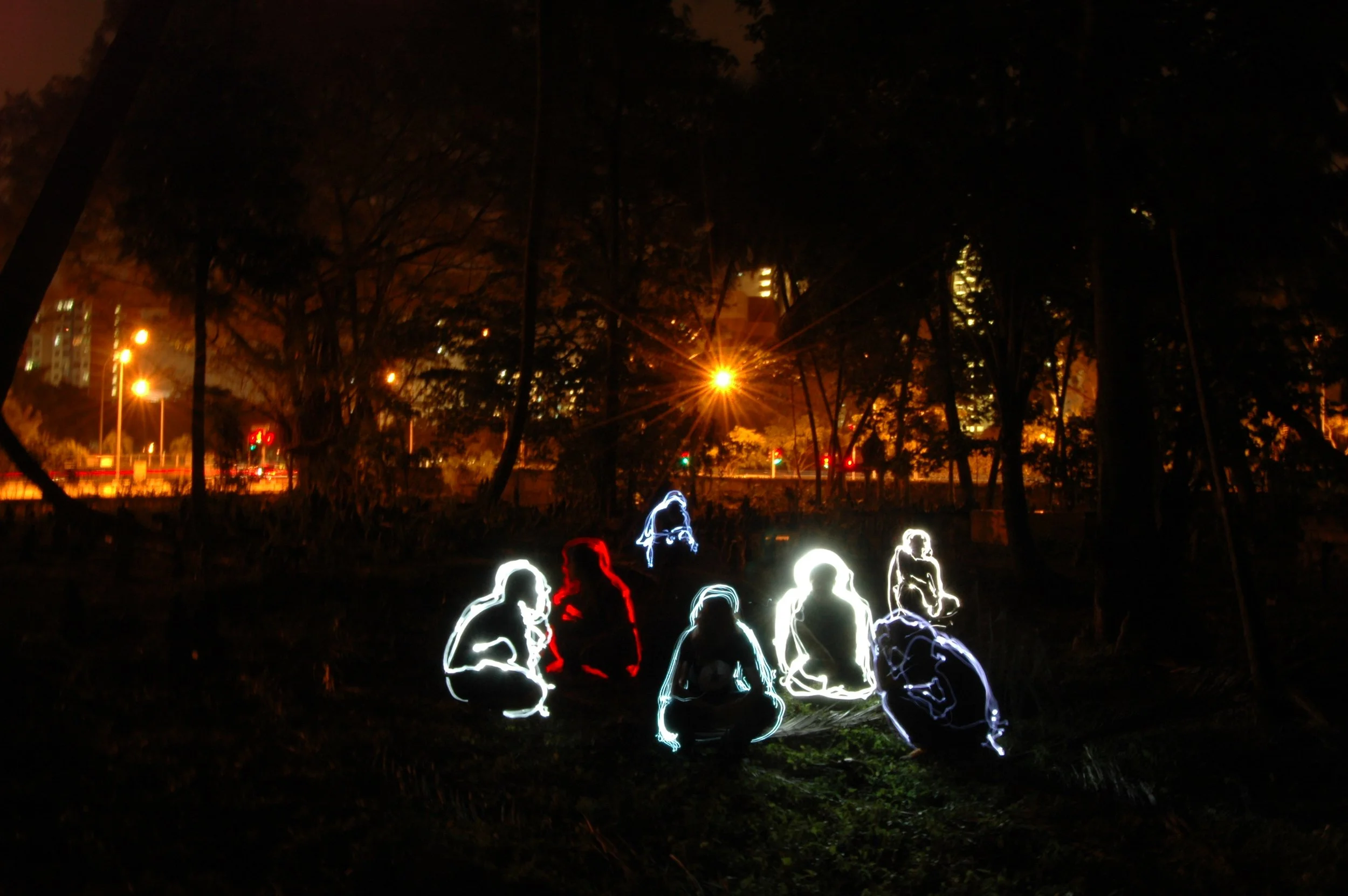
FormLAB performances in Singapore (2009) with La Salle College of the Arts and Nanyang Academy of Art. 2009-2025 © Les Joynes, ARS New York and DACS London.
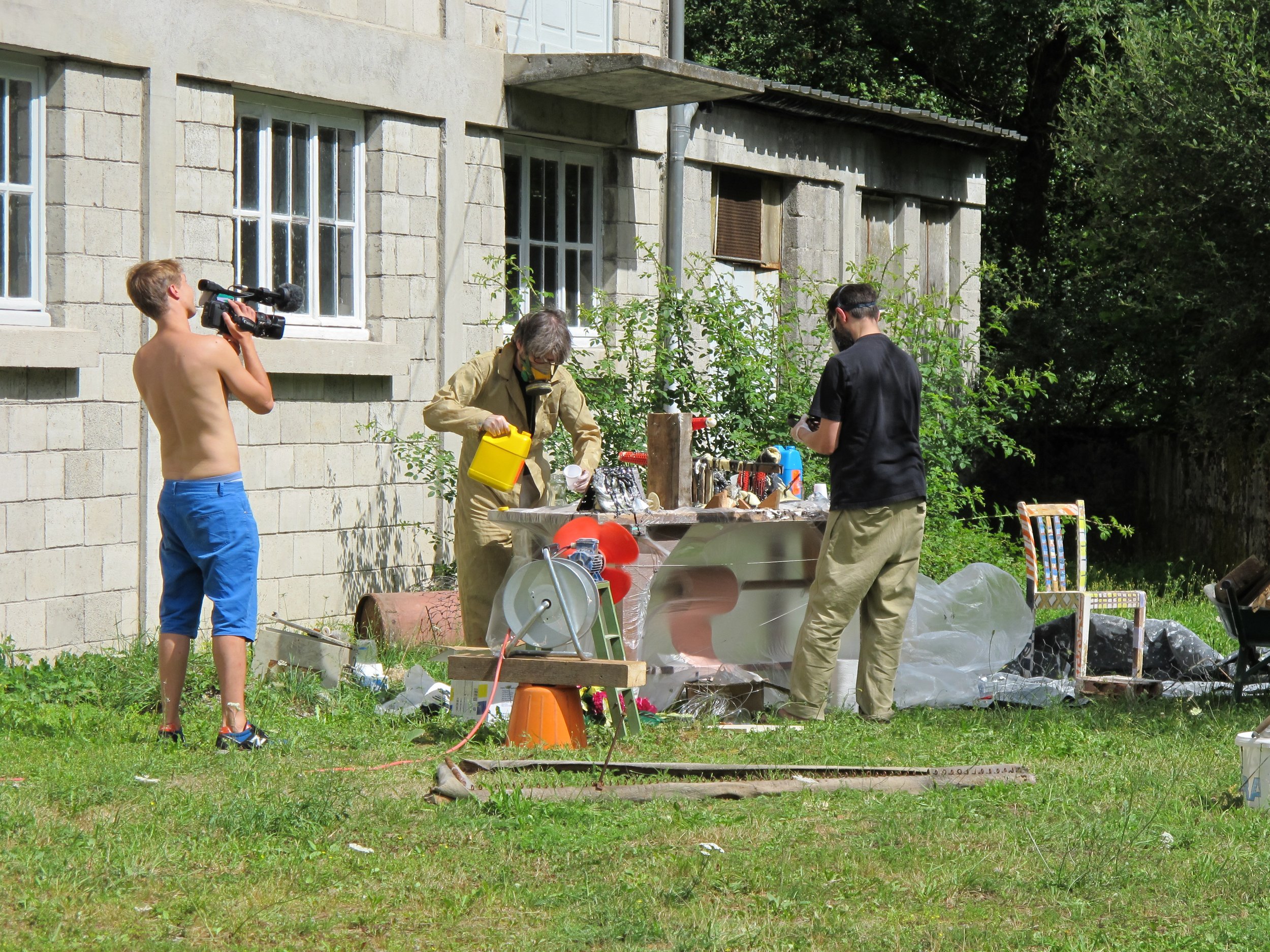
FormLAB assemblage performance, Teignac Projet, Sorreze, France , 2010 © Les Joynes, ARS New York and DACS London.
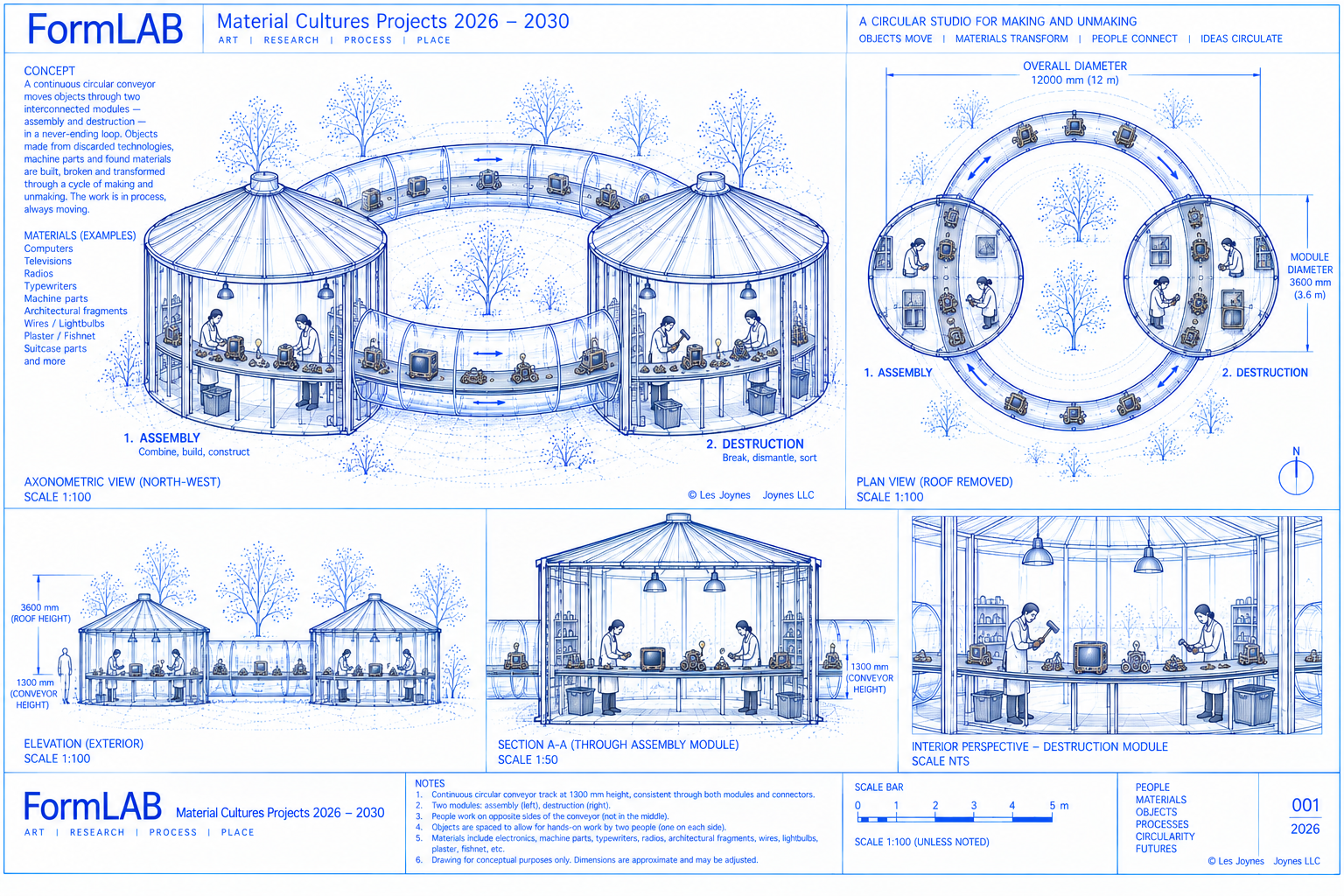
Blueprint for The Genesis Project - (de) ConstructLAB. FormLAB New York 2026 © Les Joynes, ARS New York and DACS London.
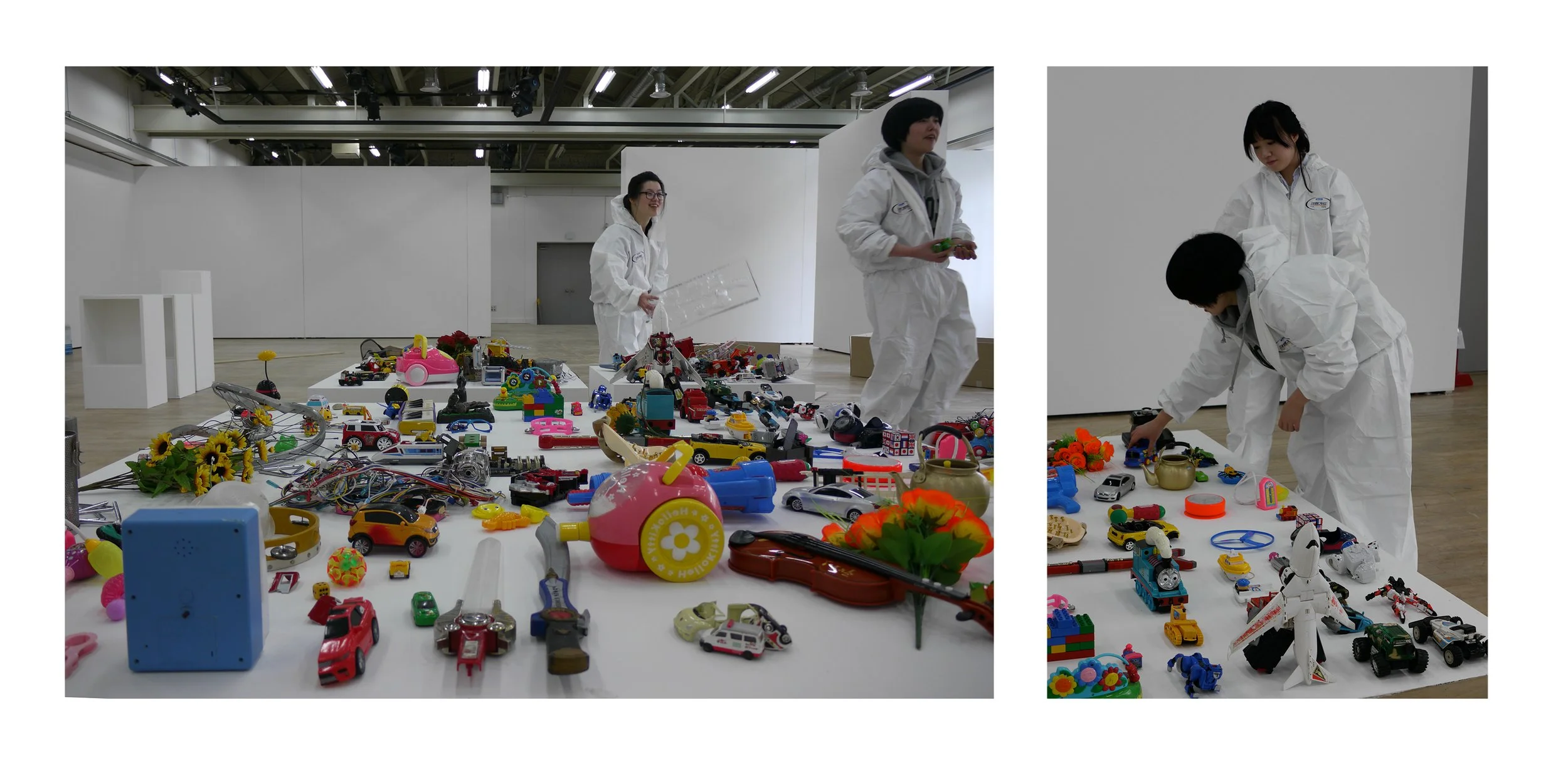
Assemblage performance, Seoul Foundaiton for Art and Culture, Seoul 2009 © Les Joynes, ARS New York and DACS London.
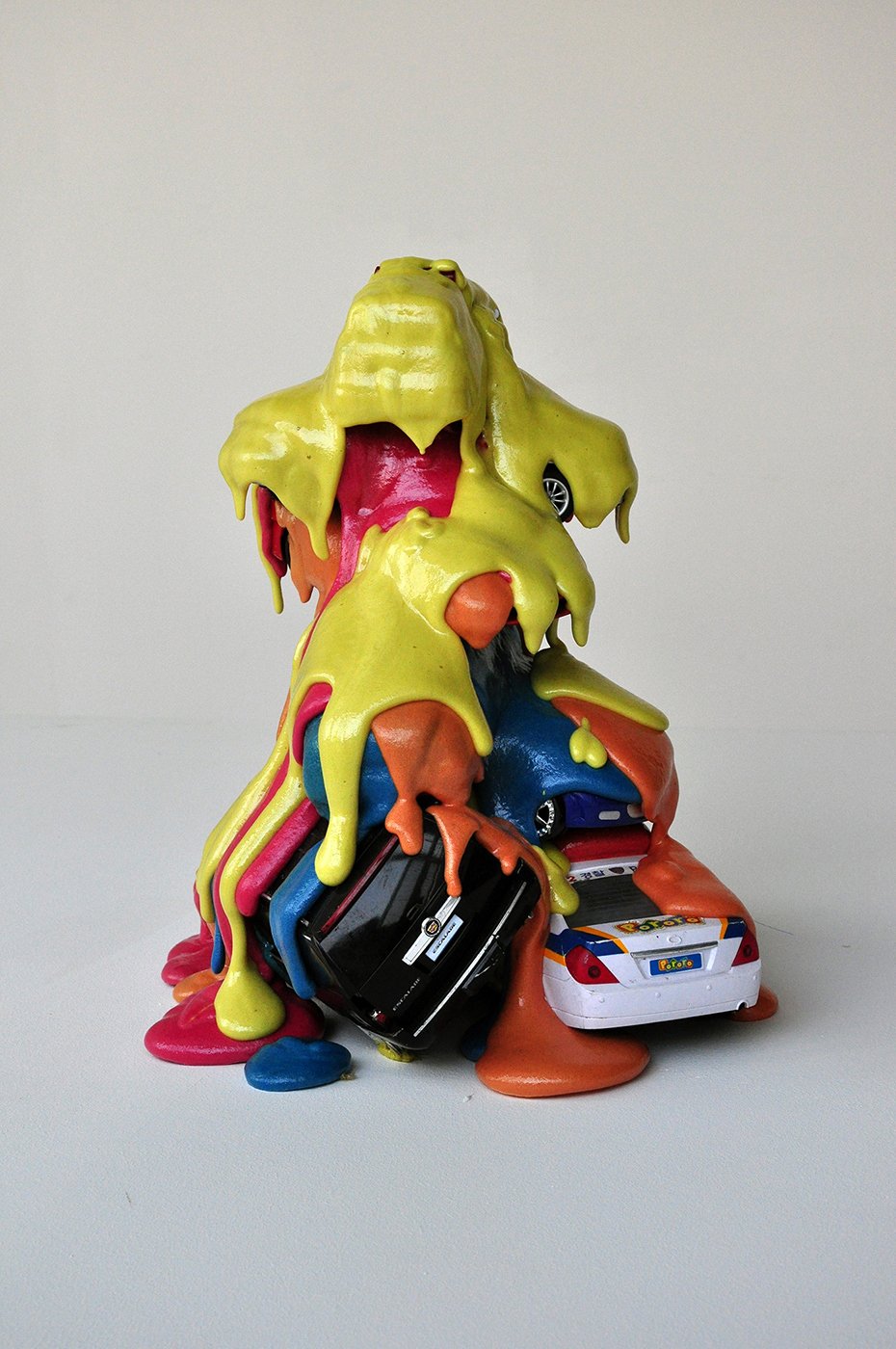
Artifact from assemblage performance, Seoul Foundaiton for Art and Culture, Seoul 2009 © Les Joynes, ARS New York and DACS London.
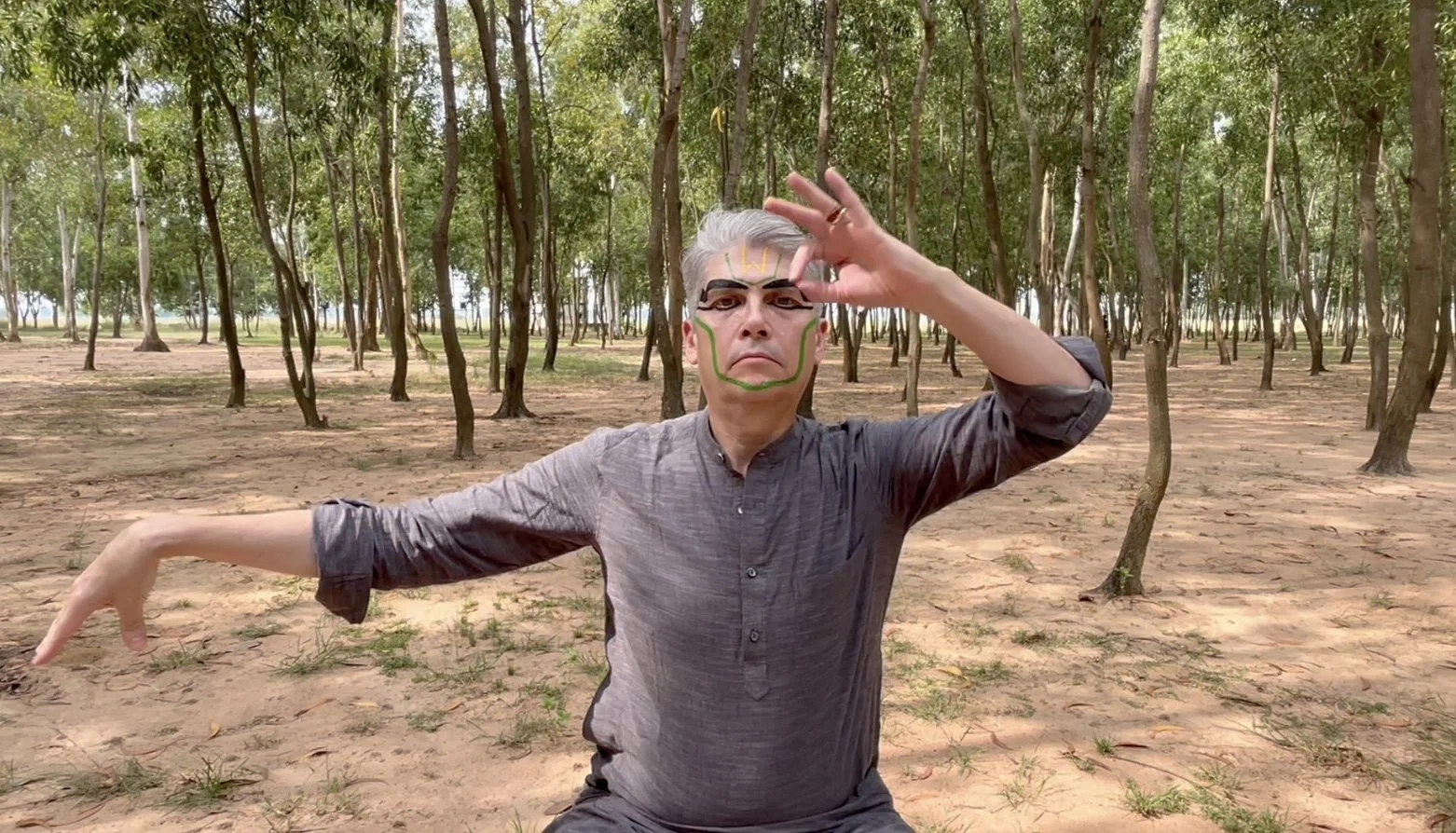
Performance with local language/ Mudra poetry, West Bengal India (2022) . 2009-2025 © Les Joynes, ARS New York and DACS London.

FormLAB explores the layered colonial histories of Taiwan with the exhibition Sugar (2024), ByWood Gallery, Kaohsiung, Taiwan. 2009-2025 © Les Joynes, ARS New York and DACS London.
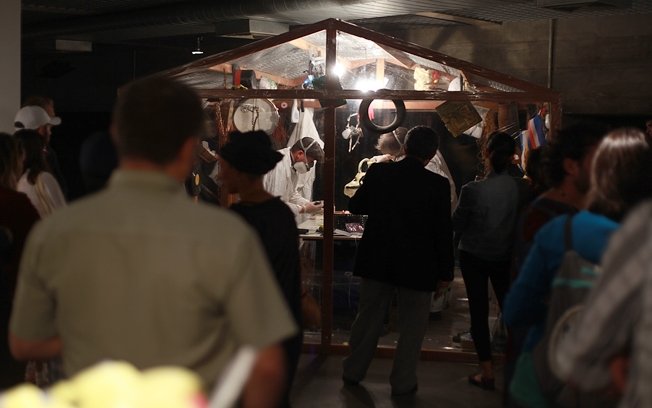
Installation of FormLAB “factory” at Brazilian Museum of Sculpture, Sao Paulo, Brazil 2012 © Les Joynes, ARS New York and DACS London.

Installation of FormLAB “factory” at Brazilian Museum of Sculpture, Sao Paulo, Brazil 2012 © Les Joynes, ARS New York and DACS London.


Site specific video work exploring the city of Sao Paulo in Brazil - still images of Sleeping in República (São Paulo) (video 3 min, 2013), 2023-2025 © Les Joynes, ARS New York and DACS London.

FormLAB explores nomadic reindeer communities in Northern Mongolia as part of a Fulbright-Hays US public diplomacy project. Still from Shapeshifter (Mongolia) 2014.video 2 min 56, 2014 © Les Joynes, ARS New York and DACS London.

Discussion on Joseph Beuys and Andy Warhol with a Reindeer n Khovsgol, Mongolia (2014), chromogenic print. © Les Joynes, ARS New York and DACS London.
Joynes’s work has featured at the National Museum of Taiwanese Literature (2023), ByWoods Gallery, Kaohsiung, Taiwan (2023), Douba Film Festival, China (2019), Inside Out Art Museum, Beijing (2017), Museum of Brazilian Arts (MAB-FAAP), Sao Paulo, Brazil (2015), Zanabazar Museum of Fine Art, Ulaanbaatar, Mongolia (2014), 976 Gallery, Ulaanbaatar, Mongolia. Launch for Venice Biennale (2014), Fundação Armando Alvares Penteado, São Paulo (2013), Brazilian Museum of Sculpture, São Paulo (2012), Seoul Foundation for Arts and Culture, Korea (2012), Fenberger House Museum, Nagano, Japan (2012), Gallery Thomas Jaeckel, New York (2011), Welsh Museum of Modern Art, UK (2010), Treignac Projet, France (2010), Bauhaus Foundation, Dessau, Berlin and Queenstown, Singapore (2009), Åmotgård Museum, Bygstad, Norway (2008), Michael Steinberg Fine Art, New York (2008), New General Catalog, New York (2007), CBGB New York (2006), Space, London (2005), Romo Gallery, Atlanta (2005), Mizuma Gallery Tokyo (2005), Bergstübl Mitte, Berlin (2004), Mars, Tokyo (2003), Tactical Museum/ AIT, Tokyo (2002), Art Gallery of New South Wales, Sydney (2001), Nylon, London (2000), Asahi Contemporary Art 2000, Tokyo (2000), Bangkok Experimental Film Festival, Bangkok (1999), Tatsumi Orimoto Space, Kawasaki, Japan (1999), Casa, Tokyo (1998), Norimatsu Museum, Japan (1997), Milch, London (1996), Barbican, London (1995).